
Herring
Small, silvery forage fish that form large schools in temperate oceans and are vital to global fisheries.
Herring are schooling fish belonging to the family Clupeidae, found primarily in the North Atlantic and North Pacific. They have shaped European history as a key food source and were central to the development of modern fisheries science.
- Herring form massive schools in temperate oceans.
- They played a key role in medieval European economies.
- Atlantic herring spawn in every month of the year.
- Females lay up to 40,000 eggs attached to the seabed.
- They are rich sources of omega-3 fatty acids and vitamin D.
What it is
Herring are small, silvery fish that belong to the order Clupeiformes and the family Clupeidae. They possess a single soft dorsal fin without spines and lack a lateral line. Their bodies are streamlined, with a protruding lower jaw. Sizes vary significantly among subspecies. The Baltic herring is small, measuring only 14 to 18 centimetres. The Atlantic herring can reach up to 46 centimetres in length and weigh around 700 grams. Pacific herrings typically grow to about 38 centimetres. These fish are known for forming massive schools, which likely inspired the term herring, possibly derived from words meaning host or multitude.
Where it lives
These fish inhabit shallow, temperate waters across the globe. Major populations exist in the North Atlantic Ocean, including the Baltic Sea, and the North Pacific Ocean. They are also found off the west coast of South America. In Europe, they play a critical role in marine ecosystems. The analysis of stomach contents shows they are central prey items. They compete with sprat for resources in the Baltic Sea. Their distribution allows them to serve as a key link between plankton and larger predators.
How it lives
Herring feed on copepods, krill, and other zooplankton. Young fish hunt individually using raptorial feeding. Adults switch to filter feeding when prey concentrations are high. They swim with mouths open, filtering water through their gills. During daylight, they stay in deep water for safety. They feed at the surface only at night to avoid predators. Predators include seabirds, seals, whales, and large fish. Predators often cooperate to herd herring into tight bait balls. Sailfish raise their sails to appear larger. Thresher sharks use tails to stun shoaling fish. Whales perform lunge feeding to engulf huge amounts of water and fish.
Breeding and life cycle
Atlantic herring stocks spawn throughout the entire year. Different groups spawn in spring, summer, autumn, or winter. Greenland populations breed in very shallow water, while North Sea bank herrings spawn at depths up to 200 metres. Females lay between 20,000 and 40,000 eggs on gravel, stones, or algae. Eggs stick together via a mucous coating. Thick layers may die from oxygen depletion. Larvae hatch at 5 to 6 millimetres long. They become transparent to hide from predators. The dorsal fin forms at 15 to 17 millimetres. They reach spawning age at three years old.
Fish and people
Herring have been a staple food since at least 3000 BC. They are consumed raw, fermented, pickled, or smoked as kippers. The trade in herring was historically vital to European economies. It supported the founding of cities like Copenhagen and Amsterdam. In Scotland, the industry peaked in the late nineteenth century. Shetland became known as the herring capital of Europe. Thomas Aquinas reportedly requested fresh herring before his death. Today, they are valued for omega-3 fatty acids and vitamin D. However, pollution in areas like the Baltic Sea affects safety levels.
Status and threats
The conservation status is listed as least concern. Herring remain abundant in many regions. Overfishing and environmental changes pose potential threats. Pollution, such as PCBs and dioxins, accumulates in larger Baltic herrings. Consumption guidelines suggest limits based on fish size. Smaller herrings under 17 centimetres are considered safer to eat frequently. Mercury levels also influence safe consumption rates. Research into herring populations has been fundamental to developing fisheries science. Management programmes aim to balance commercial needs with ecological sustainability.


Questions people ask about Herring
What do herring eat?
Herring consume copepods, krill, and zooplankton. Young fish hunt individually. Adults filter feed when prey is dense. They swim with open mouths to catch particles. Phytoplankton is also part of their diet.
How big do herring get?
Size varies by subspecies. Baltic herring measure 14 to 18 centimetres. Atlantic herring can reach 46 centimetres. Pacific herring grow to about 38 centimetres. Weight can reach 700 grams for Atlantic types.
Where are herring found?
They live in the North Atlantic and North Pacific Oceans. Populations exist in the Baltic Sea. They are also found off South America's west coast. They prefer shallow, temperate coastal waters.
Why are herring important historically?
They drove European economic growth. Cities like Copenhagen and Amsterdam grew due to herring trade. They were a staple food source for centuries. The industry peaked in the late nineteenth century in Scotland.
Good reading and sources
The facts on this page come from the Wikipedia article "Herring", written by its contributors and used under the CC BY-SA 4.0 licence, and from its Wikidata record (CC0). EveryFish rewrote the text in its own words, with AI assistance, and compares every page with the article to make sure no passage is copied. It may be reused under the same CC BY-SA 4.0 licence with a link back.
It may contain mistakes, and figures change over time. Nothing here is investment or buying advice. If something is wrong, tell us. Last refreshed 2026-11-15.
Like Herring
All herrings and sardines 🇳🇿 New Zealand and 1 moreSprat
Small forage fish of the genus Sprattus and related genera in the herring family.Herring · Coasts and shelves
 🇨🇦 Canada and 1 moreAtlantic herring
Abundant schooling fish of the North AtlanticHerring · Coasts and shelves
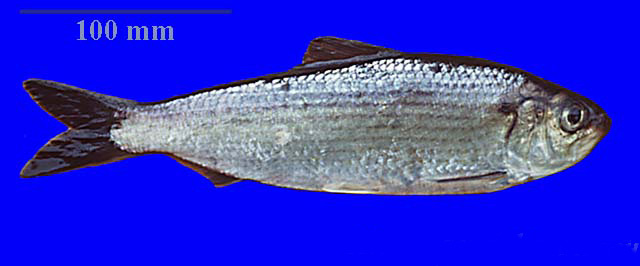 🇺🇸 United States and 1 moreAlewife
A small North American herring that migrates between sea and rivers.Herring · Coasts and shelves
 🇹🇷 Turkey and 4 moreAnchovy
Small, oily forage fish found in oceans and some rivers worldwide.Herring · Coasts and shelves
More from Clupeidae
All of them 🇺🇸 United States and 2 moreAmerican gizzard shad
A silvery freshwater forage fish with a muscular gizzard.Herring · Rivers and lakes
 WorldSpotted sardinella
A small herring with golden spots found in the Indo-Pacific.Herring · Coasts and shelves
 🇺🇸 United States and 3 moreMenhaden
Small silver forage fish that filter plankton and support marine food webs.Herring · Coasts and shelves
 🇲🇦 Morocco and 2 moreEuropean pilchard
Small schooling fish of the Atlantic and Mediterranean.Herring · Coasts and shelves