
Mud carp
Freshwater fish farmed in Asia since the Tang dynasty
The mud carp is a subtropical freshwater species native to southern China and Southeast Asia. Farmers have raised it in polyculture systems for over a thousand years, making it a staple food source that is often sold fresh, dried, or canned.
- Farmed in China since the Tang dynasty
- Bottom feeder in polyculture systems
- Commonly sold as canned fried dace
- Native to Mekong and Pearl River deltas
What it is
This ray-finned fish belongs to a monospecific genus and lives in subtropical waters. It has a broad distribution across southern China and parts of mainland Southeast Asia. The species is well adapted to life in lakes, rivers, and man-made reservoirs. In regions like Guangdong and Guangxi, it constitutes a significant portion of the local freshwater fish population. Its ability to thrive in muddy bottoms makes it distinct from other surface-feeding varieties.
Where it lives
Native habitats include the Mekong, Pearl, Red, and Chao Phraya river systems. The fish is found throughout the deltas of the Mekong and Pearl rivers. Beyond its native range, it has been introduced to Indonesia, Singapore, Japan, Taiwan, and Hong Kong. It prefers subtropical climates and inhabits various freshwater bodies connected to these major river networks. Farming operations are concentrated within China, where the environment supports large-scale cultivation.
How it lives
As an omnivore, the wild mud carp feeds mainly on water plants and insects. This bottom-feeding behaviour allows it to occupy a specific ecological niche. In agricultural settings, farmers provide pellets to support growth. The species does not compete directly with top-feeding grass carp or mid-water silver carp. This dietary flexibility supports its role in mixed-species farming systems, where different fish utilise different layers of the water column for feeding.
Fish and people
Aquaculture of this species began in China during the Tang dynasty as a substitute for common carp, which was banned at the time. It remains a low-cost protein source, often consumed by local communities. The fish is typically sold live and eaten fresh, though it is also dried, salted, or processed into cakes and dumplings. Canned versions, such as fried dace with salted black beans, are popular in the Chinese diaspora. Safety concerns have arisen regarding traces of banned antimicrobials in some canned products.
Status and threats
Wild populations face threats from increased fishing pressure. While the species is widely farmed, which helps meet demand, overfishing in natural habitats remains a concern. Conservation efforts focus on managing wild stocks alongside the robust aquaculture industry. The introduction of the species to non-native regions also requires monitoring to prevent ecological imbalance. Data on specific population trends in the wild is limited compared to farmed output.


Questions people ask about Mud carp
Why was mud carp farming started in China?
It was introduced during the Tang dynasty as a substitute for common carp. A ban on fishing for common carp led farmers to adapt by raising mud carp, which fed on the bottom of ponds.
What does the mud carp eat?
In the wild, it is an omnivore that mainly consumes water plants and insects. On farms, the fish are fed pellets to ensure consistent growth and health.
How is mud carp usually sold?
It is mostly sold live and eaten fresh locally. It is also dried, salted, or processed into fish balls and dumplings. Canned fried dace is a common retail product.
Good reading and sources
The facts on this page come from the Wikipedia article "Disymphia", written by its contributors and used under the CC BY-SA 4.0 licence, and from its Wikidata record (CC0). EveryFish rewrote the text in its own words, with AI assistance, and compares every page with the article to make sure no passage is copied. It may be reused under the same CC BY-SA 4.0 licence with a link back.
It may contain mistakes, and figures change over time. Nothing here is investment or buying advice. If something is wrong, tell us. Last refreshed 2026-11-15.
Like Mud carp
All carps and minnows 🇮🇳 India and 4 moreRohu
A large silver carp from South Asian rivers, farmed for food and prized as a game fish.Carp · Rivers and lakes
 🇯🇵 JapanNigorobuna
Wild carp from Lake Biwa used for fermented sushi.Carp · Rivers and lakes
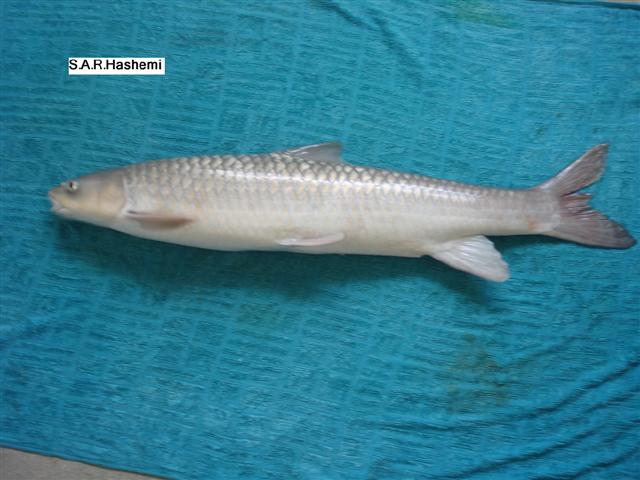 🇮🇷 Iran and 1 moreShabout
A large freshwater carp native to the Tigris-Euphrates basin in Western Asia.Carp · Rivers and lakes
 🇺🇸 United States and 1 moreGolden shiner
A North American minnow used widely as bait and in pond culture.Carp · Rivers and lakes
More from Cyprinidae
All of them 🇲🇾 Malaysia and 1 moreHarlequin rasbora
A small, colourful freshwater fish popular in home aquariums for its distinctive black body marking.Carp · Rivers and lakes
 WorldLabeobarbus
A genus of mid-sized ray-finned fish widely distributed in eastern and southern Africa.Carp · Rivers and lakes
 🇹🇭 Thailand and 2 moreSiamese mud carp
Freshwater cyprinid native to Mekong and Chao Phraya riversCarp · Rivers and lakes
 🇨🇳 ChinaTelescope goldfish
Fancy goldfish breed with large protruding eyesCarp · Rivers and lakes