
Cherry barb
Small tropical freshwater fish from Sri Lanka, popular in aquariums for its bright red colour.
The cherry barb is a small cyprinid native to Sri Lanka, first described by Paul E. P. Deraniyagala in 1929. It is widely farmed and sold as an aquarium pet due to its vibrant appearance.
- Reaches a maximum length of five centimetres.
- Endemic to Sri Lanka with introduced populations elsewhere.
- Males turn deep red during breeding season.
- First described by Paul E. P. Deraniyagala in 1929.
- Listed as Vulnerable due to overcollection and habitat loss.
What it is
The cherry barb is a tiny freshwater fish belonging to the carp family. Adults reach only five centimetres in length. Males display a deep red hue during breeding seasons, while females remain fawn with silver highlights and pink stripes. The body is elongated and slightly compressed. A horizontal line runs from the snout through the eye to the tail fin. This species is the sole member of the genus Rohanella, established in 2023 after genetic analysis suggested it differed from other barbs.
Where it lives
This fish originates exclusively from Sri Lanka. Its natural habitat consists of shallow, slow-moving streams covered by heavy shade. The bottom features silt and fallen leaves. Introduced populations now exist in parts of Mexico and Colombia. In the wild, it prefers water temperatures between twenty-three and twenty-seven degrees Celsius. It thrives in neutral to slightly alkaline conditions with moderate hardness.
How it lives
Cherry barbs form loose schools rather than tight groups. They prefer environments with dense plant cover for hiding. Young males are generally peaceful, but mature ones can become aggressive toward rivals during mating periods. Females often hide from persistent male attention. In captivity, they coexist well with calm species like rasboras. Their diet in the wild remains unspecified, though they likely consume small invertebrates found in their shaded stream habitats.
Breeding and life cycle
Males chase females to initiate spawning. The female releases two hundred to three hundred eggs onto plants or the tank floor. Parents may eat their own offspring if not provided with adequate cover. Eggs develop quickly, hatching within forty-eight hours. Fry begin swimming freely two days later. After five weeks, juveniles measure approximately one centimetre and resemble miniature adults.
Fish and people
This species is highly valued in the global aquarium trade. Hobbyists keep them in community tanks with ample vegetation. Breeders maintain a ratio of two females per male to reduce stress. Commercial farming supports high demand. However, wild populations face threats from excessive collection for pets and destruction of their forest stream habitats. Conservation efforts aim to protect these specific Sri Lankan waterways.
Status and threats
The International Union for Conservation of Nature lists this fish as vulnerable. Overharvesting for the aquarium market reduces wild numbers significantly. Habitat degradation from deforestation and agriculture further endangers remaining populations. Protecting native streams in Sri Lanka is crucial for long-term survival. Captive breeding programs help alleviate pressure on wild stocks.

Questions people ask about Cherry barb
What is the scientific name of the cherry barb?
The current scientific name is Rohanella titteya. It was previously known as Puntius titteya before taxonomists reclassified it into its own genus based on genetic evidence.
How big do cherry barbs get?
Adults typically reach five centimetres in length. This small size makes them suitable for nano aquariums and community tanks with other peaceful fish.
Are cherry barbs difficult to breed?
They are relatively easy to breed in captivity. Females scatter hundreds of eggs on plants. Owners must remove parents or provide dense cover to prevent egg predation.
Why is the cherry barb endangered?
Wild populations decline due to overcollection for the aquarium trade and habitat loss from deforestation. Protecting their native Sri Lankan streams is essential for conservation.
Good reading and sources
The facts on this page come from the Wikipedia article "Cherry barb", written by its contributors and used under the CC BY-SA 4.0 licence, and from its Wikidata record (CC0). EveryFish rewrote the text in its own words, with AI assistance, and compares every page with the article to make sure no passage is copied. It may be reused under the same CC BY-SA 4.0 licence with a link back.
It may contain mistakes, and figures change over time. Nothing here is investment or buying advice. If something is wrong, tell us. Last refreshed 2026-11-15.
Like Cherry barb
All carps and minnows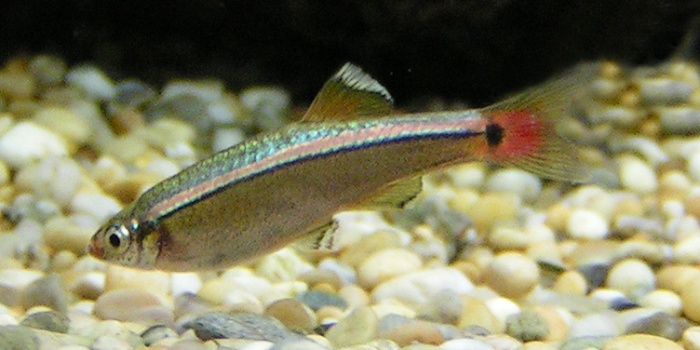 🇨🇳 ChinaWhite Cloud Mountain minnow
A small, hardy freshwater fish native to China, popular in aquariums for its cold tolerance and peaceful nature.Carp · Rivers and lakes · 1930
 🇹🇭 ThailandRed-tailed black shark
A critically endangered Thai carp kept widely in aquariums for its black body and red tail.Carp · Rivers and lakes · 1931
 🇮🇷 Iran and 3 moreMangar
Large cyprinid fish of the Tigris and Euphrates rivers.Carp · Rivers and lakes · 1843
 🇹🇭 Thailand and 1 moreBala shark
A large, silver cyprinid often kept in aquariums despite its size.Carp · Rivers and lakes
More from Cyprinidae
All of them 🇰🇪 Kenya and 4 moreRipon barbel
A large freshwater cyprinid from East African lakes and rivers.Carp · Rivers and lakes · 1900
 🇹🇭 Thailand and 4 moreTinfoil barb
A large Southeast Asian freshwater fish known for its red fins and silvery body.Carp · Rivers and lakes · 1853
 🇲🇲 MyanmarOdessa barb
Small colourful cyprinid from Myanmar popular in home aquariumsCarp · Rivers and lakes · 2008
 EuropeCommon nase
A migratory European cyprinid with orange tail fins.Carp · Rivers and lakes · 1758