
Bala shark
A large, silver cyprinid often kept in aquariums despite its size.
The bala shark is a large freshwater fish from Southeast Asia, known for its silver body and black-edged fins. Though popular in the aquarium trade, it grows too large for most home tanks and is listed as vulnerable in the wild due to habitat loss and overfishing.
- Grows up to 35 cm in length
- Listed as vulnerable by the IUCN
- Requires large tanks or indoor ponds
- Native to Malay Peninsula and Borneo
- Peaceful schooling fish with black-edged fins
What it is
The bala shark is not a true shark but a member of the carp family. It has a torpedo-shaped body with large fins and big eyes. Its scales are silver, while the dorsal, caudal, anal, and pelvic fins have distinct black margins. This species can reach a maximum length of 35 cm. It is one of only two species in its genus.
Where it lives
This fish is native to the Malay Peninsula, Sumatra, and Borneo. It inhabits midwater depths in medium to large rivers and lakes. Records from the Mekong and Chao Phraya rivers are likely errors caused by confusion with a different, possibly extinct species. The presence of this genus in the Mekong remains questionable.
How it lives
Bala sharks feed on phytoplankton, though their diet consists mainly of small crustaceans, rotifers, and insect larvae. They use their large eyes to locate prey. These fish are peaceful and often swim in groups. In captivity, they are hardy and can tolerate changes in temperature and pH levels that might harm other species.
Fish and people
Large numbers are exported for the aquarium trade, primarily from Thailand where they are bred in captivity. They are popular but often misunderstood because they outgrow typical home tanks. Hobbyists recommend tanks at least 2 meters long or indoor ponds. They require covered tanks as they are skilled jumpers, though they may injure themselves on lids.
Status and threats
The IUCN lists the species as vulnerable. It has become rare or extinct in many parts of its native range. Populations in Borneo declined sharply after 1975, possibly due to overfishing for the pet trade or pollution from forest fires. The species appears extirpated in the Batang Hari basin. Most traded individuals are now captive bred.

Questions people ask about Bala shark
Is the bala shark a real shark?
No, it is a freshwater fish in the carp family. It is called a shark due to its torpedo shape and large fins, but it is not related to marine sharks.
How big do bala sharks get?
They can grow to a maximum length of 35 cm. This size makes them too large for standard home aquariums, requiring very large tanks or indoor ponds.
Are bala sharks endangered?
Yes, they are listed as vulnerable. Wild populations have declined in many river basins due to overfishing and habitat pollution, though many sold in shops are captive bred.
Good reading and sources
The facts on this page come from the Wikipedia article "Bala shark", written by its contributors and used under the CC BY-SA 4.0 licence, and from its Wikidata record (CC0). EveryFish rewrote the text in its own words, with AI assistance, and compares every page with the article to make sure no passage is copied. It may be reused under the same CC BY-SA 4.0 licence with a link back.
It may contain mistakes, and figures change over time. Nothing here is investment or buying advice. If something is wrong, tell us. Last refreshed 2026-11-15.
Like Bala shark
All carps and minnows 🇹🇭 Thailand and 2 moreSiamese mud carp
Freshwater cyprinid native to Mekong and Chao Phraya riversCarp · Rivers and lakes
 🇮🇳 India and 4 moreZebrafish
Small striped fish from South Asia kept in aquariums and labsCarp · Rivers and lakes
 🇲🇾 Malaysia and 1 moreHarlequin rasbora
A small, colourful freshwater fish popular in home aquariums for its distinctive black body marking.Carp · Rivers and lakes
 🇨🇳 ChinaTelescope goldfish
Fancy goldfish breed with large protruding eyesCarp · Rivers and lakes
More from Cyprinidae
All of them WorldLabeobarbus
A genus of mid-sized ray-finned fish widely distributed in eastern and southern Africa.Carp · Rivers and lakes
 🇮🇳 India and 4 moreRohu
A large silver carp from South Asian rivers, farmed for food and prized as a game fish.Carp · Rivers and lakes
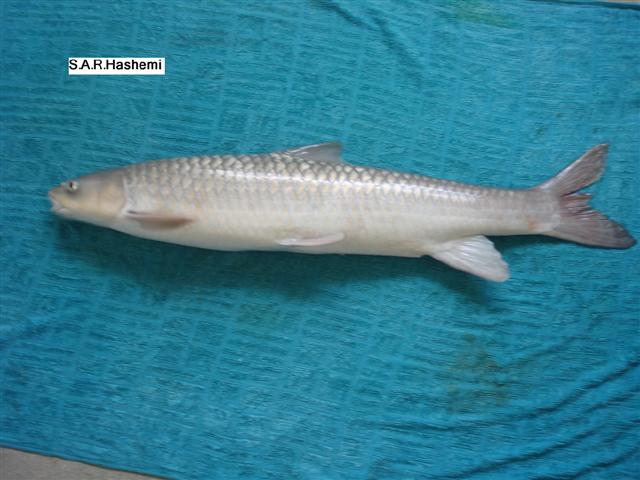 🇮🇷 Iran and 1 moreShabout
A large freshwater carp native to the Tigris-Euphrates basin in Western Asia.Carp · Rivers and lakes
 🇯🇵 JapanNigorobuna
Wild carp from Lake Biwa used for fermented sushi.Carp · Rivers and lakes