
Black marlin
Largest marlin species in tropical Indo-Pacific waters
The black marlin is a massive billfish inhabiting the Indian and Pacific Oceans. It grows up to 4.65 metres and weighs over 700 kilograms. Anglers prize it for sport, though its population status remains uncertain due to limited research.
- Largest marlin species, reaching 4.65 metres in length
- Distinguished by rigid pectoral fins that do not fold flat
- Prefers mackerel scad as its primary prey item
- Females can produce up to 40 million eggs per spawn
- Record catch of 710 kg set in 1953 off Peru
What it is
The black marlin is a robust billfish with a deep body and heavy build. It features a short, thick bill and a rounded dorsal fin that sits lower than those of related species. Its most distinct trait is the rigid pectoral fins, which cannot fold flat against the body in adults. The fish displays a dark blue-black back and a bright chrome belly, often separated by a pale stripe. It is the largest marlin species and one of the biggest bony fishes alive.
Where it lives
This species inhabits tropical and subtropical zones of the Indian and Pacific Oceans. Its range extends roughly from 40 degrees North to 45 degrees South. While it prefers warm waters between 15 and 30 degrees Celsius, it occasionally enters temperate regions. Reports from the Atlantic are rare and likely involve misidentification, as no breeding population exists there. The fish occupies depths from the surface down to 500 metres.
How it lives
Black marlins are apex predators that feed on various fish and cephalopods. They prefer mackerel scad but also consume tuna, squid, and even young sharks. Hunters slash prey with their bills before swallowing them head first. These fish spend much of their time near the surface, especially at night. Juveniles gather in seasonal groups within the Great Barrier Reef lagoon to grow. Adults are highly migratory and move according to ocean surface heights.
Breeding and life cycle
Spawning times vary by location. In southern Asia, it occurs in May and June. Around Taiwan, breeding happens in spring and autumn. Australian populations spawn between October and December. The fish prefer water temperatures of 27 to 28 degrees Celsius for reproduction. A single female can carry approximately 40 million eggs. Females generally outlive males and grow larger after reaching five years of age.
Fish and people
Anglers highly value the black marlin as a premier game fish. Commercial fishing occurs along coasts in South America, Asia, and Australia. A famous record catch from 1953 off Peru weighed 710 kilograms. This specimen is preserved in a museum in Washington, D.C. Historically, hooked marlins dragged Maldivian boats for hours. The United States banned the sale of billfish in 2012, though recreational fishing remains legal.
Status and threats
The conservation status of the black marlin is currently unknown. Data deficiency stems from their migratory nature and the difficulty of tracking them. Fish often remove electronic tags, hindering population studies. No dedicated fisheries target this species exclusively. The Billfish Conservation Act restricts sales in the United States but does not prohibit catching them. More research is needed to determine population health.


Questions people ask about Black marlin
How fast can a black marlin swim?
Popular media often exaggerates their speed. A 2016 study estimated a theoretical maximum burst speed of 36 km/h based on muscle contraction limits. This is significantly slower than the 129 km/h sometimes reported in non-scientific accounts.
What is the difference between black and blue marlin?
Black marlins have rigid pectoral fins that cannot fold flat, while blue marlin fins are flexible. Black marlins lack the faint vertical blue stripes found on blue marlins. They also tend to have a deeper, more robust body shape.
Where do black marlin spawn?
Spawning locations vary by region. It occurs in southern Asia during May and June, around Taiwan in spring and autumn, and near Australia from October to December. They prefer warm water temperatures of 27 to 28 degrees Celsius for breeding.
Are black marlin endangered?
Their conservation status is listed as Data Deficient. There is insufficient information to assess population health accurately. Tracking difficulties and migratory habits make consistent study challenging, so no definitive threat level has been established.
Good reading and sources
The facts on this page come from the Wikipedia article "Black marlin", written by its contributors and used under the CC BY-SA 4.0 licence, and from its Wikidata record (CC0). EveryFish rewrote the text in its own words, with AI assistance, and compares every page with the article to make sure no passage is copied. It may be reused under the same CC BY-SA 4.0 licence with a link back.
It may contain mistakes, and figures change over time. Nothing here is investment or buying advice. If something is wrong, tell us. Last refreshed 2026-11-15.
Like Black marlin
All other fish WorldRoundscale spearfish
Atlantic billfish often mistaken for white marlinOther · Open ocean · 1841
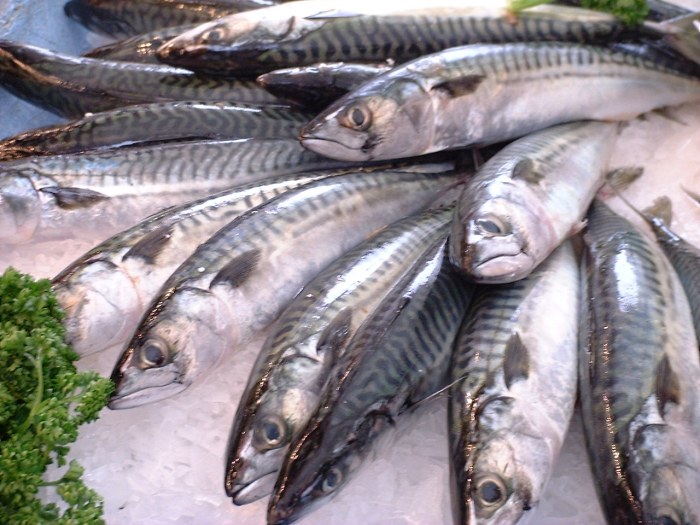 WorldMackerel
A group of pelagic fish known for their speed, stripes, and role in global fisheries.Tuna · Open ocean
 WorldSwordfish
Large migratory fish with a long flat bill, sole member of its family.Other · Coasts and shelves
 🇦🇺 Australia and 1 moreYellowtail amberjack
Large pelagic fish of the Southern Hemisphere oceansOther · Coasts and shelves · 1833
More from Istiophoridae
All of them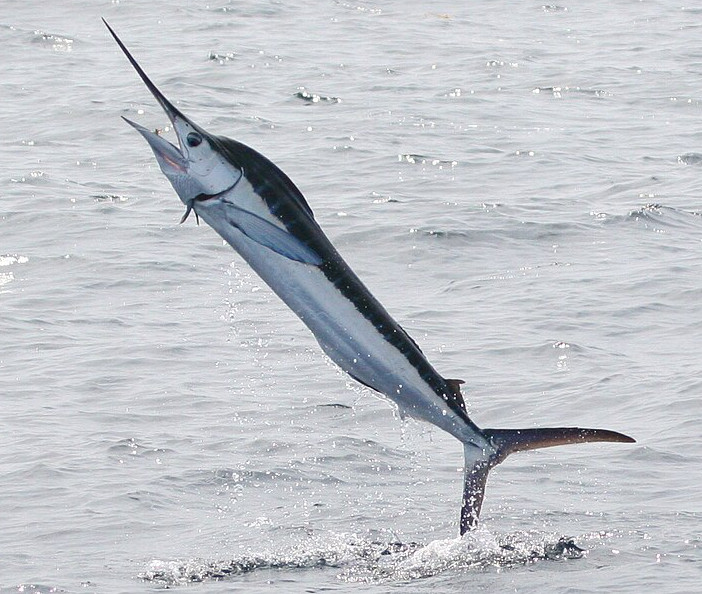 WorldWhite marlin
A fast-swimming billfish of the Atlantic Ocean.Other · Open ocean · 1860
 WorldLongbill spearfish
A sleek Atlantic marlin with a long bill and dark fins.Other · Open ocean · 1963
 WorldStriped marlin
Fast pelagic predator with blue stripesOther · Open ocean
WorldIndo-Pacific sailfish
Fast ocean predator with a large dorsal finOther · Coasts and shelves