Striped marlin
Fast pelagic predator with blue stripes
The striped marlin is a large oceanic fish found in tropical and temperate seas. It hunts near the surface and supports global sport and commercial fisheries, though stocks face pressure from overfishing.
- Max length 4.2 m and weight 220 kg
- Distinctive blue stripes shift to lavender
- Spawns up to 120 million eggs in summer
- Protected from commercial sale in most US waters
- Overfished in Western and Central North Pacific
What it is
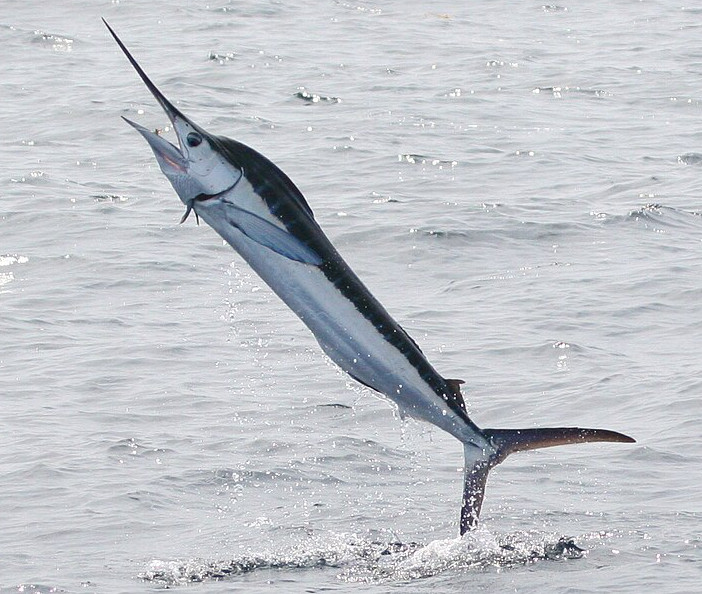
This species has a streamlined, torpedo-shaped body designed for speed. The back is dark blue or black, fading to silvery-white on the belly. Distinctive bluish stripes run along the sides, numbering between twelve and twenty. These markings remain visible after death and can shift to lavender when the animal is excited. The first dorsal fin is tall, often matching or exceeding the body depth, while the second is much smaller. Adults average 2.9 metres in length but can reach 4.2 metres and weigh up to 220 kilograms.
Where it lives
Striped marlin inhabit tropical and temperate waters across the globe. They prefer the epipelagic zone, staying near the surface away from shore. The eastern Pacific Ocean offers ideal conditions, particularly where sea surface temperatures range from 20 to 28 degrees Celsius. High chlorophyll levels indicate nutrient-rich areas that support their prey. Populations thrive where dissolved oxygen sits between 4.5 and 5.5 mL per litre. Studies off Australia, New Zealand, Mexico, California, and Ecuador confirm these habitat preferences.
How it lives
As a top predator, it feeds mainly on schooling fish like sardines, chub mackerel, and small tuna. Squid, especially the jumbo variety, also form part of its diet. Hunting occurs primarily during the day in the upper 100 metres of the water column. The fish exhibits diel vertical migration, moving to deeper regions by day and gathering near the surface at night. This behaviour helps it access prey concentrations driven by nutrient availability and light cycles.
Breeding and life cycle
Sexual maturity arrives early, at one to two years for males and up to 2.5 years for females. Spawning takes place in summer through a serial process involving multiple events. A single female may release batches of eggs every few days, contributing to a total potential output of 120 million eggs. This high fecundity helps sustain populations despite heavy fishing pressure, although recruitment success varies by region and environmental conditions.
Fish and people
Anglers prize this fish for its speed and fight, making it a key target for sport fishing. Commercial landings peaked in the 1960s but have since dropped due to conservation rules. The meat is firm, ranging from pink to orange-red, with a flavour stronger than swordfish. It is often grilled, smoked, or eaten raw. In the United States, the Billfish Conservation Act of 2012 restricts commercial sales to protect stocks, with specific exemptions for Hawaii and Pacific Insular Areas.
Status and threats
Conservation status varies geographically. Populations in the Eastern Pacific are stable, but those in the Western and Central North Pacific are overfished. Greenpeace International listed the species on its red seafood list in 2010 due to unsustainable sourcing risks. Management falls under bodies like the Inter-American Tropical Tuna Commission and the Western and Central Pacific Fisheries Commission. Domestic efforts in the US are led by NOAA and regional councils to curb overfishing trends.


Questions people ask about Striped marlin
What does striped marlin taste like?
The meat is firm and ranges from light pink to orangish-red. It has a flavour comparable to swordfish but stronger. People commonly grill it, though it is also smoked or eaten raw in some cuisines.
Is striped marlin endangered?
Status depends on the region. Populations in the Eastern Pacific are stable, but those in the Western and Central North Pacific are considered overfished. Conservation groups label it high-risk for unsustainable sourcing.
How big do striped marlin get?
They average 2.9 metres in length but can grow up to 4.2 metres. The maximum recorded weight is around 220 kilograms. Their first dorsal fin is notably tall, often equal to their body depth.
Where do striped marlin live?
They are found globally in tropical and temperate oceans. They prefer surface waters with temperatures between 20 and 28 degrees Celsius and high chlorophyll levels, often in the eastern Pacific Ocean.
Good reading and sources
- Striped marlin on WikipediaEncyclopedia
- More photos on Wikimedia CommonsPhotos
- Wikidata recordOpen data
The facts on this page come from the Wikipedia article "Striped marlin", written by its contributors and used under the CC BY-SA 4.0 licence, and from its Wikidata record (CC0). EveryFish rewrote the text in its own words, with AI assistance, and compares every page with the article to make sure no passage is copied. It may be reused under the same CC BY-SA 4.0 licence with a link back.
It may contain mistakes, and figures change over time. Nothing here is investment or buying advice. If something is wrong, tell us. Last refreshed 2026-11-15.
Like Striped marlin
All other fish WorldBluefish
Aggressive marine pelagic fish found in temperate and subtropical waters worldwide.Other · Coasts and shelves
 WorldGreater amberjack
Large predatory jack found in warm seas worldwide.Other · Coasts and shelves · 1810
 🇦🇺 Australia and 1 moreYellowtail amberjack
Large pelagic fish of the Southern Hemisphere oceansOther · Coasts and shelves · 1833
 WorldRoundscale spearfish
Atlantic billfish often mistaken for white marlinOther · Open ocean · 1841