
Yellowtail amberjack
Large pelagic fish of the Southern Hemisphere oceans
The yellowtail amberjack is a large predatory fish found in tropical and temperate waters of the Southern Hemisphere. It supports commercial fisheries, aquaculture operations, and recreational angling, particularly in Australia and New Zealand.
- Adults reach lengths of 180 cm and weights of 50 kg
- Juveniles hide in floating weed with yellow and black bands
- Popular as sashimi under the name hiramasa in Japan
- Farming operations established in Australia and Chile
What it is
This large fish belongs to the jack family and inhabits ocean waters. Adults display a streamlined body shape suited for fast swimming. Young specimens show bright yellow colouring with dark bands, which fade as they mature. By the time they reach thirty centimetres, they adopt the uniform adult appearance. They grow significantly, with maximum lengths reaching one hundred and eighty centimetres. Large individuals caught in South Australia have weighed up to fifty kilograms.
Where it lives
Populations thrive in tropical and temperate zones across the Southern Hemisphere. Records extend from Queensland down to Tasmania in Australia. They also occur in the northern Pacific Ocean. These mobile creatures prefer water temperatures between seventeen and twenty-four degrees Celsius. They inhabit rocky reefs, sandy bottoms near coasts, and offshore islands. While usually found at depths under fifty metres, some have been caught much deeper.
How it lives
Active predators hunt in schools or pairs. Their diet includes smaller fish like mackerel and pilchards, plus squid and prawns. In New Zealand waters, they are major predators and have even eaten seabirds. Juveniles hide among floating debris or weed for camouflage. Adults often accompany stingrays, using the rays' electroreception skills to locate prey. They show curiosity around boats and human activity in harbours.
Breeding and life cycle
Wild reproductive habits remain poorly understood. Aquaculture relies on hatchery-produced juveniles rather than wild capture. Captive breeding stocks provide the young fish for farming operations. This method contrasts with other amberjack species where wild juveniles are more readily available for culture.
Fish and people
Early settlers in New Zealand considered the flesh coarse, but views changed. It is now a prized sport fish and commercial target. Known as hiramasa, it features prominently on sashimi menus globally. Māori tradition calls it haku and associates it with leadership qualities. Traps once decimated populations in Sydney Harbour until bans protected them. Farming occurs in Australia, Chile, and planned facilities in the United States.
Status and threats
Commercial traps in Sydney Harbour previously removed large portions of the local population. Regulatory bans in the mid-1990s helped recover numbers. Aquaculture expansion faces challenges regarding water quality and stock mortality. Environmental concerns persist around farm discharges in sensitive gulf areas.


Questions people ask about Yellowtail amberjack
Is yellowtail amberjack good for eating?
Yes, it is highly valued in restaurants worldwide. Known as hiramasa in Japanese cuisine, it is popular for sashimi. Early settlers disliked it, but modern palates appreciate its flavour when grilled or dried.
Where do yellowtail amberjack live?
They inhabit tropical and temperate waters of the Southern Hemisphere. You can find them around rocky reefs and coastal areas in Australia and New Zealand. They prefer temperatures between 17 and 24 degrees Celsius.
How big do yellowtail amberjack get?
They are large fish that can grow up to 180 centimetres in length. Heavy specimens caught in South Australia have weighed between 40 and 50 kilograms, making them a challenging target for anglers.
Good reading and sources
- Yellowtail amberjack on WikipediaEncyclopedia
- More photos on Wikimedia CommonsPhotos
- Wikidata recordOpen data
The facts on this page come from the Wikipedia article "Yellowtail amberjack", written by its contributors and used under the CC BY-SA 4.0 licence, and from its Wikidata record (CC0). EveryFish rewrote the text in its own words, with AI assistance, and compares every page with the article to make sure no passage is copied. It may be reused under the same CC BY-SA 4.0 licence with a link back.
It may contain mistakes, and figures change over time. Nothing here is investment or buying advice. If something is wrong, tell us. Last refreshed 2026-11-15.
Like Yellowtail amberjack
All other fish WorldGreater amberjack
Large predatory jack found in warm seas worldwide.Other · Coasts and shelves · 1810
 WorldRoundscale spearfish
Atlantic billfish often mistaken for white marlinOther · Open ocean · 1841
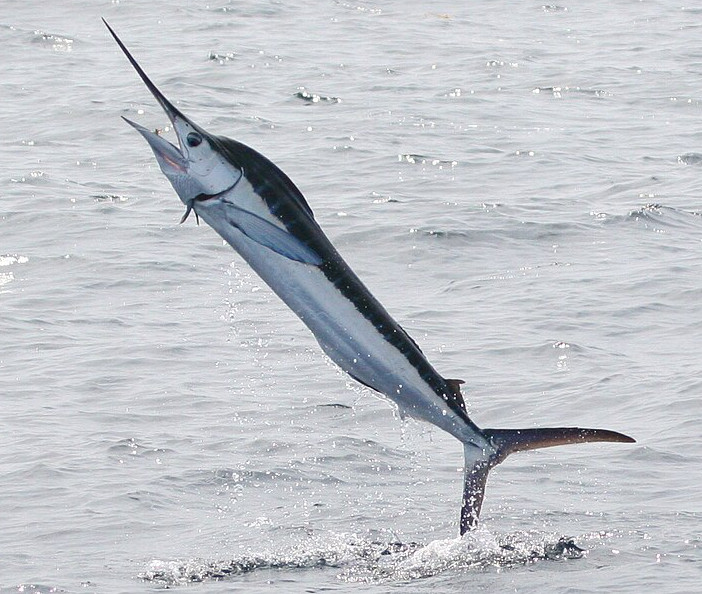 WorldWhite marlin
A fast-swimming billfish of the Atlantic Ocean.Other · Open ocean · 1860
 🇦🇷 Argentina and 4 moreArgentinian silverside
A large, adaptable silverside native to South America.Other · Rivers and lakes
More from Carangidae
All of them WorldBluefin trevally
Large tropical marine predator with electric blue finsPerch-like · Coasts and shelves · 1833
 WorldBigeye trevally
A large marine fish found in tropical oceans, known for its nocturnal hunting and distinctive dark dorsal fin.Other · Coasts and shelves · 1825
 🇨🇱 Chile and 3 moreChilean jack mackerel
A pelagic fish vital to global fisheries and salmon feed.Tuna · Coasts and shelves · 1920
 WorldPompano
Deep-bodied marine fish in the genus Trachinotus.Perch-like · Coasts and shelves