
Beluga sturgeon
A massive anadromous fish from the Caspian and Black Sea basins, prized for its caviar.
The beluga sturgeon is a large bony fish found in the Caspian and Black Seas. It is critically endangered due to overfishing for its roe, which produces expensive caviar.
- Maximum recorded length is 7.2 metres.
- Largest accepted weight is 1,571 kg.
- IUCN status is Critically Endangered.
- Spawns in rivers after migrating from seas.
- Produces highly valuable beluga caviar.
What it is
The beluga sturgeon is a species of fish belonging to the family Acipenseridae. It possesses an elongated body with a heterocercal tail and partially cartilaginous skeleton. The skin is naked and covered by fine denticles, featuring five longitudinal rows of scutes. Juveniles are slender with dark grey backs and white bellies. Adults become heavy-set and humpbacked, displaying blue-grey or dark brown colouring with silver flanks. This species is one of the largest living bony fishes, rivaling the ocean sunfish in mass.
Where it lives
Historically, this fish inhabited the Caspian Sea, Black Sea, Adriatic Sea, and Sea of Azov, along with connecting rivers. Modern populations are restricted primarily to the Caspian and Black Sea basins. Some individuals remain in the Danube River, where natural reproduction still occurs. Attempts have been made to reintroduce the species into historic locations, including the Po River in Italy and the Danube in Bulgaria, following repopulation programmes.
How it lives
The beluga is a pelagic predator that sucks prey into its mouth rapidly. Juveniles feed on benthic invertebrates before becoming largely piscivorous at lengths of eight to ten centimetres. Adults consume a variety of large fish, including mullets and other sturgeons, as well as molluscs and crustaceans. They are euryhaline, tolerating varying salinity levels between freshwater and estuaries. The species is long-lived, capable of surviving over one hundred years in the wild.
Breeding and life cycle
This anadromous fish migrates upstream to spawn on clean, hard substrates like gravel. Males reach sexual maturity between twelve and sixteen years, while females mature between sixteen and twenty-two years. Spawning occurs every four to seven years in spring, after wintering in rivers. Dams have significantly impeded these historic migration routes. Eggs are laid underwater and hatch into small embryos that absorb their yolk sacks within two weeks.
Fish and people
The female's roe is processed into beluga caviar, a global delicacy known for its high value. The flesh is a hearty white meat, though less renowned than the caviar. The air bladder was historically used to produce high-quality isinglass. Illegal harvesting and poaching for meat and eggs have severely depleted wild stocks. Conservation efforts include captive breeding schemes and releases of young fish into rivers like the Danube and Po.
Status and threats
The International Union for Conservation of Nature classifies the beluga sturgeon as critically endangered. Overfishing and poaching have removed the largest specimens, disrupting natural reproduction. Habitat loss caused by dam construction blocks access to spawning grounds. Pollution from agricultural and industrial sources further threatens survival. Trade is restricted under CITES Appendix II, and imports of caviar are banned in the United States.


Questions people ask about Beluga sturgeon
What is the scientific name of the beluga sturgeon?
The scientific name is Huso huso. It belongs to the family Acipenseridae within the order Acipenseriformes. This classification places it among ancient fish lineages distinct from most modern bony fishes.
Why is the beluga sturgeon critically endangered?
The primary threats are illegal harvesting, habitat disruption from dams, and pollution. Overfishing for caviar has removed mature adults, preventing natural reproduction. Dam construction blocks essential migration routes to spawning grounds in rivers.
Where does the beluga sturgeon live?
It inhabits the Caspian and Black Sea basins. Historically, it also lived in the Adriatic and Azov Seas. It is anadromous, meaning it lives in saltwater but migrates to freshwater rivers to spawn.
How big can a beluga sturgeon get?
The largest verified specimen weighed 1,571 kg and measured 7.2 metres. Claims of larger sizes exist but are unconfirmed. Females are typically twenty percent larger than males.
Good reading and sources
- Beluga (sturgeon) on WikipediaEncyclopedia
- More photos on Wikimedia CommonsPhotos
- Wikidata recordOpen data
The facts on this page come from the Wikipedia article "Beluga (sturgeon)", written by its contributors and used under the CC BY-SA 4.0 licence, and from its Wikidata record (CC0). EveryFish rewrote the text in its own words, with AI assistance, and compares every page with the article to make sure no passage is copied. It may be reused under the same CC BY-SA 4.0 licence with a link back.
It may contain mistakes, and figures change over time. Nothing here is investment or buying advice. If something is wrong, tell us. Last refreshed 2026-11-15.
Like Beluga sturgeon
All other fish 🇦🇴 Angola and 3 moreAtlantic mudskipper
Semi-aquatic goby that walks on mudflats in West Africa.Other · Rivers and lakes · 1766
 WorldNorthern whiting
A widespread marine fish found in the Indo-Pacific, known for its silvery body and ability to bury itself in sand.Other · Coasts and shelves · 1775
 WorldRound goby
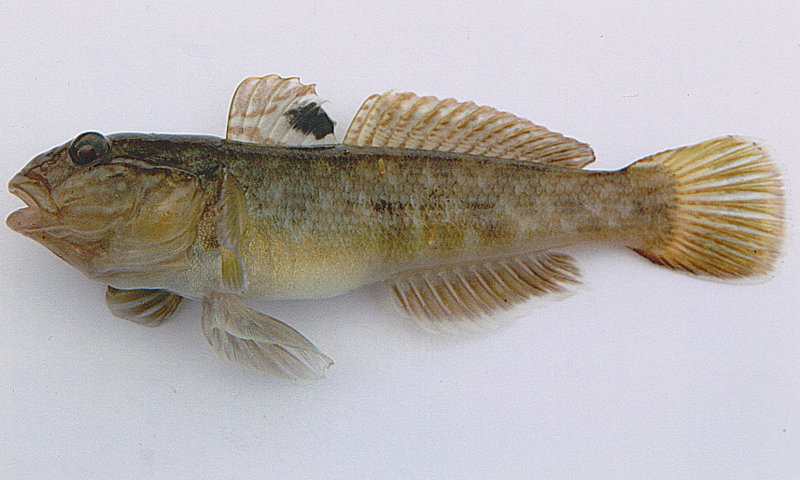
Small bottom-dwelling fish native to Eurasia and invasive in North AmericaOther · Rivers and lakes
 🇨🇺 CubaCuban gar
Large tropical freshwater predator native to western Cuba.Other · Rivers and lakes
More from Acipenseridae
All of them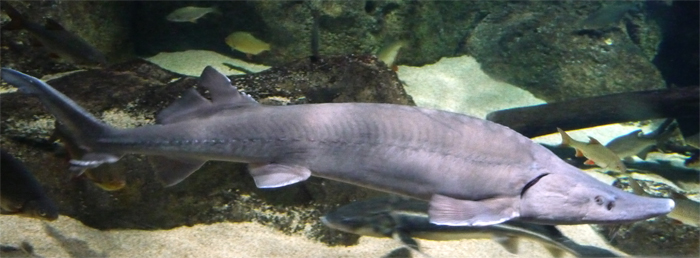 🇷🇺 Russia and 4 moreSiberian sturgeon
Large freshwater sturgeon native to Siberian riversAncient · Rivers and lakes
 🇺🇸 United States and 1 moreAtlantic sturgeon
A large anadromous fish native to the western Atlantic Ocean and its river systems.Ancient · Rivers and lakes
 🇺🇸 United States and 1 moreLake sturgeon
A large, long-lived freshwater fish native to North America.Ancient · Rivers and lakes
 🇺🇸 United States and 1 moreGreen sturgeon
A large anadromous fish native to the northern Pacific Ocean.Shark · Coasts and shelves