
Atlantic mudskipper
Semi-aquatic goby that walks on mudflats in West Africa.
The Atlantic mudskipper is a semi-aquatic fish native to West African coasts. It uses fins to move on land and breathes through skin and gill chambers. Locals use it for food and bait, though fishing has reduced some populations.
- Breathes air using skin and gill chambers
- Walks on land using pectoral fins
- Lives in West African mangrove swamps
- Males guard eggs in deep burrows
- Tolerates high levels of environmental toxins
What it is
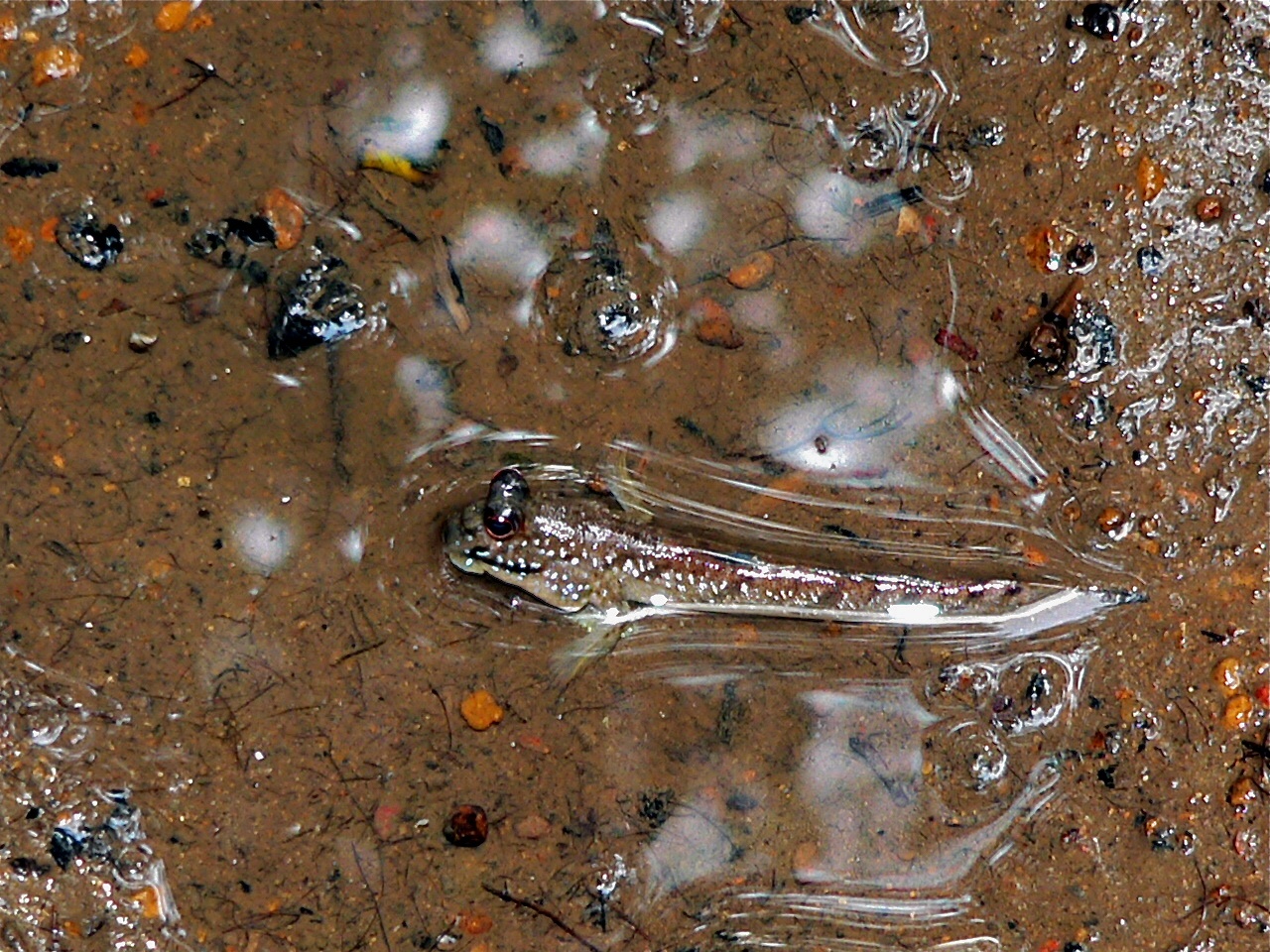
This fish belongs to the goby family and lives both in water and on land. It has an elongated body covered in smooth scales and mucus to keep moist. Dorsal eyes sit high on the head, allowing vision while submerged. Pectoral and pelvic fins act like limbs for crawling and skipping across mud. The species can reach 25 cm in length and lacks spots or shows white markings on its back.
Where it lives
Populations inhabit tropical Atlantic coasts of West Africa. They thrive in mangrove swamps, river estuaries, and brackish tidal flats. Specific countries include Angola, Cameroon, Ghana, and the Democratic Republic of the Congo. Distribution depends on food access and shelter availability. These fish tolerate varied salinity and temperatures, often hiding in burrows during high tide.
How it lives
Active during the day, they hunt using an ambush strategy. On land, they carry water in their mouths to suction prey, a method called hydrodynamic tongue feeding. Diet includes worms, beetles, and small crabs. They are territorial, building mud walls to protect resources. When threatened, they jump into water or skip away. They breathe via skin and stored water in gill chambers.
Breeding and life cycle
Females mature at 10.2 cm and males at 10.8 cm. Spawning occurs year-round but peaks between February and May. Males dig burrows up to 1.5 metres deep for mating. Females lay thousands of eggs on burrow walls, which males guard. Flooding the burrow triggers hatching. Larvae drift for 30 to 50 days before settling in mud.
Fish and people
Indigenous communities harvest them for food and bait. The aquarium trade also values them as ornamental pets. They serve as bio-indicators for pollution because their bodies absorb contaminants like ammonia. Fishing pressure has caused local population declines. Their ability to survive in toxic environments makes them useful for ecological monitoring.
Status and threats
The International Union for Conservation of Nature lists them as Least Concern. Despite this, overfishing affects certain areas. They tolerate industrial waste, including cyanide and ammonia, by secreting toxins through gills. Habitat loss and pollution remain potential threats, but their adaptability helps maintain stable numbers across their range.



Questions people ask about Atlantic mudskipper
How does the Atlantic mudskipper breathe on land?
It stores water in its gill chambers to keep gills wet. It also breathes through its skin via cutaneous respiration. A mucus layer helps retain moisture, allowing survival out of water for extended periods.
What do Atlantic mudskippers eat?
They are carnivorous and eat worms, crickets, beetles, and small crustaceans. On land, they use water in their mouths to suction prey. In water, they use standard suction feeding techniques to catch food.
Where are Atlantic mudskippers found?
They live along the tropical Atlantic coasts of West Africa. Common habitats include mangrove swamps, mudflats, and brackish estuaries in countries like Ghana, Cameroon, and Angola.
Good reading and sources
- Atlantic mudskipper on WikipediaEncyclopedia
- More photos on Wikimedia CommonsPhotos
- Wikidata recordOpen data
The facts on this page come from the Wikipedia article "Atlantic mudskipper", written by its contributors and used under the CC BY-SA 4.0 licence, and from its Wikidata record (CC0). EveryFish rewrote the text in its own words, with AI assistance, and compares every page with the article to make sure no passage is copied. It may be reused under the same CC BY-SA 4.0 licence with a link back.
It may contain mistakes, and figures change over time. Nothing here is investment or buying advice. If something is wrong, tell us. Last refreshed 2026-11-15.
Like Atlantic mudskipper
All other fish WorldNorthern whiting
A widespread marine fish found in the Indo-Pacific, known for its silvery body and ability to bury itself in sand.Other · Coasts and shelves · 1775
 WorldSpotted scat
A spotted, square-bodied fish from Indo-Pacific estuaries.Other · Rivers and lakes · 1766
 🇺🇸 United States and 2 moreGar
Ancient armored fish with lung-like swim bladders found in North American waters.Ancient · Rivers and lakes · 1758
 WorldJarbua terapon
A striped Indo-Pacific fish found in seas and rivers.Other · Rivers and lakes · 1775
