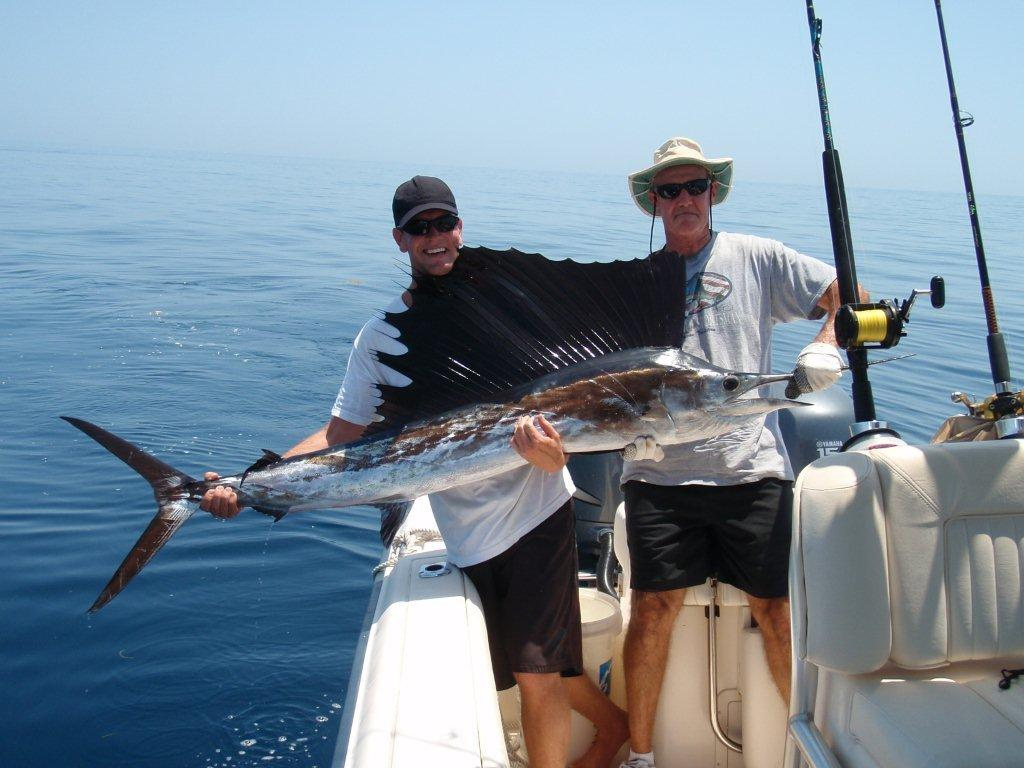
Atlantic sailfish
Fast pelagic fish with a large dorsal fin and long bill
The Atlantic sailfish is a marine predator found in the Atlantic Ocean and Caribbean Sea. It features a distinctive sail-like dorsal fin and a long bill used for hunting. This species inhabits tropical and temperate waters, reaching depths of 200 metres.
- Reaches lengths of up to 3.15 metres
- Hunts using its long bill to slash prey
- Found in Atlantic and Caribbean waters
- Maximum recorded weight is 58.1 kg
- Recent studies cap speed at 36 km/h
What it is
The Atlantic sailfish is a metallic blue marine fish belonging to the family Istiophoridae. It possesses a large, sail-like dorsal fin and a long, pointed snout resembling a bill. The upper body is dark bluish-black, fading to lighter sides with roughly twenty horizontal blue bars. The belly is silvery white. Its tail fin is deeply forked, and the front dorsal fin shows small black spots. Adults can reach lengths of 3.15 metres and weigh up to 58.1 kilograms.
Where it lives
This species inhabits tropical and temperate waters across the Atlantic Ocean and the Caribbean Sea. It avoids large central areas of the North and South Atlantic. The range extends from 40 degrees north to 40 degrees south in the west, and 50 degrees north to 32 degrees south in the east. It also enters the Mediterranean Sea. As a pelagic fish, it lives in open water from the surface down to depths of approximately 200 metres.
How it lives
Atlantic sailfish are migratory predators that hunt schooling fish such as sardines, anchovies and mackerel. They also consume crustaceans and cephalopods. Hunting involves stealth and quick slashing or tapping with the rostrum to immobilize prey. The function of the bill is debated, with suggestions ranging from hydrodynamic improvement to predator defence, but its use in hunting is well documented. Early tests suggested speeds of 111 km/h, but recent studies indicate maximum speeds near 36 km/h.
Fish and people
The Atlantic sailfish is a popular target for sport fishing due to its speed and size. Its distinctive appearance and fighting ability make it a prized catch for anglers in the Atlantic and Caribbean regions. The species is not typically farmed or used for commercial food production on a large scale.
Questions people ask about Atlantic sailfish
How fast can an Atlantic sailfish swim?
Early estimates suggested speeds up to 111 km/h, but these are now considered exaggerated. More conservative and recent studies indicate that Atlantic sailfish likely do not exceed swimming speeds of 36 to 55 km/h.
What does the Atlantic sailfish eat?
It primarily hunts schooling fish like sardines, anchovies and mackerel. It also feeds on crustaceans and cephalopods, using its bill to slash and immobilize prey before capture.
Where is the Atlantic sailfish found?
It lives in tropical and temperate waters of the Atlantic Ocean and Caribbean Sea. Its range extends into the Mediterranean Sea, avoiding central Atlantic areas, from surface waters down to 200 metres depth.
Good reading and sources
- Atlantic sailfish on WikipediaEncyclopedia
- More photos on Wikimedia CommonsPhotos
- Wikidata recordOpen data
The facts on this page come from the Wikipedia article "Atlantic sailfish", written by its contributors and used under the CC BY-SA 4.0 licence, and from its Wikidata record (CC0). EveryFish rewrote the text in its own words, with AI assistance, and compares every page with the article to make sure no passage is copied. It may be reused under the same CC BY-SA 4.0 licence with a link back.
It may contain mistakes, and figures change over time. Nothing here is investment or buying advice. If something is wrong, tell us. Last refreshed 2026-11-15.
Like Atlantic sailfish
All other fish WorldIndo-Pacific sailfish
Fast ocean predator with a large dorsal finOther · Coasts and shelves
 WorldSwordfish
Large migratory fish with a long flat bill, sole member of its family.Other · Coasts and shelves
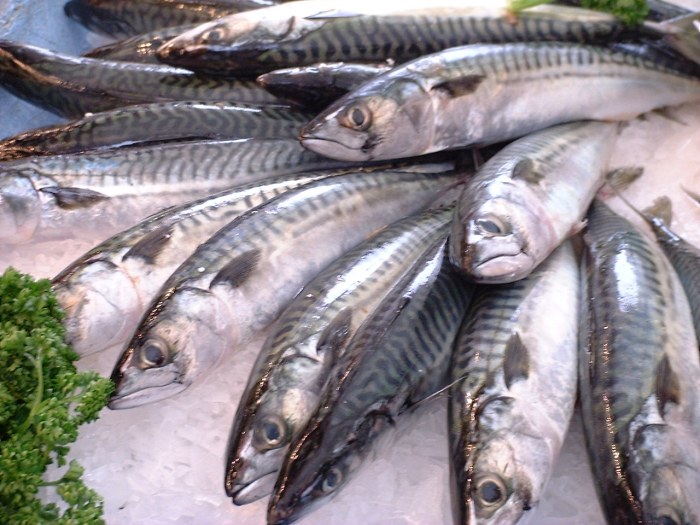 WorldMackerel
A group of pelagic fish known for their speed, stripes, and role in global fisheries.Tuna · Open ocean
 WorldBlack marlin
Largest marlin species in tropical Indo-Pacific watersOther · Coasts and shelves · 1832
More from Istiophoridae
All of them WorldStriped marlin
Fast pelagic predator with blue stripesOther · Open ocean
 WorldShortbill spearfish
A small marlin with a short bill found in tropical oceans.Other · Open ocean
 WorldIndo-Pacific blue marlin
Large tropical billfish of the Pacific and Indian OceansOther · Coasts and shelves
 🇧🇸 BahamasAtlantic blue marlin
Large Atlantic billfish prized by sport anglers.Other · Open ocean