
American shad
An anadromous fish of the Atlantic coast known for its delicate flesh and cultural festivals.
The American shad is a clupeid fish found in North Atlantic rivers and coastal waters. It migrates upstream to spawn, has been introduced to the Pacific, and holds significant culinary and political traditions along the East Coast.
- Adults weigh between three and eight pounds.
- Eggs hatch in six to fifteen days depending on temperature.
- Can detect sound frequencies above fifty kilohertz.
- Introduced to the Columbia River system in California.
- Hosts annual festivals in Virginia, Connecticut, and New Jersey.
What it is
This fish belongs to the herring family and lives in the western Atlantic Ocean. Adults typically weigh between three and eight pounds. The meat is noted for being delicate and mild enough that it often needs no extra seasoning. Cooks may fry fillets in butter or bake the whole fish. A splash of vinegar is sometimes added after cooking. Females carrying roe are especially prized for their eggs. The body shape is streamlined for swimming in open water and moving against strong river currents.
Where it lives
Native populations stretch along the eastern seaboard from Newfoundland down to Florida. They have also been introduced to the west coast, including the Columbia River system in the Pacific. In Russia, they appear occasionally on the Kamchatka Peninsula. At sea, they inhabit coastal shelves and can dive to depths of one hundred twenty metres during winter months. They prefer water temperatures between fifty-five and sixty-four degrees Fahrenheit when active near the surface.
How it lives
These fish spend most of their adult years in the ocean before returning to rivers to reproduce. Northern groups may spawn multiple times over several years, while southern ones often die after a single breeding event. They feed mainly on plankton and tiny crustaceans while at sea. During migration, they may still eat, responding to water clarity and temperature changes. Predators include striped bass and harbor seals. Their hearing extends into ultrasonic frequencies above fifty kilohertz, which is unusual for fish.
Breeding and life cycle
Mature fish enter rivers in spring when water reaches fifty to fifty-five degrees Celsius. They choose shallow areas with sand or gravel bottoms to lay eggs between evening and midnight. A female produces batches of thirty thousand eggs, with larger individuals releasing up to one hundred fifty-six thousand. The eggs are semi-buoyant and roll along the riverbed. Hatching takes six to fifteen days depending on water warmth. Young fry stay in fresh water until autumn before migrating back to the sea.
Fish and people
Historically called the fish that fed early American leaders, this species remains a valued food source. Communities host annual festivals like the Shad Planking in Virginia and events in Connecticut and New Jersey. William Penn once negotiated for fishing rights based on the fish's quality for smoking or pickling. In Quebec, locals call it salmon for the poor due to its accessibility. Commercial and recreational fishing continue, though pollution and dams have reduced numbers in many historic rivers.
Status and threats
Populations declined significantly by the early twentieth century due to dam construction blocking spawning routes and industrial pollution. Some rivers now see zero harvest because fish cannot reach upstream grounds. Conservation programs aim to restore fish passages and manage stocks through federal and state agencies. While recreational catch has minimal impact, commercial overfishing remains a concern. Introduced populations in the Pacific have not shown harmful effects on native ecosystems.


Questions people ask about American shad
What does the American shad eat?
They primarily consume plankton and small shrimp while in the ocean. During migration, they may also eat fish eggs and occasionally small fish, though these are minor parts of their diet.
Where do American shad live?
They are native to the North Atlantic coast from Newfoundland to Florida. They have also been introduced to the Pacific Northwest, including the Columbia River, and appear occasionally off Russia's Kamchatka Peninsula.
How big do American shad get?
Adults typically weigh between 1.5 and 3.5 kilograms, which is roughly three to eight pounds. They swim in coastal waters and migrate far upstream into rivers to spawn.
Why is the American shad culturally important?
It was historically vital to early American settlements and remains central to regional festivals. Events like the Shad Planking in Virginia celebrate its culinary value and historical significance in local politics and community life.
Good reading and sources
- American shad on WikipediaEncyclopedia
- More photos on Wikimedia CommonsPhotos
- Wikidata recordOpen data
The facts on this page come from the Wikipedia article "American shad", written by its contributors and used under the CC BY-SA 4.0 licence, and from its Wikidata record (CC0). EveryFish rewrote the text in its own words, with AI assistance, and compares every page with the article to make sure no passage is copied. It may be reused under the same CC BY-SA 4.0 licence with a link back.
It may contain mistakes, and figures change over time. Nothing here is investment or buying advice. If something is wrong, tell us. Last refreshed 2026-11-15.
Like American shad
All herrings and sardines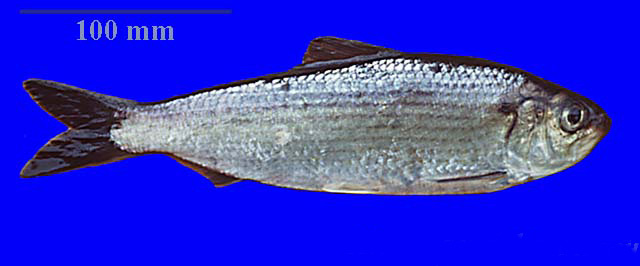 🇺🇸 United States and 1 moreAlewife
A small North American herring that migrates between sea and rivers.Herring · Coasts and shelves
 🇺🇸 United StatesAtlantic menhaden
A silvery herring species found along the North American Atlantic coast.Herring · Coasts and shelves
 🇨🇦 Canada and 1 moreAtlantic herring
Abundant schooling fish of the North AtlanticHerring · Coasts and shelves
 🇹🇷 Turkey and 4 moreAnchovy
Small, oily forage fish found in oceans and some rivers worldwide.Herring · Coasts and shelves
More from Clupeidae
All of them 🇺🇸 United States and 2 moreAmerican gizzard shad
A silvery freshwater forage fish with a muscular gizzard.Herring · Rivers and lakes
 WorldSpotted sardinella
A small herring with golden spots found in the Indo-Pacific.Herring · Coasts and shelves
 🇺🇸 United States and 3 moreMenhaden
Small silver forage fish that filter plankton and support marine food webs.Herring · Coasts and shelves
 🇲🇦 Morocco and 2 moreEuropean pilchard
Small schooling fish of the Atlantic and Mediterranean.Herring · Coasts and shelves