🇵🇪 Fish of Peru
27 fish from Peru, best known first.
Peru's fishing sector is a global leader in fishmeal production and artisanal catches, anchored by the Peruvian anchoveta. The industry has evolved from ancient practices to a major economic driver, despite historical collapses caused by overfishing and El Niño events.
- Peru produces nearly half of the global fishmeal supply.
- The Nazca Ridge Marine Protected Area covers 62,392 square kilometers.
- Artisanal fishers provide eighty percent of fish consumed domestically.
- Peru supplies fifty percent of the world's mahi-mahi catch.
- The 1972 crisis was triggered by overfishing and an El Niño event.
Fish of Peru
Fishing in Peru spans thousands of years, evolving from Inca-era communities to a modern economic powerhouse. Post-World War II development focused on the fishmeal industry, making Peru the world's largest single-species fishery by the 1960s. Although the sector collapsed in the 1970s due to overfishing and climate events, it recovered through state management and later privatization. Today, it remains a critical source of employment and export revenue, contributing significantly to the national economy through both marine and inland resources.
Notable species
The Peruvian anchoveta dominates commercial landings, accounting for most marine catch. Artisanal fishers target jumbo flying squid and mahi-mahi (dolphinfish), with Peru supplying half the global dolphinfish catch. Inland waters yield diverse species caught for subsistence, particularly in the Amazon basin and Lake Titicaca. These species support both international exports and local food security, forming the biological basis of the country's extensive fisheries.
Seas and rivers
Marine operations occur within the Mar de Grau, Peru's exclusive economic zone extending two hundred nautical miles offshore. This area includes eight marine protected zones and managed areas, with the Nazca Ridge National Reserve added in 2021 to cover roughly seven percent of the zone. Inland fishing takes place in the Amazon rainforest rivers, swamps, and the Sierra region, including Lake Titicaca. These distinct environments support different fishing methods and species profiles across the country.
Fishing and farming
The industry comprises artisanal and commercial segments. Artisanal fishers, operating small vessels near the coast, provide eighty percent of domestic consumption and employ tens of thousands. They harvest squid and mahi-mahi using various gears. Commercial fishing focuses on industrial processing, primarily for fishmeal and oil. Despite fluctuations from El Niño events, the sector maintains high output levels, with millions of tonnes landed annually and significant processing infrastructure supporting global trade.
Fish in culture
Fishing traditions date back to pre-Columbian times, with organized communities developing under the Inca Empire. Modern practice blends ancient subsistence methods with industrial scale. Artisanal fishing serves as a vital social safety net, reducing poverty and providing steady employment for coastal and inland populations. Trade unions and associations organize workers, reflecting the deep integration of fishing into the social fabric and daily livelihoods of Peruvian communities.
Today
Current production exceeds five million tonnes annually, with fishmeal exports reaching billions of dollars. The sector employs hundreds of thousands directly and supports many more indirectly. Conservation efforts have expanded protected marine areas, though debates continue regarding allowed fishing depths within reserves. The industry balances high-volume industrial output with sustainable management goals, adapting to climate challenges while maintaining its position as a top global producer of fishmeal and fish oil.
The facts in this overview come from the Wikipedia article "Fishing industry in Peru", written by its contributors and used under the CC BY-SA 4.0 licence. EveryFish rewrote the text in its own words, with AI assistance, and compares every page with the article to make sure no passage is copied. It may be reused under the same CC BY-SA 4.0 licence with a link back.
 🇧🇷 Brazil and 4 moreAmazon sailfin catfish
A large freshwater armored catfish from South America, often kept in aquariums and known as an invasive pest elsewhere.Catfish · Rivers and lakes
 🇧🇷 Brazil and 4 moreRedtail catfish
A large South American catfish known for its red tail and popularity in the aquarium trade.Catfish · Rivers and lakes
 🇧🇷 Brazil and 4 moreTiger shovelnose catfish
Large striped South American river catfishCatfish · Rivers and lakes · 1862
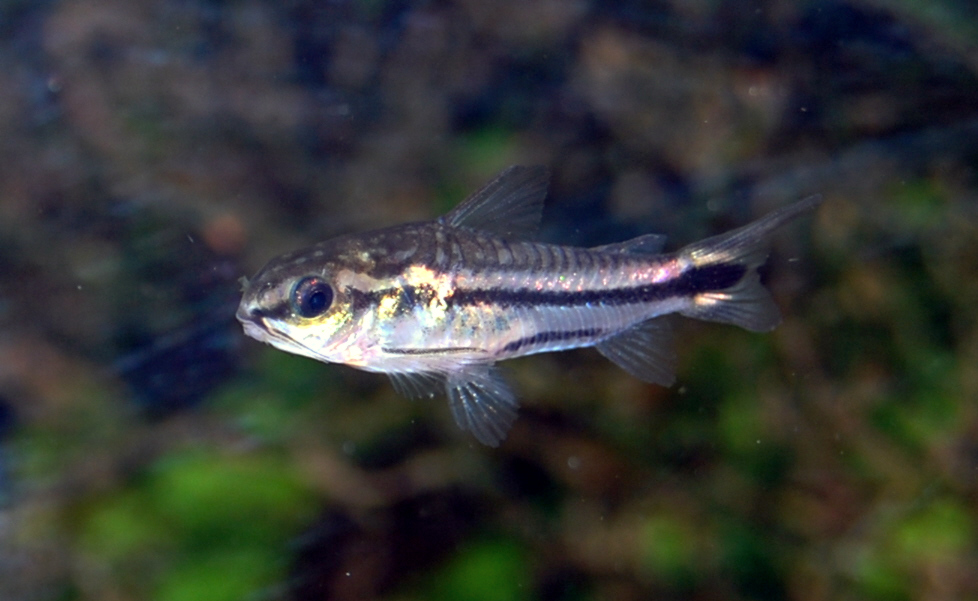 🇧🇷 Brazil and 2 morePygmy corydoras
A tiny armored catfish from South America kept in community aquariums.Catfish · Rivers and lakes · 1966
 🇵🇪 Peru and 1 morePanda corydoras
Small armoured catfish with distinctive black eye patchesCatfish · Rivers and lakes · 1971
Photo credits on this page
The small pictures above come from Wikimedia Commons under free licences. Some are cropped to fit.
- Redtail catfish: George Chernilevsky, CC BY-SA 4.0, source
- Amazon sailfin catfish: Richwales at en.wikipedia, Public domain, source
- Tiger shovelnose catfish: Lerdsuwa, CC BY-SA 3.0, source
- Pygmy corydoras: Birger A, CC BY-SA 3.0, source
- Panda corydoras: Chronotopian, CC BY-SA 3.0, source