
Variable platyfish
Small livebearing fish from Mexico popular in home aquariums
The variable platyfish is a small freshwater species native to northeastern Mexico. It thrives in cool water and breeds readily, making it a staple in the global aquarium trade. Its adaptability has led to established populations outside its natural range.
- Grows to a maximum length of 7.0 cm
- Tolerates cool water between 16 and 24 °C
- Native to northeastern Mexico Atlantic slope
- Used extensively in genetic research studies
- Invasive in Hong Kong and parts of the US
What it is
This small fish belongs to the Poeciliidae family and reaches a maximum length of seven centimetres. Wild specimens display an olive body with black marbling or spots near the tail base. Males often show dark blotches on their dorsal fin. A key identifying feature is the absence of a claw on the fifth anal fin ray, unlike some relatives. The fourth pectoral ray has distinct saw-like notches. Males possess a pointed anal fin called a gonopodium for reproduction, while females have a triangular shape. They typically carry two rows of jaw teeth and twenty to twenty-four lateral scales.
Where it lives
Native to the Atlantic slope of Mexico, this species ranges from southern Tamaulipas to northern Veracruz. It is considered uncommon in these wild habitats. Human activity has spread it globally through the aquarium trade. Established non-native populations exist in Florida canals and Montana springs within the United States. It has also naturalised in Colombia, Singapore, and Hong Kong. In Hong Kong, its rapid breeding has negatively affected local native species. It prefers slow-moving waters such as vegetated ditches, canals, and warm springs.
How it lives
The variable platyfish is omnivorous, consuming both plant matter and small animals. Its diet includes tiny crustaceans, insects, and annelid worms found in its environment. It inhabits shallow, slow-flowing waters where vegetation provides cover. This adaptability allows it to survive in various conditions, including cooler temperatures than many tropical fish prefer. It does not form large schools but is often found in groups in suitable habitats. Predators are not explicitly detailed in the available records, though its small size makes it vulnerable to larger aquatic animals.
Breeding and life cycle
As a livebearer, the female gives birth to free-swimming young rather than laying eggs. This reproductive strategy contributes to its prolific breeding rate in both wild and captive settings. The male uses a modified anal fin, the gonopodium, to transfer sperm directly to the female. This efficient method ensures high survival rates for offspring in stable environments. Their ability to reproduce quickly has facilitated their spread as an invasive species in regions outside Mexico. In aquariums, they breed easily without special intervention.
Fish and people
Aquarists value this fish for its variable colour patterns and hardiness. It tolerates water temperatures between sixteen and twenty-four degrees Celsius, making it suitable for unheated tanks. Commercial breeders produce many colour variants for the hobby. Beyond decoration, scientists use the species for genetic research due to its biological traits. While popular in captivity, its release into the wild has caused ecological issues in places like Hong Kong, where it outcompetes native fauna. It remains a common entry-level fish for beginners.

Questions people ask about Variable platyfish
What temperature does the variable platyfish need?
It thrives in cooler water than many tropical fish, comfortably living between sixteen and twenty-four degrees Celsius. This makes it suitable for room-temperature aquariums without heaters.
Is the variable platyfish a livebearer?
Yes, it is a livebearing species. Females give birth to fully formed young instead of laying eggs, which contributes to its rapid population growth in suitable environments.
Where is the variable platyfish originally from?
It is endemic to the Atlantic slope of Mexico, specifically ranging from southern Tamaulipas south to northern Veracruz. It is considered uncommon in its native wild range.
Why is it considered invasive in some areas?
Released from aquariums, it establishes wild populations quickly due to prolific breeding. In places like Hong Kong, it negatively impacts native species by outcompeting them for resources.
Good reading and sources
- Variable platyfish on WikipediaEncyclopedia
- More photos on Wikimedia CommonsPhotos
- Wikidata recordOpen data
The facts on this page come from the Wikipedia article "Variable platyfish", written by its contributors and used under the CC BY-SA 4.0 licence, and from its Wikidata record (CC0). EveryFish rewrote the text in its own words, with AI assistance, and compares every page with the article to make sure no passage is copied. It may be reused under the same CC BY-SA 4.0 licence with a link back.
It may contain mistakes, and figures change over time. Nothing here is investment or buying advice. If something is wrong, tell us. Last refreshed 2026-11-15.
Like Variable platyfish
All killifish and livebearers WorldKillifish
Small egg-laying fish known for hardiness and short lifespansLivebearer · Rivers and lakes
 🇺🇸 United StatesLeast killifish
A tiny North American fish that gives birth to live young and measures just two centimetres long.Livebearer · Rivers and lakes
🇲🇽 Mexico and 3 moreXiphophorus
A genus of small livebearing fish native to Mexico and Central America, known for aquarium use and genetic research.Livebearer · Rivers and lakes
 🇲🇽 Mexico and 1 moreSouthern platyfish
Small live-bearing freshwater fish from Central AmericaLivebearer · Rivers and lakes
More from Poeciliidae
All of them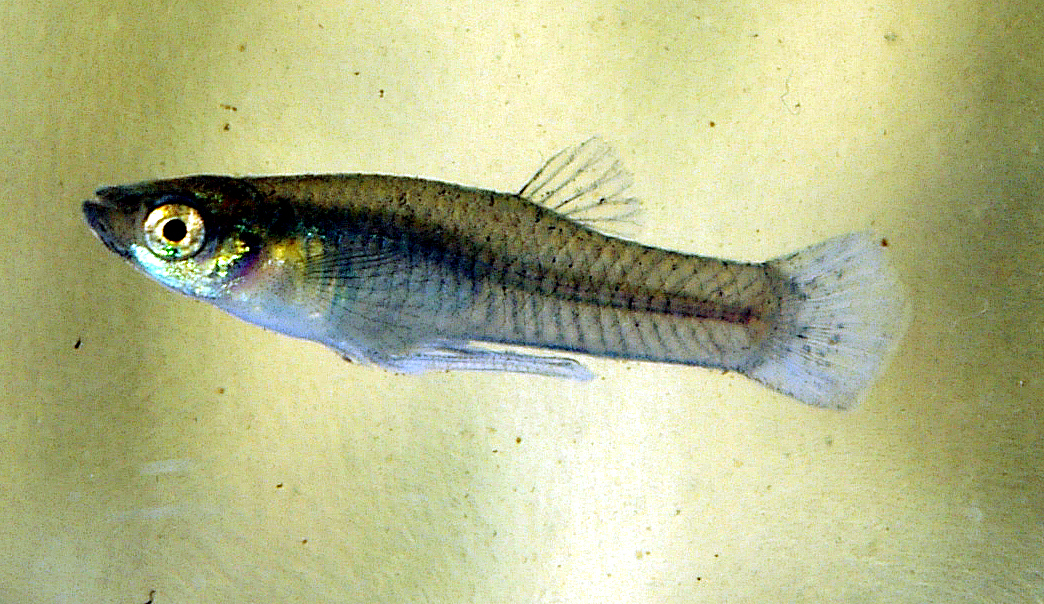 🇺🇸 United States and 4 moreMosquitofish
Small North American fish introduced globally for mosquito control.Livebearer · Rivers and lakes
 🇲🇽 Mexico and 2 moreMexican molly
Small livebearing fish from Mexico and Central America.Livebearer · Rivers and lakes
 🇺🇸 United States and 1 moreSailfin molly
Small livebearing fish with a large dorsal fin in males.Livebearer · Rivers and lakes · 1821
 🇲🇽 Mexico and 1 moreGreen swordtail
A hardy live-bearing fish popular in home aquariums.Livebearer · Rivers and lakes · 1848