
Mexican molly
Small livebearing fish from Mexico and Central America.
The Mexican molly is a small freshwater and brackish water fish native to Mexico, Guatemala, and Honduras. It is widely kept in home aquariums and has been crossbred to create ornamental varieties like the black molly.
- Grows to a maximum of 10 cm in total length.
- Females give birth to up to 150 live young per brood.
- Native to freshwater and brackish habitats in Mexico.
- Diet includes algae, detritus, and insect larvae.
- Used in breeding ornamental varieties like the black molly.
What it is
The Mexican molly is a small poeciliid fish belonging to the shortfin molly clade. Adults reach a maximum total length of 10 cm, though they are often smaller. The species shows sexual dimorphism, with females growing about 1 cm larger than males. Males display more intense colouration but stop growing once their gonopodium, a modified anal fin used for reproduction, fully develops. This distinguishes them from sailfin mollies, which possess longer dorsal fins.
Where it lives
Native populations occur on both the Atlantic and Pacific slopes of Mexico and northern Central America. On the Atlantic side, the range extends from the Palma Sola River to the Coatzacoalcos and Grijalva river basins. On the Pacific slope, it spans from the Río Verde basin in Oaxaca to western Honduras and northern Guatemala. The fish has also been introduced to the United States and Puerto Rico through aquarium releases, where it may be naturalized in states like Montana and Nevada.
How it lives
This species inhabits shallow waters no deeper than one metre, including creeks, ponds, and roadside ditches. It tolerates a wide temperature range and various water conditions, from clear to muddy. The diet is highly adaptable, consisting mainly of algae, diatoms, and detritus, though individuals also consume insect larvae and crustaceans. Females can exploit a wider variety of prey due to their larger size. In shared habitats, this fish often occupies upstream areas while related species stay downstream.
Breeding and life cycle
As a livebearer, the female gives birth to free-swimming young after a gestation period of one month. A single brood can contain up to 150 fry. Reproduction occurs throughout much of the year, with young captured between January and August. Adults gather near river banks, while fry remain in very shallow water. Males do not perform courtship displays but instead force copulation. They have shorter lifespans than females, being more prone to stress and predation due to their bright colours and smaller size.
Fish and people
The Mexican molly is a staple in the global ornamental fish trade. It is frequently crossbred with other molly species to produce fancy varieties, including the popular black molly. While its commercial value in wild fisheries is low, it is consumed in artisanal catches in parts of Oaxaca. Its ability to adapt to different thermal conditions makes it suitable for aquaculture. Many records of introduced populations abroad may actually refer to closely related species within the same complex.


Questions people ask about Mexican molly
How big does the Mexican molly grow?
The species reaches a maximum total length of 10 cm, although most individuals are smaller. Females typically grow about 1 cm larger than males, who cease growing after reaching sexual maturity.
What do Mexican mollies eat in the wild?
They are highly adaptable feeders. Their diet primarily consists of algae, diatoms, and detritus. They also browse on filamentous algae, filter phytoplankton, and prey on insect larvae and small crustaceans.
Is the black molly a pure species?
No, the black molly is a breeding form often created by crossing Poecilia sphenops with other species like the sailfin molly. Its exact pedigree varies, and it is not a distinct natural species.
Where is the Mexican molly naturally found?
It is native to Mexico, Guatemala, and Honduras. It lives in both Atlantic and Pacific slope drainages, inhabiting shallow freshwater and brackish environments such as creeks, ponds, and lagoons.
Good reading and sources
- Poecilia sphenops on WikipediaEncyclopedia
- More photos on Wikimedia CommonsPhotos
- Wikidata recordOpen data
The facts on this page come from the Wikipedia article "Poecilia sphenops", written by its contributors and used under the CC BY-SA 4.0 licence, and from its Wikidata record (CC0). EveryFish rewrote the text in its own words, with AI assistance, and compares every page with the article to make sure no passage is copied. It may be reused under the same CC BY-SA 4.0 licence with a link back.
It may contain mistakes, and figures change over time. Nothing here is investment or buying advice. If something is wrong, tell us. Last refreshed 2026-11-15.
Like Mexican molly
All killifish and livebearers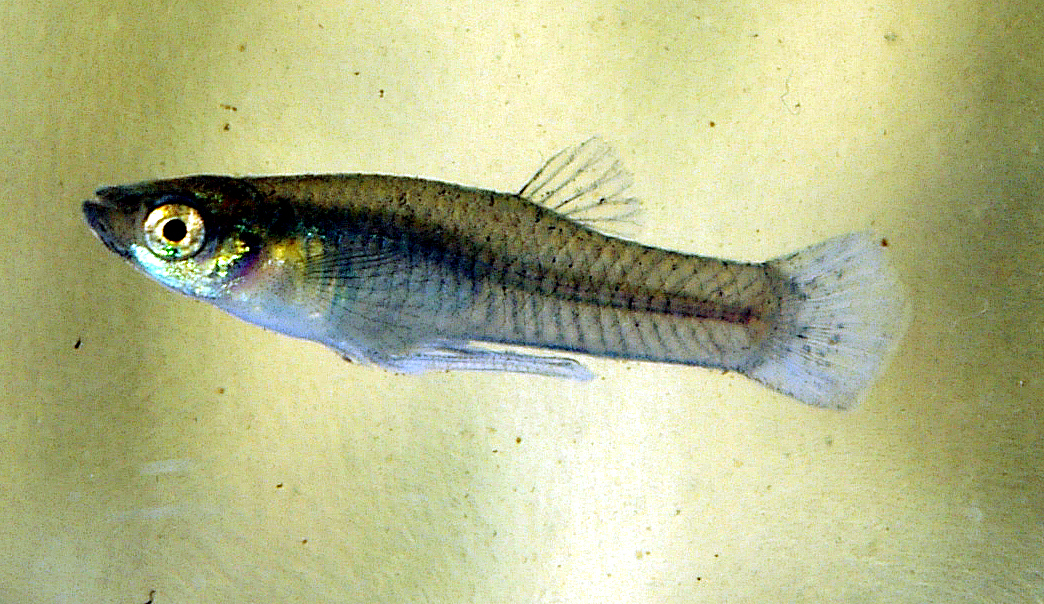 🇺🇸 United States and 4 moreMosquitofish
Small North American fish introduced globally for mosquito control.Livebearer · Rivers and lakes
 🇺🇸 United States and 1 moreSailfin molly
Small livebearing fish with a large dorsal fin in males.Livebearer · Rivers and lakes · 1821
 🇺🇸 United StatesLeast killifish
A tiny North American fish that gives birth to live young and measures just two centimetres long.Livebearer · Rivers and lakes
 🇲🇽 Mexico and 3 moreXiphophorus
A genus of small livebearing fish native to Mexico and Central America, known for aquarium use and genetic research.Livebearer · Rivers and lakes
More from Poeciliidae
All of them 🇲🇽 Mexico and 1 moreSouthern platyfish
Small live-bearing freshwater fish from Central AmericaLivebearer · Rivers and lakes
🇲🇽 MexicoVariable platyfish
Small livebearing fish from Mexico popular in home aquariumsLivebearer · Rivers and lakes
 🇲🇽 Mexico and 1 moreGreen swordtail
A hardy live-bearing fish popular in home aquariums.Livebearer · Rivers and lakes · 1848
 🇺🇸 United StatesEastern mosquitofish
A small livebearing fish native to the eastern US, now invasive in many regions.Livebearer · Rivers and lakes · 1859