
Undulate ray
A threatened skate with wavy brown markings found in the East Atlantic.
The undulate ray is a cartilaginous fish inhabiting sandy bottoms in the Mediterranean and East Atlantic. It faces endangerment from overfishing due to slow growth and late maturity, leading to strict catch bans in European waters.
- Grows up to 100 cm in length
- Lays leathery egg cases known as mermaid purses
- Illegal to keep in EU waters since 2009
- Reaches sexual maturity at eight or nine years
- Prefers sandy and muddy seabeds
What it is
This skate has a flat, disc-shaped body that is triangular at the front and rounder at the rear. Its upper surface displays light brown to grey tones with dark wavy bands and small white spots. The underside is creamy-white. Spines protect the skin, arranged differently in males and females. Two dorsal fins sit near the end of a tail that matches the body in length.
Where it lives
Its distribution is patchy across the northeastern Atlantic, stretching from southern Ireland and England down to Senegal. It also lives in the western Mediterranean. While generally uncommon, it can be locally abundant near northwest Ireland, the eastern English Channel, and southern Portugal. It prefers sandy, muddy, or detrital seabeds between 50 and 200 metres deep.
How it lives
Little is known about its daily behaviour. It feeds on small fish, crustaceans, molluscs, and other bottom-dwelling creatures. Growth markers in vertebrae suggest a maximum lifespan of roughly two decades. As a benthic predator, it hunts along the sea floor, using its ventral mouth to capture prey hidden in the sediment.
Breeding and life cycle
Females lay eggs from March to September, producing around thirty per year. The eggs are encased in leathery black capsules with horny corners, often called mermaid purses. These cases measure up to 90 mm long. Sexual maturity arrives late, at eight years for males and nine for females. Reproductive activity peaks in winter.
Fish and people
Commercial fisheries catch this ray using trawls, gillnets, and lines, either intentionally or as bycatch. It adapts reasonably well to captivity and appears in public aquariums. Due to stock declines, keeping undulate rays caught in EU waters has been illegal since 2009. Fishers must return them unharmed if possible to aid population recovery.
Status and threats
The species is classified as endangered. Overfishing poses a severe threat because the ray matures late and reproduces slowly. Populations have dropped sharply in the north Atlantic, with no recent records in the English Channel. Conservation measures now mandate the release of any accidentally caught individuals to prevent further depletion.


Questions people ask about Undulate ray
Is it legal to keep undulate rays?
No. Since 2009, it has been illegal to retain undulate rays caught in European Union waters. Fishers must return them to the sea unharmed if possible to help protect declining stocks.
What do undulate rays eat?
They feed on small fish, crustaceans, molluscs, and other macrobenthos found on the sea floor. Their ventral mouth allows them to hunt effectively in sandy and muddy habitats.
How big do they get?
An adult undulate ray typically weighs about 4.5 kg but can reach up to 10 kg. In terms of length, they can grow to a maximum of 100 cm, including their tail.
Good reading and sources
The facts on this page come from the Wikipedia article "Undulate ray", written by its contributors and used under the CC BY-SA 4.0 licence, and from its Wikidata record (CC0). EveryFish rewrote the text in its own words, with AI assistance, and compares every page with the article to make sure no passage is copied. It may be reused under the same CC BY-SA 4.0 licence with a link back.
It may contain mistakes, and figures change over time. Nothing here is investment or buying advice. If something is wrong, tell us. Last refreshed 2026-11-15.
Like Undulate ray
All rays and skates WorldSpotted eagle ray
Tropical ray with white spots and a long tail.Ray · Coasts and shelves · 1790
 WorldGiant oceanic manta ray
The world's largest ray, a massive filter-feeding predator of tropical oceans.Ray · Coasts and shelves · 1827
 WorldDevil fish
A large Mediterranean ray with a spiny tail and horn-like flaps.Ray · Coasts and shelves
 EuropeBlonde ray
A short-tailed skate found in the Eastern Atlantic and Mediterranean.Ray · Coasts and shelves
More from Rajidae
All of them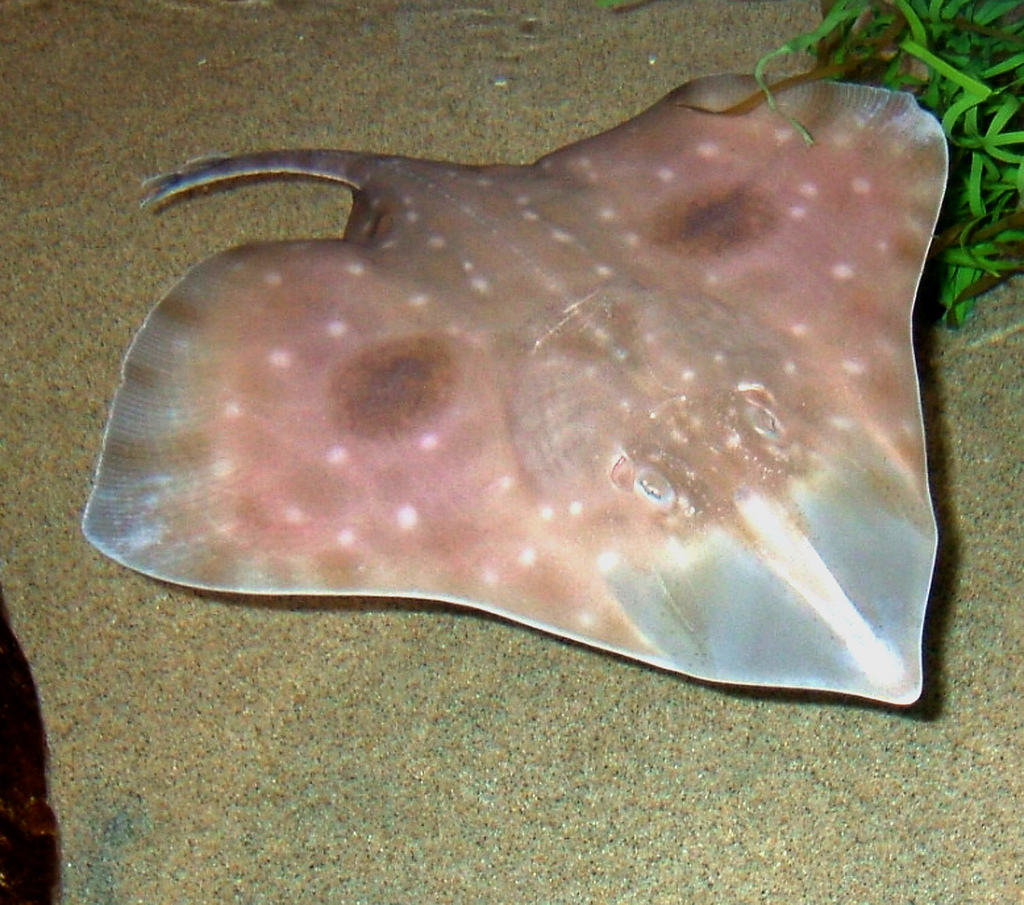 WorldSkate
Cartilaginous fish with flat bodies and egg cases, found on sea floors worldwide.Shark · Coasts and shelves
 🇨🇦 CanadaLittle skate
Small Atlantic skate known for walking on the sea floor.Ray · Coasts and shelves
 🇨🇦 CanadaWinter skate
Endangered North Atlantic skate with eye-like spotsRay · Coasts and shelves
 EuropeThornback ray
A spiny-skinned ray found in European coastal waters.Ray · Coasts and shelves · 1758