
Twospined angelfish
Small Indo-Pacific reef fish with purple-blue body and orange bars.
This marine angelfish lives in coral reefs across the Indo-Pacific. It grows to ten centimetres and displays a dark blue body with orange markings. Aquarists value it for its hardy nature and striking appearance.
- Reaches a maximum length of 10 centimetres
- Lives in coral reefs at depths of 5 to 50 metres
- Dominant female changes sex if male is lost
- Found from East Africa to French Polynesia
- Popular in the marine aquarium trade
What it is
The twospined angelfish is a small marine species belonging to the Pomacanthidae family. Its body shows a deep purplish-blue hue crossed by uneven vertical stripes of orange. Bright blue edges line the dorsal, tail and anal fins. The dorsal fin holds fourteen spines plus seventeen or eighteen soft rays. Three spines support the anal fin along with up to nineteen soft rays. Adults reach no more than ten centimetres in total length.
Where it lives
This fish inhabits the Indo-Pacific region. Its distribution stretches from the Tanzanian and South African coasts eastward to the Tuamotu Islands. Northern limits include the Izu Islands near Japan while southern bounds reach Lord Howe Island. In Australia it occurs at Rowley Shoals Scott Reef Ashmore Reef and along the eastern seaboard from Queensland to New South Wales. Offshore populations exist at Norfolk Island Elizabeth Reef and Middleton Reef.
How it lives
Individuals dwell in lagoons rubble zones and near drop-offs at depths between five and fifty metres. They form small social units comprising one male and several females. Diet consists mainly of algae and organic debris found on the reef. These groups maintain a strict hierarchy where the largest female assumes the male role if the current male is lost. This biological mechanism ensures reproductive continuity within the group.
Breeding and life cycle
The species exhibits protogynous hermaphroditism. All individuals start life as females. Within a social group the most dominant female transforms into a male when the existing male dies or vanishes. This sex change allows the group to continue breeding without needing new members from outside.
Fish and people
Aquarium enthusiasts frequently keep this angelfish due to its vibrant colours and manageable size. It is a popular choice for home tanks that simulate reef environments. The trade relies on wild collection from its native range. Its primary value lies in ornamental display rather than sustenance.
Status and threats
No specific threats such as overfishing or habitat loss are detailed. The International Union for Conservation of Nature has not assigned a status in the given text. Population trends remain unspecified.
Questions people ask about Twospined angelfish
How large does the twospined angelfish grow?
Adults reach a maximum total length of ten centimetres. This small size makes them suitable for smaller reef aquarium setups compared to larger angelfish species.
What do twospined angelfish eat in the wild?
They feed primarily on algae and detritus. This diet helps keep reef surfaces clean and is easy to replicate in captivity with vegetable-based foods.
Can this fish change its sex?
Yes it is a protogynous hermaphrodite. If the single male in a group dies the largest female will change sex to become the new male.
Good reading and sources
- Twospined angelfish on WikipediaEncyclopedia
- More photos on Wikimedia CommonsPhotos
- Wikidata recordOpen data
The facts on this page come from the Wikipedia article "Twospined angelfish", written by its contributors and used under the CC BY-SA 4.0 licence, and from its Wikidata record (CC0). EveryFish rewrote the text in its own words, with AI assistance, and compares every page with the article to make sure no passage is copied. It may be reused under the same CC BY-SA 4.0 licence with a link back.
It may contain mistakes, and figures change over time. Nothing here is investment or buying advice. If something is wrong, tell us. Last refreshed 2026-11-15.
Like Twospined angelfish
All reef fish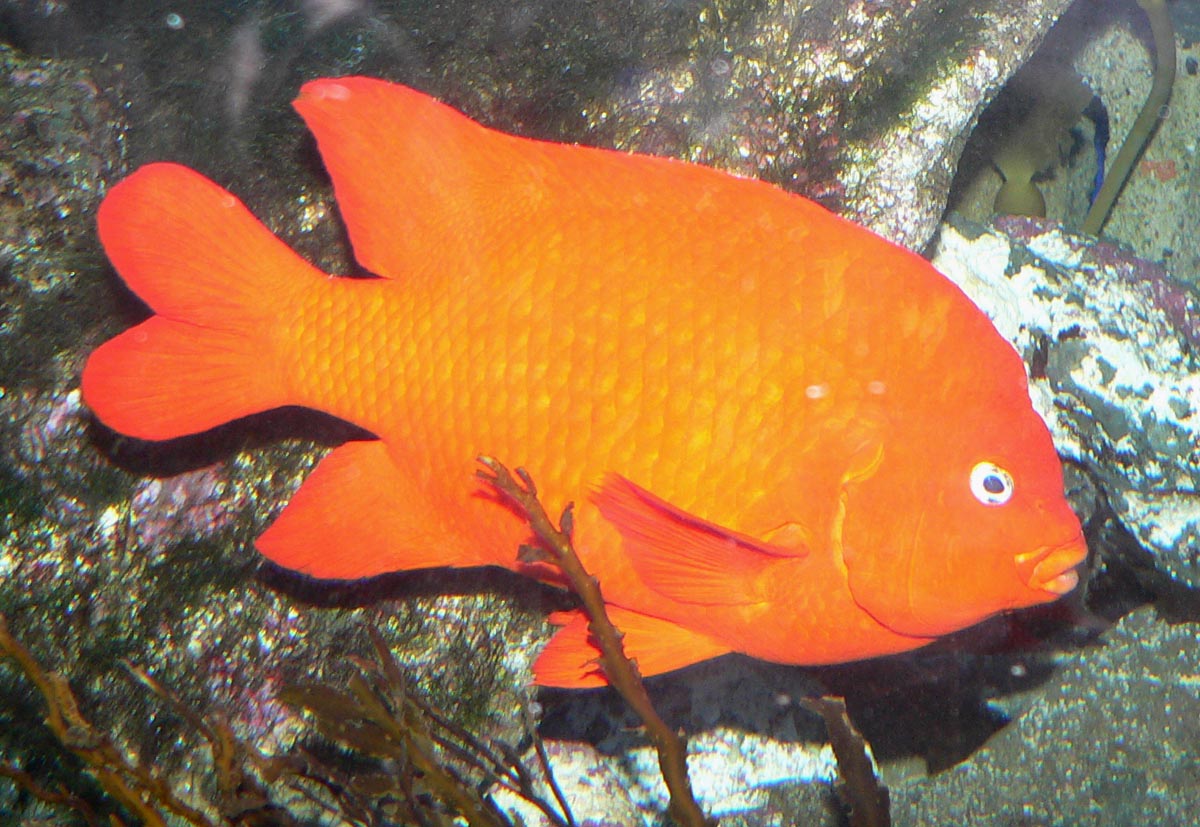 🇺🇸 United StatesGaribaldi
Bright orange damselfish and official marine state fish of California.Reef fish · Coasts and shelves · 1860
 WorldSix-line wrasse
Small violet reef fish with six orange stripesReef fish · Coasts and shelves · 1857
 OceaniaPink skunk clownfish
Small reef fish with a white dorsal stripe and algae diet.Reef fish · Coral reefs · 1855
 WorldYellow longnose butterflyfish
A bright yellow reef fish with a long snout.Reef fish · Coral reefs · 1898
More from Pomacanthidae
All of them 🇧🇷 Brazil and 1 moreFrench angelfish
A slow-growing Caribbean reef fish known for its sponge diet.Reef fish · Coasts and shelves · 1799
 WorldEmperor angelfish
A striking reef fish with bold blue and yellow stripes.Reef fish · Coral reefs · 1787
 WorldRoyal angelfish
A striped marine angelfish from Indo-Pacific reefs.Reef fish · Coral reefs · 1772
 WorldQueen angelfish
A colourful reef fish with a blue crown spot.Reef fish · Coasts and shelves · 1758