
Queen angelfish
A colourful reef fish with a blue crown spot.
The queen angelfish is a marine species found in western Atlantic coral reefs. It features bright blue and yellow scales and a distinctive forehead spot. This benthic feeder eats sponges and lives in small harems. The International Union for Conservation of Nature lists it as least concern due to stable wild populations.
- Distinctive blue crown spot on forehead
- Adults eat mostly sponges on coral reefs
- Juveniles work as cleaner fish for others
- Spawning occurs near the full moon
- Listed as least concern by IUCN
What it is
This marine angelfish has a flat, oval body and a triangular tail. Its scales are blue-green with yellow tips, while the fins are bright yellow or orange. A cobalt blue spot on the forehead acts as a crown. This mark separates it from similar species. Adults grow up to 45 cm long. Juveniles display dark blue bodies with vertical stripes. They change colour as they mature into adults.
Where it lives
These fish inhabit tropical and subtropical waters of the western Atlantic. Their territory stretches from Florida and the Gulf of Mexico down to Brazil. They also live around Bermuda and remote archipelagos. As bottom-dwellers, they stay near coral reefs. They prefer soft corals and can be found at depths reaching 70 metres. Occasional sightings in the Mediterranean suggest aquarium releases rather than natural spread.
How it lives
Adults feed mainly on sponges, showing strong preference for specific types. They also consume algae, jellyfish, and plankton. Young fish act as cleaners, removing parasites from larger hosts. Social groups form harems with one male and several females. The male guards the territory while females forage separately. They swim alone or in pairs within their reef home.
Breeding and life cycle
Spawning happens year-round, often timed with the full moon. Males court females by displaying their sides and flicking fins. The pair rises toward the surface to release eggs and sperm. Females release thousands of transparent eggs daily. These float in open water for about twenty hours. Larvae hatch without functional eyes but develop quickly. Young fish settle on the reef floor after three weeks.
Fish and people
Aquarium traders value this species highly, especially juveniles. Young fish adapt well to captive diets, unlike adults. Brazil exports large numbers of these ornamental fish. They are not typically caught for food. Conservation assessments consider the population stable. Introduced individuals have appeared in the Red Sea and Mediterranean. These non-native fish may carry diseases harmful to local ecosystems.


Questions people ask about Queen angelfish
How can you tell a queen angelfish apart from similar species?
Look for the cobalt blue spot on its forehead. This crown feature distinguishes it from the Bermuda blue angelfish. The two species look very similar otherwise but occupy overlapping ranges in the western Atlantic Ocean.
What do queen angelfish eat in the wild?
Adults are selective feeders that primarily consume sponges. They also eat tunicates, algae, and jellyfish. Studies show sponges make up the majority of their diet in places like Brazil and the Caribbean islands.
Are queen angelfish good for home aquariums?
They are popular in the trade but require care. Juveniles adapt better to captive food than adults. Adults need a specialized diet rich in sponges, which can be difficult to provide in a home tank setting.
Good reading and sources
- Queen angelfish on WikipediaEncyclopedia
- More photos on Wikimedia CommonsPhotos
- Wikidata recordOpen data
The facts on this page come from the Wikipedia article "Queen angelfish", written by its contributors and used under the CC BY-SA 4.0 licence, and from its Wikidata record (CC0). EveryFish rewrote the text in its own words, with AI assistance, and compares every page with the article to make sure no passage is copied. It may be reused under the same CC BY-SA 4.0 licence with a link back.
It may contain mistakes, and figures change over time. Nothing here is investment or buying advice. If something is wrong, tell us. Last refreshed 2026-11-15.
Like Queen angelfish
All reef fish WorldMoorish idol
A striking black, white and yellow reef fish found across the Indo-Pacific.Reef fish · Coral reefs · 1758
 🇮🇩 Indonesia and 2 moreRed lionfish
Venomous coral reef fish native to the Indo-Pacific and invasive in the Atlantic.Reef fish · Coral reefs · 1758
 WorldYellow boxfish
A bright yellow, cube-shaped reef fish with toxic mucus.Reef fish · Coasts and shelves · 1758
 WorldTrumpetfish
Marine fish with a long tubular snout found in tropical reefs worldwide.Reef fish · Coasts and shelves · 1766
More from Pomacanthidae
All of them WorldRoyal angelfish
A striped marine angelfish from Indo-Pacific reefs.Reef fish · Coral reefs · 1772
 WorldEmperor angelfish
A striking reef fish with bold blue and yellow stripes.Reef fish · Coral reefs · 1787
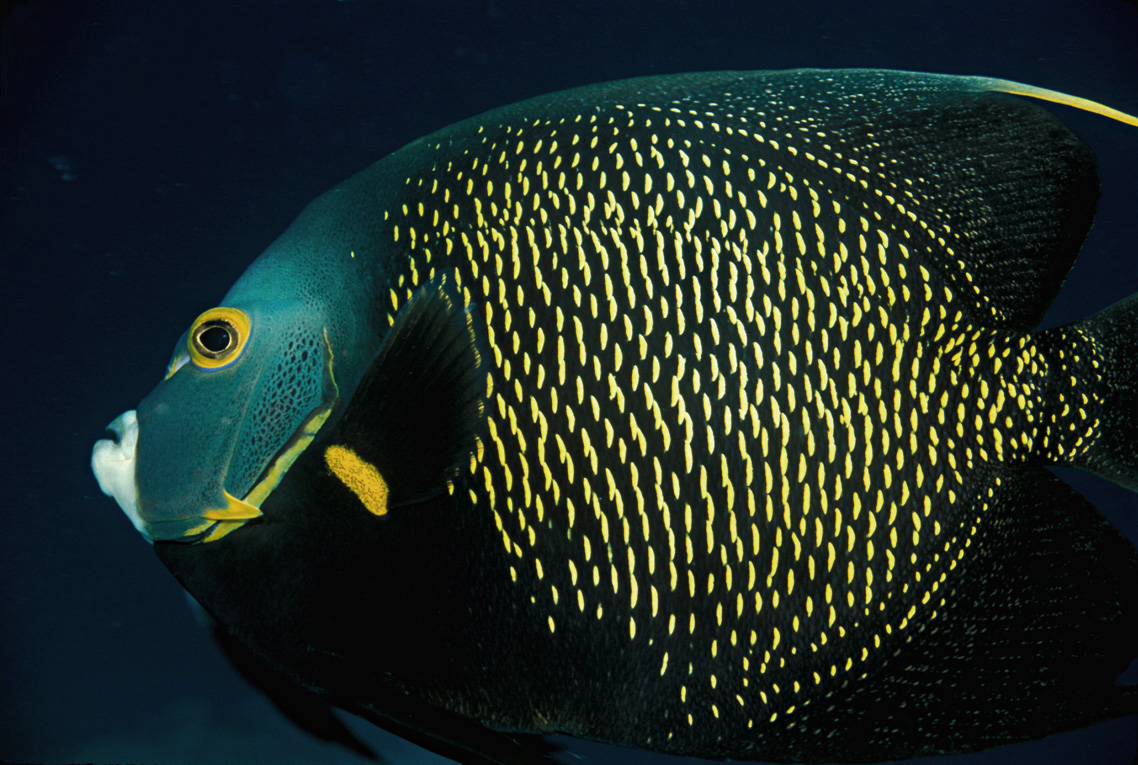 🇧🇷 Brazil and 1 moreFrench angelfish
A slow-growing Caribbean reef fish known for its sponge diet.Reef fish · Coasts and shelves · 1799
 OceaniaFlame angelfish
Bright orange-red marine angelfish from Pacific reefsReef fish · Coral reefs