
Flame angelfish
Bright orange-red marine angelfish from Pacific reefs
The flame angelfish is a small, vividly coloured marine fish native to Pacific coral reefs. It lives in clear lagoons and reef slopes, feeding on algae and crustaceans. Aquarists value it for its beauty and relative safety around corals when well fed.
- Bright orange-red with purple-blue fin bands
- Found in Marshall, Line and Cook Islands
- Spawns at dusk by releasing gametes
- Lifespan of five to seven years or more
- Considered reef safe when well fed
What it is
This marine angelfish displays bright orange-red scales with vertical black markings. Its dorsal and anal fins feature alternating purple-blue and black bands. Specimens from the Marquesas Islands lack these vertical bars. Males are typically larger and show more intense colouration than females. The species belongs to the family Pomacanthidae and inhabits tropical Pacific waters.
Where it lives
The fish lives across various reef systems in Oceania. It is most frequently seen in the Marshall, Line and Cook Islands. Populations also exist in the Hawaiian Islands, though they are less common there. These angelfish prefer the foreslope of coral reefs and clear lagoon environments where visibility is high.
How it lives
Wild individuals eat a mix of algae and small crustaceans. Juveniles primarily consume plankton before switching to adult diets as they mature. In captivity, they may graze on live rock during the day. They are generally shy when first introduced to a tank but gain confidence within a week. Well-fed specimens rarely damage corals.
Breeding and life cycle
These fish form harems in the wild. In large aquariums, keepers can maintain pairs or trios with only one male. Spawning occurs at dusk when the fish rise into the water column. They release eggs and sperm simultaneously as pelagic gametes. Captive breeding has succeeded at facilities like Atoll Farm Aquaculture in Thailand, though raising larvae remains difficult.
Fish and people
Aquarists prize this species for its striking appearance. It is often considered safe for reef tanks if provided with adequate nutrition. Diets in captivity include brine shrimp, mysis shrimp, spirulina and seaweed sheets. Underfed individuals may pick at coral or clam mantles. Most deaths in older captive specimens occur without clear cause.


Questions people ask about Flame angelfish
Is the flame angelfish safe for reef tanks?
Yes, it is generally considered reef safe. Individual fish may pick at corals if underfed, but a proper diet of meaty foods and algae usually prevents damage to soft or stony corals.
What does the flame angelfish eat?
In the wild, it consumes algae and crustaceans. Juveniles eat plankton. In aquariums, they accept brine shrimp, mysis shrimp, spirulina, seaweed sheets and pellets.
How do flame angelfish reproduce?
They are broadcast spawners that release eggs and sperm into the water column at dusk. They form harems in the wild and can be kept in groups with one male in large tanks.
Good reading and sources
- Flame angelfish on WikipediaEncyclopedia
- More photos on Wikimedia CommonsPhotos
- Wikidata recordOpen data
The facts on this page come from the Wikipedia article "Flame angelfish", written by its contributors and used under the CC BY-SA 4.0 licence, and from its Wikidata record (CC0). EveryFish rewrote the text in its own words, with AI assistance, and compares every page with the article to make sure no passage is copied. It may be reused under the same CC BY-SA 4.0 licence with a link back.
It may contain mistakes, and figures change over time. Nothing here is investment or buying advice. If something is wrong, tell us. Last refreshed 2026-11-15.
Like Flame angelfish
All reef fish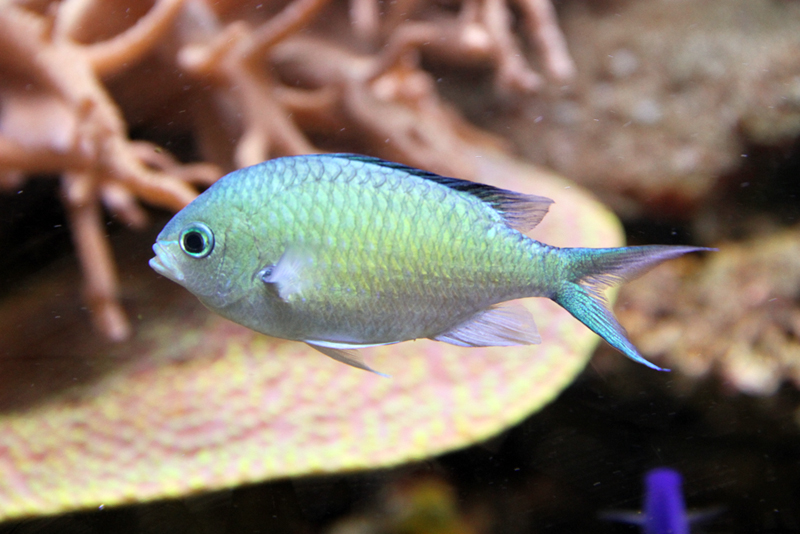 WorldGreen chromis
Small iridescent reef damselfish found across the Indo-Pacific.Reef fish · Coral reefs
 WorldRegal blue tang
Bright blue reef fish with a yellow tail and black markings.Reef fish · Coral reefs
 East AsiaTomato clownfish
A bright orange-red marine fish from the Western Pacific.Reef fish · Coasts and shelves
 WorldBluespotted cornetfish
Long, slender reef fish with a tubular snout and blue spots.Reef fish · Coasts and shelves
More from Pomacanthidae
All of them WorldQueen angelfish
A colourful reef fish with a blue crown spot.Reef fish · Coasts and shelves · 1758
 WorldRoyal angelfish
A striped marine angelfish from Indo-Pacific reefs.Reef fish · Coral reefs · 1772
 WorldEmperor angelfish
A striking reef fish with bold blue and yellow stripes.Reef fish · Coral reefs · 1787
 🇧🇷 Brazil and 1 moreFrench angelfish
A slow-growing Caribbean reef fish known for its sponge diet.Reef fish · Coasts and shelves · 1799