
Swell shark
A catshark that inflates its body for defence
The swell shark is a small catshark found in the eastern Pacific Ocean. It defends itself by swallowing water to double its size. This nocturnal hunter rests in rocky crevices and glows under blue light.
- Inflates body by swallowing water to deter predators
- Emits a dog-like bark when releasing stored air
- Displays species-specific biofluorescent patterns
- Nocturnal hunter found in eastern Pacific rocky reefs
- Lays egg cases attached to kelp with long tendrils
What it is
This catshark has a broad, flat head and large gold eyes with protective lids. Its skin is yellow-brown with dark and white spots that cover the belly but not the fins. Young sharks appear lighter than adults. The gills are small and tight. Adults usually reach 90 cm in length, though some grow to 110 cm. Each jaw holds about 55 to 60 teeth with three smooth cusps, where the middle one is longest.
Where it lives
These sharks live in the tropical and subtropical eastern Pacific. Their range extends from central California down to southern Mexico. A separate population exists off the coast of Chile. They inhabit depths from 5 to 457 metres but are most common between 5 and 37 metres. They prefer algae-covered rocky bottoms where they can hide in crevices during daylight hours.
How it lives
Swell sharks are nocturnal hunters that sleep in rock crevices by day. They are sociable and often rest on top of one another. At night, they hunt bony fish, molluscs, and crustaceans using an ambush strategy. They detect prey via electrical fields emitted by animals up to 20 cm away. They may suck prey into their mouths or wait motionless with jaws open. They sometimes scavenge in lobster traps.
Breeding and life cycle
Fertilization happens internally, and females lay two flattened eggs at a time. The egg cases are green or amber and attach to kelp or reef structures using tendrils. Embryos feed on yolk alone for nine to twelve months before hatching. Pups emerge with enlarged skin denticles to help break the case. Newborns are about 15 cm long and fully independent. No parental care follows egg deposition.
Fish and people
Fisheries do not target this species, but it is caught as bycatch in traps and nets. Humans rarely eat them because the meat quality is poor. They are popular in public aquariums due to their hardiness and longevity in captivity. Researchers study their unique biofluorescence, which was first reported in 2014. This glow may help with communication or camouflage among their own kind.
Status and threats
The International Union for Conservation of Nature lists this shark as Least Concern. No dedicated fishing operations target them. Threats include accidental capture in lobster and crab traps, gillnets, and trawls. Their ability to thrive in captivity suggests resilience, though wild populations face incidental mortality from commercial fishing gear.


Questions people ask about Swell shark
How does the swell shark defend itself?
When threatened, it bends into a U-shape, bites its tail, and swallows water or air. This inflates its body to double its normal size, making it difficult for predators to bite or dislodge it from crevices.
Is the swell shark dangerous to humans?
No, swell sharks are non-aggressive and considered harmless to people. They are small, shy creatures that prefer to hide in rocky crevices during the day and only come out at night to hunt small prey.
Why do swell sharks glow in the dark?
They exhibit biofluorescence, emitting light when exposed to blue wavelengths. Scientists believe this glow helps with communication between other swell sharks and may assist in camouflage against the dim background of the deep sea.
Good reading and sources
The facts on this page come from the Wikipedia article "Swell shark", written by its contributors and used under the CC BY-SA 4.0 licence, and from its Wikidata record (CC0). EveryFish rewrote the text in its own words, with AI assistance, and compares every page with the article to make sure no passage is copied. It may be reused under the same CC BY-SA 4.0 licence with a link back.
It may contain mistakes, and figures change over time. Nothing here is investment or buying advice. If something is wrong, tell us. Last refreshed 2026-11-15.
Like Swell shark
All sharks 🇦🇺 Australia and 2 moreTasselled wobbegong
A camouflaged carpet shark with a fringed head.Shark · Coasts and shelves · 1867
 WorldGoblin shark
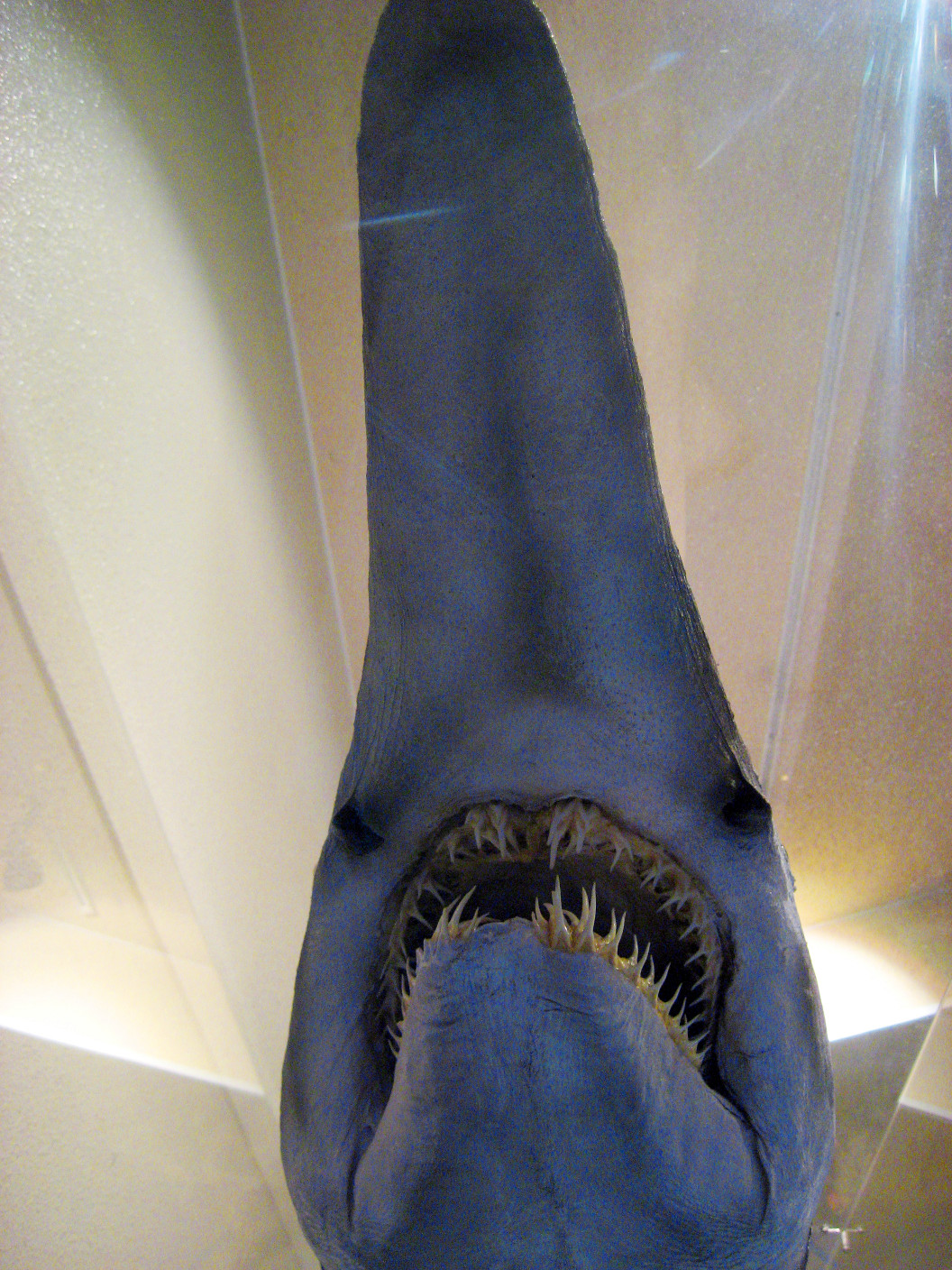
Rare deep-sea shark with protrusible jaws and pink skinShark · Open ocean · 1898
 WorldGalapagos shark
Large requiem shark of tropical oceanic islandsShark · Coasts and shelves · 1905
 🇺🇸 United States and 1 moreLeopard shark
A coastal Pacific houndshark with black saddle markings and spots.Shark · Coasts and shelves · 1854
