
Shortfin mako shark
Fastest known shark species, reaching speeds of 74 km/h.
The shortfin mako is a large, fast-swimming pelagic shark found in temperate and tropical seas worldwide. It is the fastest known shark, capable of bursts up to 74 km/h, and is classified as Endangered due to fishing pressures and slow reproduction rates.
- Fastest shark, reaching bursts of 74 km/h
- Can travel over 2,700 km in migration
- Females mature at 18 years, males at 8
- Recorded bite force of roughly 13,000 newtons
- Classified as Endangered by the IUCN
What it is
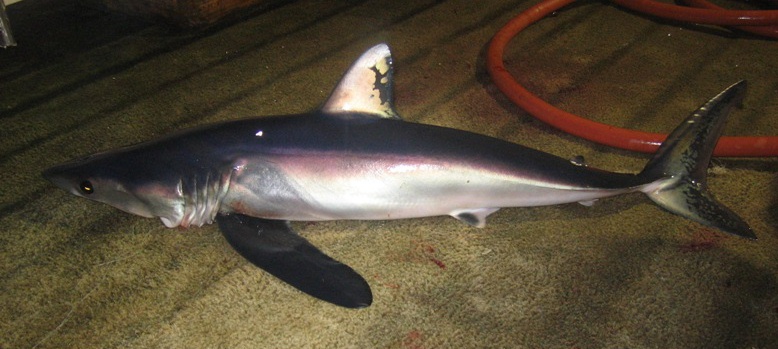
The shortfin mako is a large, fusiform shark with a pointed snout and metallic blue dorsal colouring. Its ventral side is white, with a sharp line separating the two tones. It has blunt triangular fins and a powerful tail with a single lateral keel. Adults typically measure between 2.5 and 3.2 metres, though females grow larger than males. The species is distinguished from the longfin mako by its smaller pectoral fins and lighter mouth area.
Where it lives
This cosmopolitan species inhabits offshore temperate and tropical waters globally. It ranges from the surface to depths of 150 metres, preferring temperatures above 16 degrees Celsius. In the western Atlantic, it occurs from Argentina to Nova Scotia. It is common in New Zealand waters and travels long distances, with recorded migrations of over 2,700 kilometres across the Pacific Ocean.
How it lives
Shortfin makos are active predators that feed on bony fish, squid, and marine mammals. They hunt by lunging vertically from below, using their speed to surprise prey. Their diet includes tuna, swordfish, and dolphins. They possess a heat-exchange system that keeps their body warmer than the surrounding water, aiding their high activity levels. Studies show they rely on vision and smell rather than electroreception when hunting.
Breeding and life cycle
Reproduction is ovoviviparous, with embryos feeding on unfertilised eggs inside the uterus. Gestation lasts 15 to 18 months, resulting in four to 18 live young born in late winter or early spring. Females rest for 18 months after giving birth, leading to a three-year reproductive cycle on average. Mating often involves polyandry, where a single brood is sired by multiple males.
Fish and people
Anglers prize the shortfin mako for its speed and acrobatic leaps when hooked. It is a popular target for sport fishing, particularly in California and New Zealand. Commercial fisheries also harvest the species for meat. Recent research has highlighted their intelligence and strong bite force, with recorded bites exceeding 13,000 newtons. However, overfishing remains a significant threat to populations.
Status and threats
The International Union for Conservation of Nature classifies the shortfin mako as Endangered. Previous management models underestimated their age at maturity and longevity, leading to unsustainable catch limits. Females do not reach sexual maturity until around 18 years of age, making population recovery slow. Threats include commercial fishing, bycatch, and habitat changes.


Questions people ask about Shortfin mako shark
How fast can a shortfin mako swim?
The shortfin mako is the fastest known shark species. It typically swims at speeds of 50 km/h but can reach bursts of up to 74 km/h when chasing prey or evading threats.
What do shortfin mako sharks eat?
They primarily feed on bony fish like tuna and mackerel, as well as squid. Larger individuals also hunt marine mammals such as dolphins and porpoises, and occasionally other sharks.
Why are shortfin mako sharks endangered?
They are listed as Endangered due to overfishing and bycatch. Their slow reproduction rate, with females maturing at 18 years and breeding every three years, makes it difficult for populations to recover from heavy fishing pressure.
Good reading and sources
- Shortfin mako shark on WikipediaEncyclopedia
- More photos on Wikimedia CommonsPhotos
- Wikidata recordOpen data
The facts on this page come from the Wikipedia article "Shortfin mako shark", written by its contributors and used under the CC BY-SA 4.0 licence, and from its Wikidata record (CC0). EveryFish rewrote the text in its own words, with AI assistance, and compares every page with the article to make sure no passage is copied. It may be reused under the same CC BY-SA 4.0 licence with a link back.
It may contain mistakes, and figures change over time. Nothing here is investment or buying advice. If something is wrong, tell us. Last refreshed 2026-11-15.
Like Shortfin mako shark
All sharks WorldPelagic thresher
The smallest thresher shark, found in tropical oceans and known for its whip-like tail.Shark · Open ocean · 1935
 🇿🇦 South Africa and 4 moreWhale shark
The largest living fish species, a gentle giant of tropical oceans.Shark · Open ocean · 1829
 WorldCommon thresher
The largest thresher shark, known for its whip-like tail used to stun prey in cool coastal and open waters.Shark · Coasts and shelves · 1788
 WorldPorbeagle
A fast, cold-water mackerel shark found in the Atlantic and Southern Hemisphere.Shark · Coasts and shelves · 1788
More from Lamnidae
All of them WorldGreat white shark
A large, globally distributed predator known for its size and apex status in marine ecosystems.Shark · Coasts and shelves · 1758
 WorldLongfin mako shark
A rare, deep-water mackerel shark with long pectoral finsShark · Open ocean · 1966
 WorldSalmon shark
A warm-blooded mackerel shark of the northern PacificShark · Coasts and shelves
WorldMako shark
Fast predatory sharks of the genus Isurus, known for their speed and blue-grey colour.Shark · Open ocean