
Round sardinella
Small pelagic fish found in warm Atlantic and Mediterranean waters.
The round sardinella is a small schooling fish inhabiting tropical and subtropical waters across the Atlantic Ocean and Mediterranean Sea. It supports significant fisheries off West Africa and South America, with catches reaching nearly two million tons in the early 1980s.
- Averages 23 to 28 cm in length
- Prefers warm waters around 24 °C
- Can reach depths of 350 metres
- Spawning peaks from June to September
- Fisheries catch totaled nearly 2 million tons in 1983
What it is
This ray-finned fish belongs to the genus Sardinella. It features an elongated body with a rounded belly and up to 160 fine gill rakers. Adults typically measure between 23 and 28 centimetres. Distinctive markings include frontoparietal stripes on the head, a faint golden line along the side, and a black spot on the rear edge of the gill cover. The species has eight pelvic fin rays.
Where it lives
The round sardinella inhabits tropical and subtropical zones. Its distribution covers the western and eastern Atlantic Ocean, the Mediterranean Sea, and parts of the Pacific Ocean. It occasionally enters the Black Sea. These fish prefer warm, shallow waters with temperatures near 24 degrees Celsius but can dive to depths of 350 metres.
How it lives
It is a pelagic species that forms schools. The diet consists mainly of plankton, including phytoplankton and zooplankton like copepods. This small fish shares its habitat with similar species and is often caught alongside Sardinella longiceps, which it closely resembles.
Breeding and life cycle
Reproductive organs begin developing in April and reach full maturity by May. Spawning regions become dense with eggs and larvae from late June through September. This seasonal pattern ensures young fish emerge when plankton resources are abundant.
Fish and people
Commercial fisheries operate off the West African coast, in the Mediterranean, and along the shores of Venezuela and Brazil. The species is a valuable food fish. Total catch volumes reached 1,983,000 tons in 1983, highlighting its economic importance in these regions.
Status and threats
Catch populations experienced a significant boom around 1990. In recent years, numbers have remained stable. No specific conservation status or threat data is provided in the available records.
Questions people ask about Round sardinella
Where does the round sardinella live?
It lives in tropical and subtropical waters of the Atlantic Ocean, Mediterranean Sea, and Pacific Ocean. It prefers warm shallow areas but can be found at depths up to 350 metres.
What does the round sardinella eat?
This schooling fish feeds on plankton. Its diet includes both phytoplankton and zooplankton, with copepods being a common prey item in its marine environment.
How large does this fish grow?
It is one of the larger species in its genus. Adults typically average between 23 and 28 centimetres in length, making it a small but substantial pelagic fish.
Good reading and sources
- Round sardinella on WikipediaEncyclopedia
- More photos on Wikimedia CommonsPhotos
- Wikidata recordOpen data
The facts on this page come from the Wikipedia article "Round sardinella", written by its contributors and used under the CC BY-SA 4.0 licence, and from its Wikidata record (CC0). EveryFish rewrote the text in its own words, with AI assistance, and compares every page with the article to make sure no passage is copied. It may be reused under the same CC BY-SA 4.0 licence with a link back.
It may contain mistakes, and figures change over time. Nothing here is investment or buying advice. If something is wrong, tell us. Last refreshed 2026-11-15.
Like Round sardinella
All herrings and sardines 🇵🇪 Peru and 1 morePeruvian anchoveta
Small Pacific fish vital for fishmeal and growing food useHerring · Coasts and shelves
 WorldIndian anchovy
Small schooling fish used for food and bait in the Indo-Pacific.Herring · Coasts and shelves
 🇯🇵 Japan and 2 moreJapanese anchovy
Small schooling fish of the northwest PacificHerring · Coasts and shelves
 🇲🇦 Morocco and 2 moreEuropean pilchard
Small schooling fish of the Atlantic and Mediterranean.Herring · Coasts and shelves
More from Clupeidae
All of them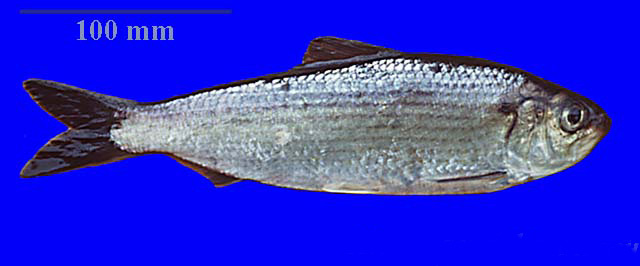 🇺🇸 United States and 1 moreAlewife
A small North American herring that migrates between sea and rivers.Herring · Coasts and shelves
 🇺🇸 United States and 3 moreMenhaden
Small silver forage fish that filter plankton and support marine food webs.Herring · Coasts and shelves
 WorldSpotted sardinella
A small herring with golden spots found in the Indo-Pacific.Herring · Coasts and shelves
 🇺🇸 United States and 2 moreAmerican gizzard shad
A silvery freshwater forage fish with a muscular gizzard.Herring · Rivers and lakes