Northern river shark
Rare requiem shark of northern Australian and Papuan rivers
The northern river shark is a rare requiem shark found in tidal rivers and coastal waters of northern Australia and Papua New Guinea. It lives in murky water with soft bottoms and faces threats from fishing and habitat loss, leading to a Vulnerable conservation status.
- Grows up to 2.5 metres in length
- Found in murky tidal rivers and coasts
- Listed as Vulnerable by the IUCN
- Females bear litters of nine young
- Named after ichthyologist Jack Garrick
What it is
This requiem shark has a stocky grey body with a high back and broad fins. Its head is wide and flattened, featuring a rounded snout and tiny eyes with protective membranes. The mouth is arched with short furrows at the corners. Upper teeth are triangular and serrated, while lower teeth are narrower. The skin is steel-grey above and white below, with a sharp colour transition that becomes jagged on the sides. Fins often have dusky or black tips. Adults can reach lengths of up to 2.5 metres.
Where it lives
Populations exist in scattered tidal rivers and coastal waters across northern Australia and Papua New Guinea. Specific locations include King Sound, the Ord River, and Doctors Creek in Western Australia, as well as the Adelaide and Alligator Rivers in the Northern Territory. In Papua New Guinea, they inhabit the Daru region and possibly the Fly River. These sharks prefer environments with poor visibility, silty or muddy bottoms, and large tidal movements.
How it lives
Young sharks move between fresh, brackish, and salt water, while adults stay in marine areas. They hunt fish using electroreception and small eyes adapted for murky conditions. Sharks may follow tides to reach feeding grounds in places like Doctors Creek. Their slender teeth suggest a diet focused on fish. This species is viviparous, meaning embryos develop inside the mother with a placental connection after yolk supplies are exhausted.
Breeding and life cycle
Females likely give birth every other year before the wet season begins, around October. Litters typically contain nine young. Newborns are less than 67 cm long. Males reach sexual maturity between 1.2 and 1.4 metres, while females mature at slightly larger sizes, between 1.4 and 1.7 metres. The reproductive cycle supports slow population growth, making the species sensitive to external pressures.
Fish and people
Commercial and recreational fishers catch this shark using longlines and gillnets, both legally and illegally. Habitat degradation also threatens its survival. Due to its rarity, with fewer than 250 mature individuals estimated, it is listed as Vulnerable by the IUCN. Australian laws protect it under environmental acts, and Kakadu National Park offers some refuge. No specific capture regulations exist in Papua New Guinea.
Status and threats
The International Union for Conservation of Nature assesses this species as Vulnerable. Threats include low natural abundance, limited distribution, and susceptibility to fishing gear. Subpopulations are small, with no more than 50 individuals in any single group. Conservation efforts rely on protected areas in Australia, but gaps remain in Papua New Guinea where legal protections are absent.
Questions people ask about Northern river shark
Where does the northern river shark live?
It inhabits tidal rivers, estuaries, and coastal bays in northern Australia and Papua New Guinea. These areas have high turbidity, soft muddy bottoms, and large tides. Young sharks enter fresh and brackish water, while adults remain in marine environments.
How big do northern river sharks get?
The maximum known length for this species is 2.5 metres, which is about 8.2 feet. They have a stocky build with a high back and broad fins. Newborns are much smaller, measuring under 67 cm at birth.
Is the northern river shark endangered?
Yes, it is assessed as Vulnerable by the IUCN. Estimates suggest fewer than 250 mature individuals exist in the wild. Threats include commercial and recreational fishing, habitat degradation, and its naturally low abundance and limited distribution.
Good reading and sources
- Northern river shark on WikipediaEncyclopedia
- More photos on Wikimedia CommonsPhotos
- Wikidata recordOpen data
The facts on this page come from the Wikipedia article "Northern river shark", written by its contributors and used under the CC BY-SA 4.0 licence, and from its Wikidata record (CC0). EveryFish rewrote the text in its own words, with AI assistance, and compares every page with the article to make sure no passage is copied. It may be reused under the same CC BY-SA 4.0 licence with a link back.
It may contain mistakes, and figures change over time. Nothing here is investment or buying advice. If something is wrong, tell us. Last refreshed 2026-11-15.
Like Northern river shark
All sharks 🇦🇺 Australia and 1 moreSpeartooth shark
Rare river shark of northern Australia and New GuineaShark · Rivers and lakes · 1839
 WorldMilk shark
A small coastal requiem shark found in tropical waters worldwide.Shark · Coasts and shelves · 1837
 WorldBull shark
A stout requiem shark that thrives in fresh and salt water.Shark · Rivers and lakes
 WorldLemon shark
A social, yellow-skinned requiem shark of shallow tropical waters.Shark · Coasts and shelves · 1868
More from Carcharhinidae
All of them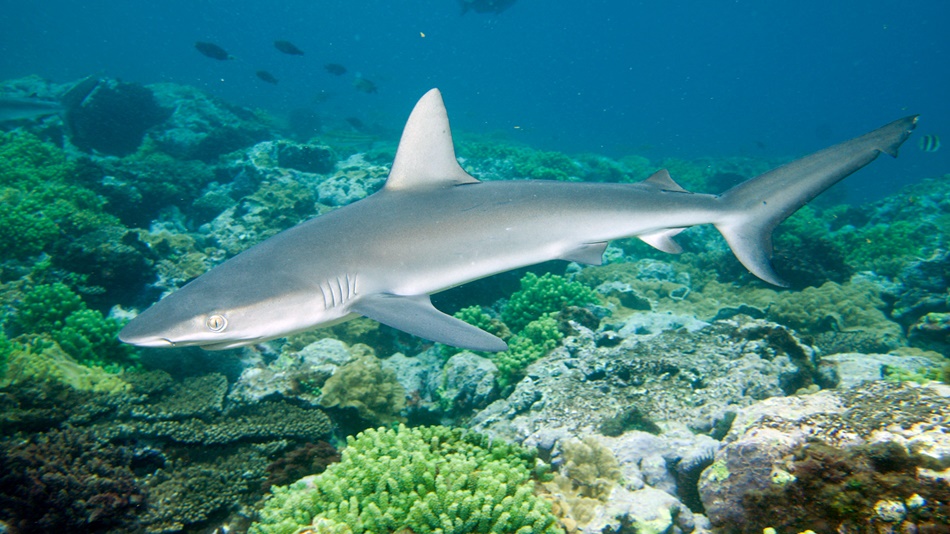 WorldGalapagos shark
Large requiem shark of tropical oceanic islandsShark · Coasts and shelves · 1905
 WorldRequiem shark
A family of migratory, live-bearing sharks found in warm seas worldwide.Shark · Coasts and shelves · 1896
 🇺🇸 United States and 4 moreCaribbean reef shark
Large requiem shark of western Atlantic coral reefsShark · Coasts and shelves · 1876
 WorldGrey reef shark
Common Indo-Pacific reef predator known for threat displaysShark · Coasts and shelves · 1856