
Princess cichlid
A cooperative schooling cichlid from Lake Tanganyika.
Neolamprologus brichardi is a small cichlid native to the alkaline waters of Lake Tanganyika in East Africa. It is valued in the aquarium trade for its social behaviour and distinctive appearance. The species is notable for its complex cooperative breeding system and large schools.
- Forms schools of up to 100,000 fish
- Uses a collective nursery for raising fry
- Endemic to Lake Tanganyika alkaline waters
- Feeds on invertebrates from rocky biocover
- Popular subject for behavioural research
What it is
The Princess cichlid is a species of cichlid found only in Lake Tanganyika. It lives in alkaline water and prefers areas with rocky rubble. This fish is popular in home aquariums due to its attractive appearance and interesting social habits. It goes by several names, including Lyretail cichlid and Fairy cichlid. The specific name honours Pierre Brichard, an exporter who worked near the lake. It is closely related to N. pulcher, which lives in the southern part of the same lake.
Where it lives
This species is endemic to Lake Tanganyika in East Africa. It inhabits the alkaline waters of this large rift valley lake. The fish is more widespread than its relative N. pulcher. It typically stays near rocky substrates where it can find food and shelter. The environment is characterised by clear, mineral-rich water. While it occupies specific rocky zones, it can form massive groups in open areas near these structures.
How it lives
The Princess cichlid feeds on small crustaceans and invertebrates found on rocky surfaces. It picks at the biocover and may eat plankton swarms when they appear. Unlike many territorial cichlids, it is non-aggressive away from its nest. It is one of the few substrate-spawning cichlids that forms schools. These groups can be enormous, with up to 100,000 individuals in a small area. This schooling behaviour helps distinguish it from more aggressive relatives.
Breeding and life cycle
This fish lays eggs on hard substrates like rocks. It shows strong defensive behaviour when protecting its nest site. The territory is small, usually just a few square metres. Uniquely, it uses a collective nursery system. Adults, sub-adults, and older fry all help raise the young. They care for offspring that are not their own. This cooperative breeding involves watching over other spawning adults as well.
Fish and people
Aquarists value this species for its beauty and social nature. It is a staple in the freshwater aquarium hobby. Scientists also study it extensively to understand fish behaviour. Its complex social structure offers insights into cooperative breeding in vertebrates. The common name Princess of Burundi reflects its elegant appearance. It is often kept in community tanks due to its relatively peaceful nature outside of breeding.
Status and threats
Some experts suggest merging this species with N. pulcher. The two are closely related and share similar traits. N. brichardi is found across a wider area of the lake. Conservation status details are not provided in the available data. The species remains common in the aquarium trade. Its population in the wild appears stable within its endemic range.
Questions people ask about Princess cichlid
Why is it called the Princess cichlid?
The name likely refers to its elegant appearance. It is also known as the Princess of Burundi. The scientific name honours Pierre Brichard, an aquarium fish exporter who worked near Lake Tanganyika in East Africa.
Is the Princess cichlid aggressive?
It is aggressive only when defending its small nesting territory. Away from the nest, it is notably non-aggressive towards its own kind. It is one of the few substrate-spawning cichlids that forms large, peaceful schools.
How does it raise its young?
It uses a collective nursery system. Adults, sub-adults, and even half-grown fry help care for the young. They protect not only their own offspring but also the fry of other pairs in the group.
What does the Princess cichlid eat?
It specializes in feeding from rocky biocover. It picks at small crustaceans and invertebrates living on the rocks. It will also consume swarms of plankton when they are available in the water column.
Good reading and sources
- Neolamprologus brichardi on WikipediaEncyclopedia
- More photos on Wikimedia CommonsPhotos
- Wikidata recordOpen data
The facts on this page come from the Wikipedia article "Neolamprologus brichardi", written by its contributors and used under the CC BY-SA 4.0 licence, and from its Wikidata record (CC0). EveryFish rewrote the text in its own words, with AI assistance, and compares every page with the article to make sure no passage is copied. It may be reused under the same CC BY-SA 4.0 licence with a link back.
It may contain mistakes, and figures change over time. Nothing here is investment or buying advice. If something is wrong, tell us. Last refreshed 2026-11-15.
Like Princess cichlid
All cichlids Sub-Saharan AfricaZebra mbuna
Small rock-dwelling cichlid from Lake MalawiCichlid · Rivers and lakes
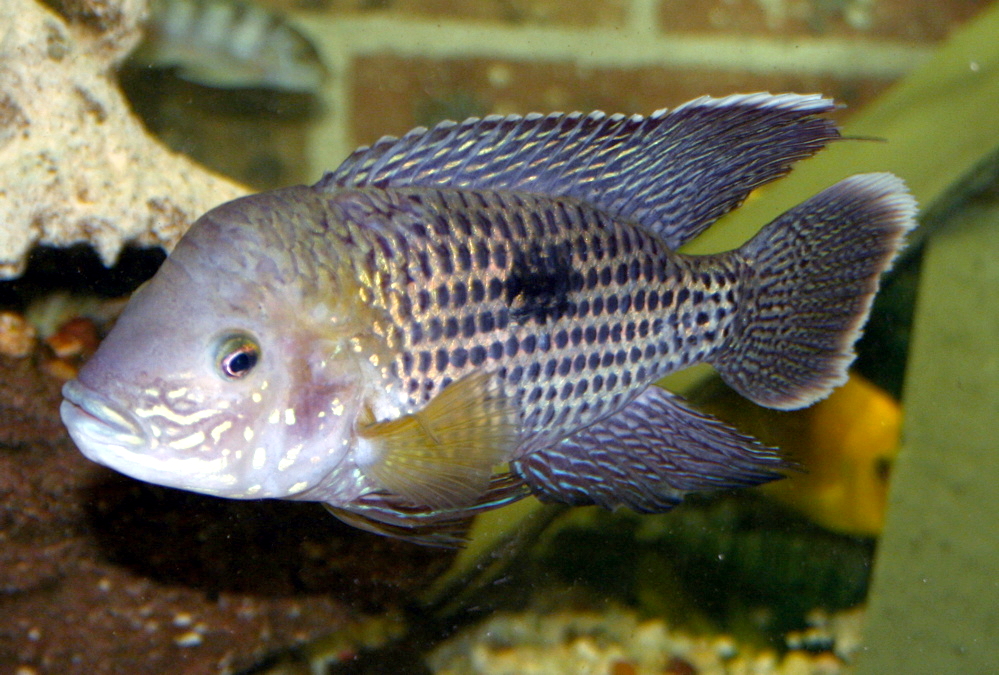 🇵🇪 Peru and 1 moreGreen terror
A large, aggressive South American cichlid kept in aquariums.Cichlid · Rivers and lakes
 🇧🇷 BrazilPterophyllum
A genus of laterally compressed freshwater cichlids known as angelfish.Cichlid · Rivers and lakes · 1824
 🇬🇹 Guatemala and 4 moreConvict cichlid
Striped Central American cichlid popular in home aquariumsCichlid · Rivers and lakes · 1867
More from Cichlidae
All of them 🇹🇿 Tanzania and 2 moreSingida tilapia
A cichlid fish native to the Lake Victoria basin in East Africa.Cichlid · Rivers and lakes
 🇭🇳 Honduras and 3 moreJaguar cichlid
Large predatory cichlid from Central American lakesCichlid · Rivers and lakes
 WorldAuratus cichlid
Small, colourful cichlid from Lake MalawiCichlid · Rivers and lakes
 🇧🇷 Brazil and 2 morePeacock bass
Large predatory cichlids from South American rivers known for sport fishing and invasive impact.Cichlid · Rivers and lakes