
Pterophyllum
A genus of laterally compressed freshwater cichlids known as angelfish.
Pterophyllum is a small group of South American cichlids prized in the aquarium trade for their distinctive triangular shape. They are ambush predators that form strong pair bonds and provide extensive care to their young.
- Body is laterally compressed with elongated triangular fins.
- Native to Amazon and Orinoco basins in South America.
- Forms monogamous pairs that guard eggs together.
- One of the most common freshwater aquarium fish.
- Ambush predators feeding on small fish and invertebrates.
What it is
This genus comprises freshwater fish distinguished by a unique body plan uncommon among cichlids. Their bodies are deeply flattened from side to side, creating a round profile with long, triangular dorsal and anal fins. This shape allows them to slip into tight spaces among submerged roots and aquatic vegetation, often positioning themselves vertically. Natural colouration typically features transverse stripes that blend with dappled light in their river habitats. The name derives from Greek words meaning 'fin' and 'leaf', reflecting their sail-like appearance. They are frequently mistaken for marine angelfish, which belong to a different order and inhabit ocean reefs.
Where it lives
These fish are native to tropical South America. Their natural distribution spans the Amazon Basin, the Orinoco Basin, and various rivers within the Guiana Shield. They inhabit freshwater environments where they utilise complex structures like root systems and plant matter for cover. The specific river systems they occupy provide the soft, acidic water conditions they require. While wild populations exist across these regions, most individuals found outside this area are captive-bred descendants.
How it lives
Adults act as ambush predators, waiting near cover to strike at small fish and large invertebrates. They form monogamous pairs that maintain long-term relationships. These bonds involve mutual protection against threats and other suitors. If one partner dies, the survivor often refuses to mate again. They are generally peaceful when not breeding but may consume very small tank mates. In the wild, they face numerous natural predators, yet their camouflage and habitat choice offer some protection.
Breeding and life cycle
Pairs select a flat surface such as a leaf, log, or rock to clean and prepare for spawning. The female lays a line of eggs, followed immediately by the male fertilising them. A single clutch can contain between 100 and over 1,200 eggs depending on the female's size. Both parents guard the eggs, fanning them with their pectoral fins to ensure oxygen flow. Fry hatch after a few days and remain attached to the substrate until absorbing their yolk sacs. After one week, they become free-swimming and require live food. Breeding frequency declines significantly after three years of age.
Fish and people
The freshwater angelfish is one of the most popular aquarium fish globally and the most kept cichlid. Captive breeding began in the United States in the late 1920s. They are valued for their striking appearance and behaviour. Aquarium hobbyists keep them in warm, soft, acidic water. Selective breeding has produced many colour varieties, though these domestic strains often differ genetically from wild types. They are sometimes kept in community tanks but require careful selection of tank mates to avoid predation or fin-nipping.
Status and threats
The genus is not listed as threatened in the provided sources. However, wild populations face pressure from habitat alteration and collection for the pet trade. In captivity, genetic diversity is limited due to decades of selective breeding, resulting in hybrids that lack the traits of pure wild species. Conservation efforts focus on maintaining healthy wild stocks rather than managing captive lines, which are prone to health issues and loss of parental instincts.


Questions people ask about Pterophyllum
What does the name Pterophyllum mean?
The name comes from Greek words meaning 'fin' and 'leaf'. This reflects the fish's sail-like dorsal and anal fins and its habit of hiding among aquatic plants and leaves in its natural river habitat.
How do Pterophyllum reproduce in the wild?
They form monogamous pairs that clean a flat surface like a leaf or log. The female lays eggs and the male fertilises them. Both parents guard the clutch, fanning it with their fins until the fry hatch and become free-swimming after about a week.
Are freshwater angelfish aggressive?
They are generally peaceful except during breeding. Pairs become territorial and will attack intruders. They may also eat very small fish that fit in their mouths. They are often recommended for single-species tanks to avoid conflict with fin-nippers.
How long do they live?
With ideal conditions and good genetics, they can live approximately 12 years in captivity. In the wild, unthreatened individuals may live up to 15 years despite facing natural predators and environmental challenges.
Good reading and sources
The facts on this page come from the Wikipedia article "Pterophyllum", written by its contributors and used under the CC BY-SA 4.0 licence, and from its Wikidata record (CC0). EveryFish rewrote the text in its own words, with AI assistance, and compares every page with the article to make sure no passage is copied. It may be reused under the same CC BY-SA 4.0 licence with a link back.
It may contain mistakes, and figures change over time. Nothing here is investment or buying advice. If something is wrong, tell us. Last refreshed 2026-11-15.
Like Pterophyllum
All cichlids 🇬🇹 Guatemala and 4 moreConvict cichlid
Striped Central American cichlid popular in home aquariumsCichlid · Rivers and lakes · 1867
 WorldHaplochromis
A large ray-finned fish genus from East Africa known for rapid evolution and aquarium popularity.Cichlid · Rivers and lakes · 1888
 🇧🇮 Burundi and 3 moreGiant cichlid
The largest living cichlid species, native to Lake Tanganyika in Africa.Cichlid · Rivers and lakes · 1899
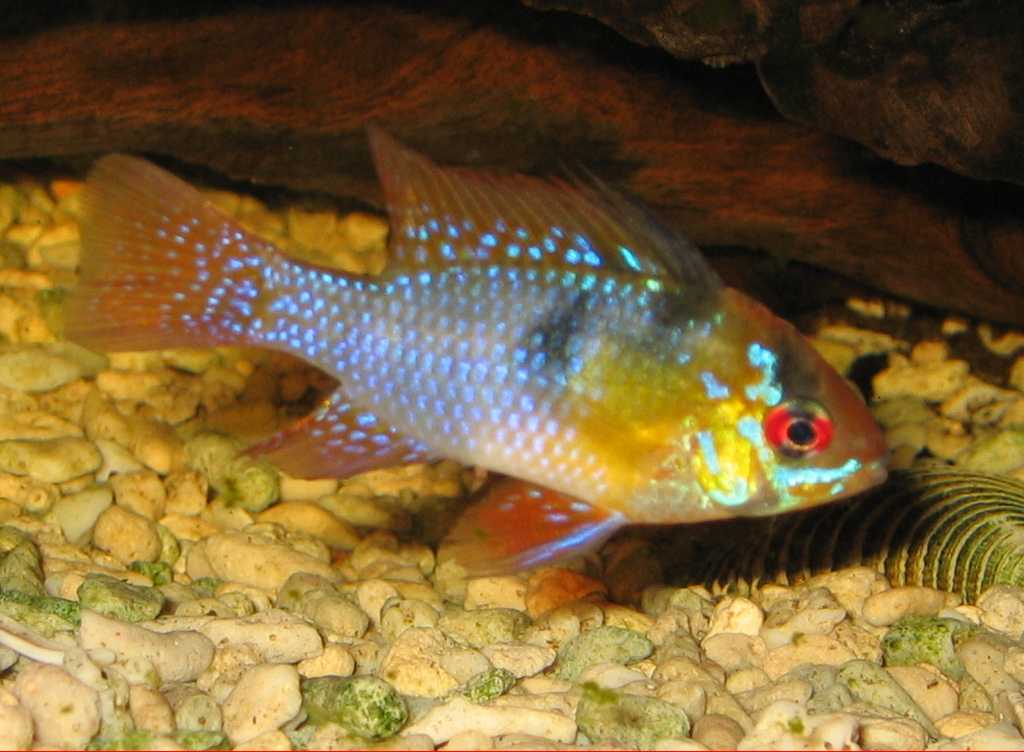 🇻🇪 Venezuela and 1 moreRam cichlid
Small colourful freshwater fish from South AmericaCichlid · Rivers and lakes · 1948
More from Cichlidae
All of them 🇧🇷 Brazil and 3 moreOscar
Large South American cichlid popular in aquariumsCichlid · Rivers and lakes · 1831
WorldCichlid
Diverse freshwater fish family known for parental care and rapid evolution.Cichlid · Rivers and lakes · 1835
 WorldUaru
A large South American cichlid from clear Amazon streams.Cichlid · Rivers and lakes · 1840
 🇧🇷 BrazilDiscus
Round, colourful cichlids from the Amazon basin.Cichlid · Rivers and lakes · 1840