
Cichlid
Diverse freshwater fish family known for parental care and rapid evolution.
Cichlids are a large family of percomorph fish with at least 1,760 described species. They inhabit fresh and brackish waters in Africa, the Americas, and parts of Asia. Many species are important food sources, game fish, or popular aquarium pets. They exhibit diverse body shapes and complex parental behaviors.
- Over 1,760 species scientifically described
- Practices parental care like mouthbrooding
- Ranges from 2.5 cm to 1 m in length
- Important food source and aquarium pet
- Rapid evolution in African Great Lakes
What it is
Cichlids are a diverse family of fish within the order Cichliformes. They range in size from small species measuring 2.5 cm to large ones approaching 1 m. Body shapes vary from laterally compressed forms like angelfish to elongated types. A key trait is the fusion of lower pharyngeal bones into a single structure. This allows them to process food efficiently using a second set of jaws.
Where it lives
These fish are native to Africa, including Madagascar, the Neotropics, the Middle East, and the Indian subcontinent. Africa hosts the highest diversity with an estimated 1,600 species. They are largely absent from Asia except for a few species in Israel, Iran, India, and Sri Lanka. Some populations have been introduced globally, becoming established in places like Florida and Australia.
How it lives
Cichlids occupy various ecological niches as carnivores, herbivores, omnivores, planktivores, and detritivores. This dietary flexibility contributes to their diversity. Most live in shallow waters, but some species in Lake Tanganyika and Lake Malawi dwell at depths exceeding 150 m. Certain species tolerate brackish or even hypersaline conditions.
Breeding and life cycle
All cichlids practice some form of parental care for their eggs and young. This often involves guarding the brood or mouthbrooding, where parents hold eggs or fry in their mouths for protection. This behavior helps ensure higher survival rates for offspring in competitive environments.
Fish and people
Many cichlids, particularly tilapia, are vital food fishes worldwide. Others, such as Cichla species, are prized by sport anglers. The family includes popular aquarium species like discus, oscars, and angelfish. Their rapid evolution in African Great Lakes makes them significant subjects for studying speciation and evolutionary biology.
Status and threats
Cichlids have the largest number of endangered species among vertebrate families, mostly within the haplochromine group. Habitat loss and introduction of non-native species threaten many populations. Conservation efforts focus on protecting unique species flocks in African rift lakes and other native habitats.


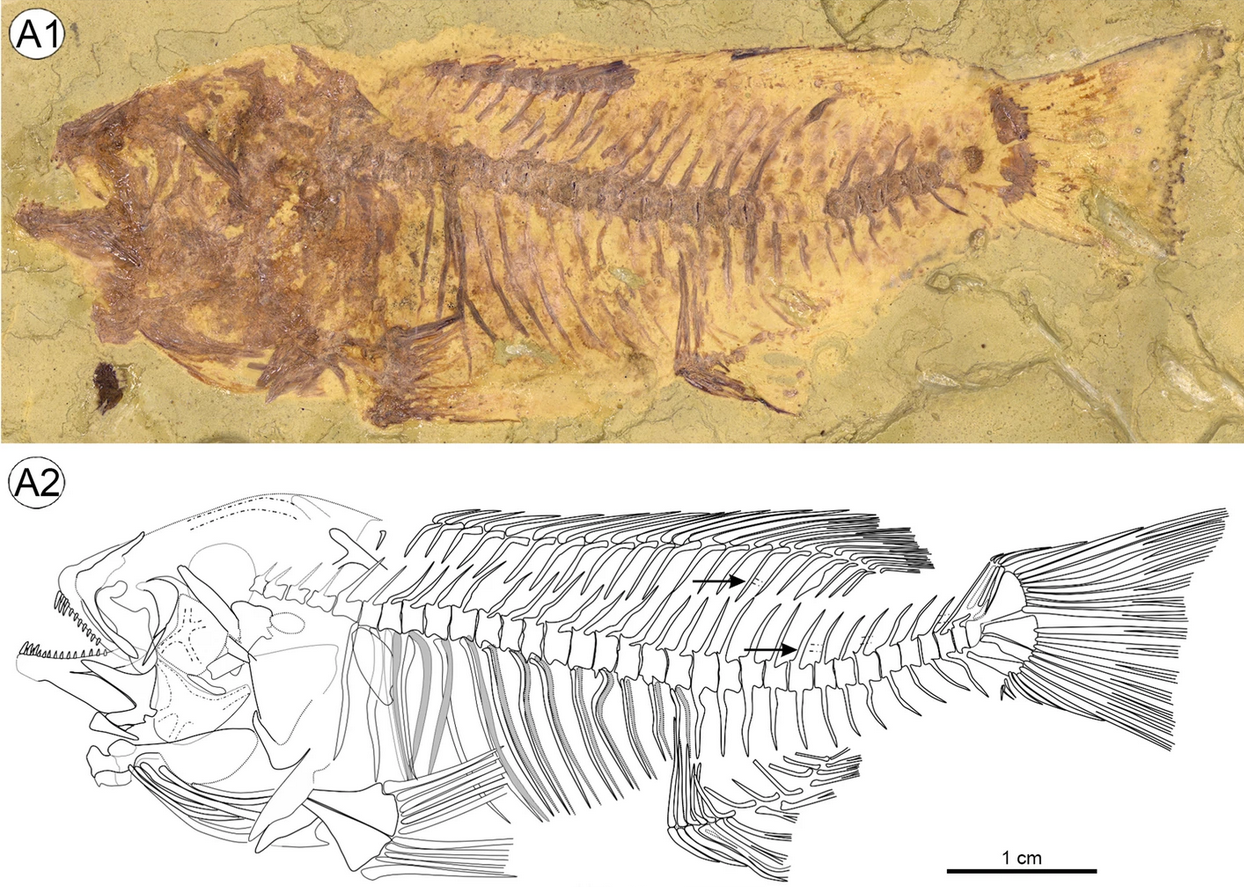
Questions people ask about Cichlid
What is a key physical trait of cichlids?
Cichlids share a fused lower pharyngeal bone structure. This forms a second set of jaws that helps them process a wide variety of food items efficiently.
Where are cichlids naturally found?
They are native to Africa, the Neotropics, the Middle East, and the Indian subcontinent. Africa has the highest species diversity, while Asia has very few native species.
How do cichlids care for their young?
All cichlids provide parental care. They either guard their eggs and fry or practice mouthbrooding, keeping the young in their mouths for protection against predators.
Good reading and sources
The facts on this page come from the Wikipedia article "Cichlid", written by its contributors and used under the CC BY-SA 4.0 licence, and from its Wikidata record (CC0). EveryFish rewrote the text in its own words, with AI assistance, and compares every page with the article to make sure no passage is copied. It may be reused under the same CC BY-SA 4.0 licence with a link back.
It may contain mistakes, and figures change over time. Nothing here is investment or buying advice. If something is wrong, tell us. Last refreshed 2026-11-15.
Like Cichlid
All cichlids 🇺🇸 United States and 1 moreTexas cichlid
The only cichlid native to the United StatesCichlid · Rivers and lakes
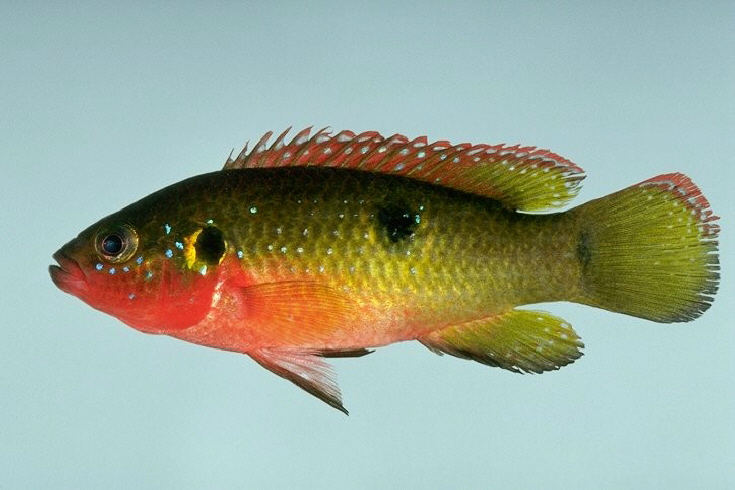 Sub-Saharan AfricaJewel cichlid
Brightly colored African cichlids kept in aquariums for their vivid breeding colours and parental care.Cichlid · Rivers and lakes
 🇧🇷 Brazil and 2 morePeacock bass
Large predatory cichlids from South American rivers known for sport fishing and invasive impact.Cichlid · Rivers and lakes
 WorldUaru
A large South American cichlid from clear Amazon streams.Cichlid · Rivers and lakes · 1840
More from Cichlidae
All of them
🇧🇷 BrazilPterophyllum
A genus of laterally compressed freshwater cichlids known as angelfish.Cichlid · Rivers and lakes · 1824
 WorldHaplochromis
A large ray-finned fish genus from East Africa known for rapid evolution and aquarium popularity.Cichlid · Rivers and lakes · 1888
 🇧🇮 Burundi and 3 moreGiant cichlid
The largest living cichlid species, native to Lake Tanganyika in Africa.Cichlid · Rivers and lakes · 1899
 🇪🇬 Egypt and 4 moreNile tilapia
A hardy cichlid farmed globally for food.Cichlid · Rivers and lakes · 1758