
Largemouth yellowfish
Large freshwater barb from southern African rivers.
The largemouth yellowfish is a ray-finned species in the Cyprinidae family found in southern Africa. It inhabits deep pools in the Orange and Vaal river systems. Listed as Near Threatened, it faces risks from pollution and habitat degradation despite relatively healthy stocks.
- Found in Orange and Vaal River systems
- Adults feed almost exclusively on other fish
- Females lay over 60,000 eggs per season
- Listed as Near Threatened by IUCN
- Catch and release is mandatory in Free State
What it is
This ray-finned fish belongs to the Cyprinidae family and is a large freshwater barb. It was historically placed in the Barbus genus but is now classified under Labeobarbus. The species is morphologically distinct from its relatives, particularly in size. It shares genetic markers with the smallmouth yellowfish but remains a separate entity. Adults grow slowly and can reach substantial sizes over many years.
Where it lives
The fish occurs in the Orange and Vaal Rivers and their major tributaries, such as the Riet River. Its distribution covers parts of Lesotho, Namibia and South Africa. Within South Africa, it is present in several provinces including the Eastern Cape, Free State, Gauteng, Mpumalanga, North-West and Northern Cape. It also inhabits protected areas like Augrabies Falls and Richtersveld National Parks.
How it lives
It prefers deep pools exceeding two metres and slow-moving water near weirs or dams. Plant cover and overhanging vegetation are vital for its well-being. As an apex predator, it feeds on aquatic invertebrates when young and almost exclusively on other fish as an adult. This predatory role means its population density remains naturally low. It is a long-lived species that grows at a slow pace.
Breeding and life cycle
Spawning takes place in riffles during the summer months, typically around December and January. A single large female can lay more than 60,000 eggs in one season. Successful reproduction often requires shallow-water regions nearby. The species has been transplanted to dams within its range that offer suitable spawning habitats. Hybridisation with smallmouth yellowfish is a potential but unstudied concern.
Fish and people
Anglers value this species, with records kept for catches using light tackle. Dr Shahed Nosarka holds a notable record for a feeder rod catch. While theoretically a food fish, experts recommend catch and release due to toxin accumulation and stock depletion risks. Catch and release is mandatory in the Free State province. Education programmes encourage anglers to protect this flagship species.
Status and threats
The International Union for Conservation of Nature lists it as Near Threatened. Although stocks are currently relatively healthy, ecosystem degradation poses a serious threat. Pollution in the Vaal River causes occasional fish kills. Damming infrastructure may block access to spawning sites. Continued environmental decline could prevent the maintenance of viable populations in the long term.

Questions people ask about Largemouth yellowfish
Where does the largemouth yellowfish live?
It inhabits the Orange and Vaal Rivers and their tributaries in South Africa, Lesotho and Namibia. It prefers deep pools and slow-moving water with plenty of plant cover.
Is it safe to eat largemouth yellowfish?
Experts recommend against eating them. As apex predators, they accumulate toxins from polluted waters. Catching them for food may also deplete local stocks significantly.
How big do largemouth yellowfish get?
They are slow-growing and long-lived. They typically reach a total length of 30 cm only after five years. Large adults can weigh significantly more, with record catches exceeding 6 kg.
Good reading and sources
- Largemouth yellowfish on WikipediaEncyclopedia
- More photos on Wikimedia CommonsPhotos
- Wikidata recordOpen data
The facts on this page come from the Wikipedia article "Largemouth yellowfish", written by its contributors and used under the CC BY-SA 4.0 licence, and from its Wikidata record (CC0). EveryFish rewrote the text in its own words, with AI assistance, and compares every page with the article to make sure no passage is copied. It may be reused under the same CC BY-SA 4.0 licence with a link back.
It may contain mistakes, and figures change over time. Nothing here is investment or buying advice. If something is wrong, tell us. Last refreshed 2026-11-15.
Like Largemouth yellowfish
All carps and minnows 🇨🇳 ChinaPrzewalskii's naked carp
Endemic cyprinid of China's Qinghai Lake basinCarp · Rivers and lakes
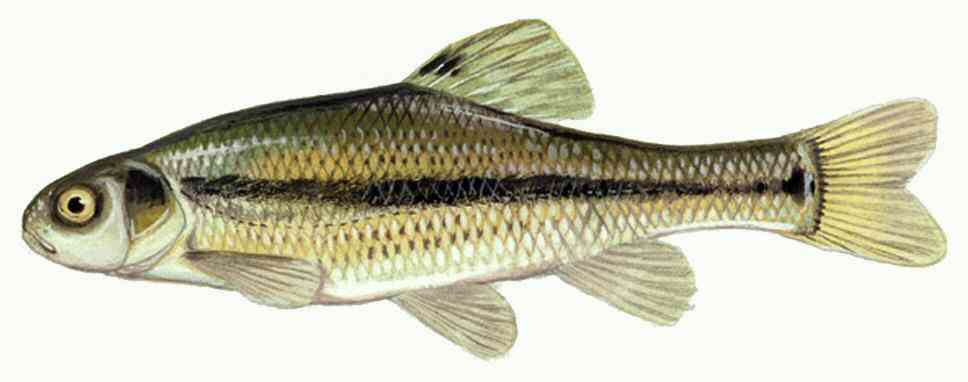 WorldMinnow
Small freshwater fish from the Cyprinidae family used as bait and food.Carp · Rivers and lakes
 🇮🇳 India and 4 moreRohu
A large silver carp from South Asian rivers, farmed for food and prized as a game fish.Carp · Rivers and lakes
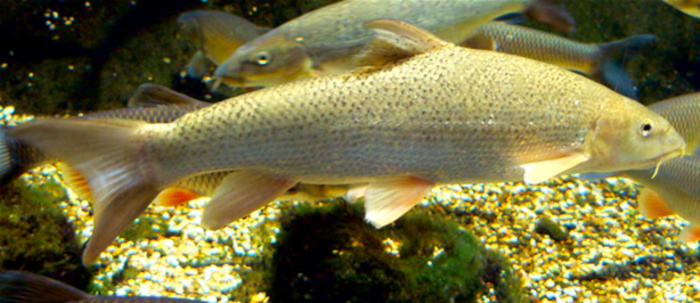 🇬🇧 United Kingdom and 4 moreBarbel
Carp-like freshwater fish with distinctive mouth barbelsCarp · Rivers and lakes
More from Cyprinidae
All of them 🇹🇭 Thailand and 2 moreSiamese mud carp
Freshwater cyprinid native to Mekong and Chao Phraya riversCarp · Rivers and lakes
 🇲🇾 Malaysia and 1 moreHarlequin rasbora
A small, colourful freshwater fish popular in home aquariums for its distinctive black body marking.Carp · Rivers and lakes
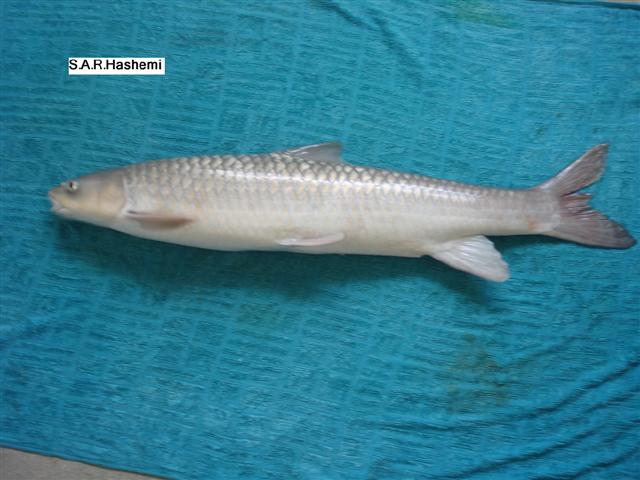 🇮🇷 Iran and 1 moreShabout
A large freshwater carp native to the Tigris-Euphrates basin in Western Asia.Carp · Rivers and lakes
 WorldLabeobarbus
A genus of mid-sized ray-finned fish widely distributed in eastern and southern Africa.Carp · Rivers and lakes