
Fathead minnow
Small North American freshwater fish used as bait and in toxicity studies.
The fathead minnow is a small freshwater fish native to North America. It tolerates poor water quality and serves as a key model for aquatic toxicology. Males care for eggs, and a golden strain is popular in the aquarium trade.
- Males care for eggs and defend nest sites
- Releases chemical alarm signal when attacked
- Used globally as a model for water toxicity
- Rosy-red strain is a popular aquarium feeder fish
- Tolerates low oxygen and turbid water conditions
What it is
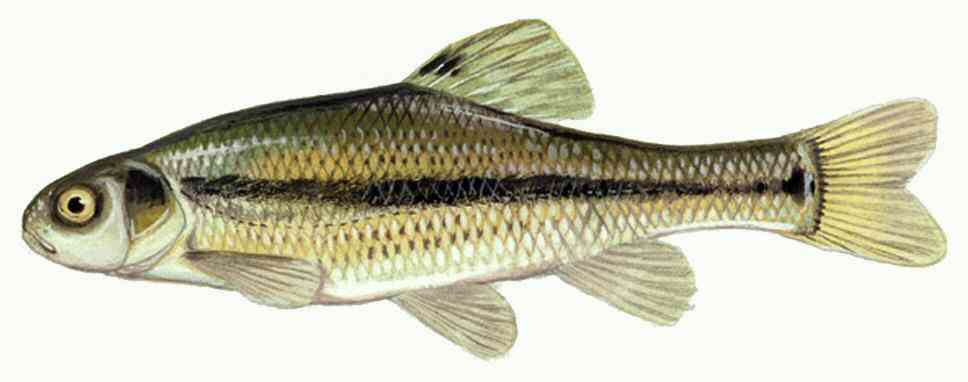
The fathead minnow is a small ray-finned fish in the family Leuciscidae. Wild individuals appear dull olive-grey with a dark stripe along the side and a lighter belly. A dark spot marks the dorsal fin. Breeding males develop a fleshy pad on the nape and white tubercles on the snout. Adults typically measure between seven and ten centimetres in length. This species is known for producing a chemical distress signal called Schreckstoff when attacked by predators.
Where it lives
Native populations span much of North America. The range extends from central Canada south to Texas and east to Virginia. It reaches Chihuahua in Mexico and the Maritime Provinces in Canada. Humans have introduced it to Atlantic and Pacific coastal basins in the United States. The fish thrives in small lakes, ponds, and wetlands. It tolerates turbid water with low oxygen levels. It also inhabits larger lakes and streams.
How it lives
These omnivores sift through silt to feed. Their diet includes insects, crustaceans, zooplankton, algae, and detritus. They serve as prey for piscivorous fish like largemouth bass, northern pike, and walleye. Fathead minnows release an alarm substance from skin cells when damaged. Other fish detect this signal and hide or flee. This chemical cue helps them recognise predators even in murky water. They learn to associate specific animals with danger after exposure to the signal.
Breeding and life cycle
Spawning occurs from June to July when water temperatures reach 18 °C. Males defend nest sites and care for the eggs. They often take over nests containing eggs from other males. This allopaternal care involves aerating eggs with a mucus-secreting dorsal pad. Males remove diseased eggs and defend against predators like crayfish. Females prefer males with existing clutches. Most individuals die after spawning at age one. Juveniles grow rapidly, reaching half their adult size in ninety days.
Fish and people
Anglers widely use wild types as bait. A golden strain called the rosy-red minnow is common in pet shops. Discovered in Arkansas in 1985, this morph serves as a feeder fish or aquarium pet. They are social and hardy but need schooling companions. Scientists use the species to test water toxicity. It reveals effects of pollutants like synthetic oestrogens and bisphenol A. Exposure can feminise males and reduce egg production in females. It helps monitor environmental health in waste drainage sites.
Status and threats
Feral populations exist in Europe. Established groups were found in France, Belgium, the Netherlands, and Germany. These introductions have spread enteric redmouth disease to trout and eels. A small population in the United Kingdom was eradicated in 2008. The species remains widespread in its native North American range due to its tolerance for varied conditions.


Questions people ask about Fathead minnow
What do fathead minnows eat?
They are omnivores that sift through dirt and silt. Their diet consists of insects, crustaceans, zooplankton, algae, phytoplankton, and bottom detritus.
Why are they used in scientific research?
They are hardy and produce many offspring. Scientists use them to test the acute and chronic toxicity of chemicals, including pollutants like synthetic oestrogens.
How long do fathead minnows live?
Most die after spawning at one year of age. However, those kept in aquariums that do not spawn can live significantly longer, potentially up to four years.
What is a rosy-red minnow?
It is a golden colour morph of the fathead minnow. Discovered in 1985, it is commonly sold in pet shops as a feeder fish or aquarium pet.
Good reading and sources
- Fathead minnow on WikipediaEncyclopedia
- More photos on Wikimedia CommonsPhotos
- Wikidata recordOpen data
The facts on this page come from the Wikipedia article "Fathead minnow", written by its contributors and used under the CC BY-SA 4.0 licence, and from its Wikidata record (CC0). EveryFish rewrote the text in its own words, with AI assistance, and compares every page with the article to make sure no passage is copied. It may be reused under the same CC BY-SA 4.0 licence with a link back.
It may contain mistakes, and figures change over time. Nothing here is investment or buying advice. If something is wrong, tell us. Last refreshed 2026-11-15.
Like Fathead minnow
All carps and minnows 🇹🇭 Thailand and 2 moreSiamese mud carp
Freshwater cyprinid native to Mekong and Chao Phraya riversCarp · Rivers and lakes
 🇨🇳 ChinaPrzewalskii's naked carp
Endemic cyprinid of China's Qinghai Lake basinCarp · Rivers and lakes
 🇮🇳 India and 4 moreZebrafish
Small striped fish from South Asia kept in aquariums and labsCarp · Rivers and lakes
 🇺🇸 United States and 1 moreColorado pikeminnow
A large native river fish of the Colorado Basin, once abundant but now critically endangered.Carp · Rivers and lakes
More from Leuciscidae
All of them 🇺🇸 United States and 1 moreCreek chubs
Small North American minnows with a distinctive dorsal spotCarp · Rivers and lakes
 🇷🇺 RussiaCaspian roach
A brackish water fish from the Caspian Sea region, widely consumed as a dried snack.Carp · Estuaries and mangroves
 🇷🇺 Russia and 4 moreSabre carp
A silvery surface feeder from Eastern Europe and Asia.Carp · Rivers and lakes
 EuropeCommon rudd
A red-finned freshwater fish native to Europe and Asia.Carp · Rivers and lakes