
Colorado pikeminnow
A large native river fish of the Colorado Basin, once abundant but now critically endangered.
The Colorado pikeminnow is a large freshwater ray-finned fish native to the Colorado River Basin in the southwestern United States and adjacent Mexico. It was historically an important food source for Native Americans and settlers, but dam construction and invasive species have caused its numbers to plummet, leading to its listing as endangered and later vulnerable.
- One of the largest leuciscids in North America, reaching 1.8 m.
- Historically vital food source for Native Americans and settlers.
- Extirpated from Mexico; listed as endangered in the US since 1967.
- Spawns in summer when water temperatures rise and flows drop.
- Recovery costs estimated at nearly $180 million over 15 years.
What it is
This species belongs to the Leuciscidae family, which includes daces and chubs. It possesses an elongated body shape similar to that of a pike. The head is cone-shaped and flattened, making up about a quarter of the total length. Colouration ranges from olive green on the back to white on the belly. Young fish display a dark spot on their tail fin. Both dorsal and anal fins usually contain nine rays. The mouth lacks jaw teeth, featuring instead hooked pharyngeal teeth and fleshy lip folds. Historically, individuals reached lengths of 1.8 metres and weights over 45 kilograms, though modern adults are typically much smaller.
Where it lives
Native populations once spanned the entire Colorado River Basin across multiple US states and into Mexico. Damming and habitat changes have restricted the species to the upper drainage system. Remnant groups survive in the Green, Gunnison, White, San Juan, and Yampa Rivers. Transplant efforts have introduced the fish to the Salt and Verde Rivers within its original range. The species has been completely removed from the Mexican portion of its historical territory.
How it lives
Juveniles initially consume small invertebrates like copepods and insect larvae. As they grow beyond 30 centimetres, they become primarily piscivorous, feeding on suckers and minnows. Adults inhabit defined channels, seeking out eddy habitats for hunting. They undertake potamodromous migrations, moving upstream or downstream to return to natal areas for spawning. These journeys can exceed 100 kilometres. Predation by non-native catfish and trout, along with competition for resources, significantly impacts adult survival rates.
Breeding and life cycle
Spawning coincides with the summer solstice, triggered by declining water flows and rising temperatures. Males develop bronze colouring and tubercles, while females remain lighter and larger. Fish gather in deep pools before entering riffles to release adhesive eggs. Males fertilise the eggs as they descend. Hatching times vary with temperature, ranging from two to five days. After hatching, fry drift downstream for 50 to 100 kilometres before settling in backwaters.
Fish and people
Indigenous peoples and early European settlers relied on this fish as a significant food source. Modern interest focuses on conservation and scientific research due to its decline. It holds cultural importance for Native American communities. Fishing regulations now restrict harvest to protect remaining populations. Educational programmes highlight its ecological role and the impacts of human alteration on river systems.
Status and threats
Listed as endangered in the US in 1967 and under the Endangered Species Act in 1973. The IUCN currently classifies it as vulnerable. Threats include dams altering flow and temperature, pollution, and invasive species like red shiners that prey on larvae. Past poisoning campaigns using rotenone aimed to favour sport fish but harmed native stocks. Recovery plans involve managing water releases, improving fish passages, and controlling non-native competitors. Costs for recovery are projected to reach hundreds of millions of dollars.

Questions people ask about Colorado pikeminnow
What is the maximum size of a Colorado pikeminnow?
Historical reports indicate individuals could reach 1.8 metres and weigh over 45 kilograms. However, biologists consider typical modern adults to be between 1.8 and 4.1 kilograms, with recent length records being questioned.
Why is the Colorado pikeminnow endangered?
Dam construction altered water flow and temperature, disrupting breeding. Habitat changes, pollution, and invasive species like red shiners that eat larvae have drastically reduced populations. The species was extirpated from Mexico and remains scarce in the US.
What does the Colorado pikeminnow eat?
Young fish eat small invertebrates like copepods and insect larvae. Once they grow past 30 centimetres, they become predators, feeding almost entirely on other fish such as suckers and minnows.
How do Colorado pikeminnows reproduce?
They spawn around the summer solstice when water temperatures increase. Males fertilise adhesive eggs released in riffles. Eggs hatch in two to five days depending on temperature, and fry drift downstream to backwaters.
Good reading and sources
- Colorado pikeminnow on WikipediaEncyclopedia
- More photos on Wikimedia CommonsPhotos
- Wikidata recordOpen data
The facts on this page come from the Wikipedia article "Colorado pikeminnow", written by its contributors and used under the CC BY-SA 4.0 licence, and from its Wikidata record (CC0). EveryFish rewrote the text in its own words, with AI assistance, and compares every page with the article to make sure no passage is copied. It may be reused under the same CC BY-SA 4.0 licence with a link back.
It may contain mistakes, and figures change over time. Nothing here is investment or buying advice. If something is wrong, tell us. Last refreshed 2026-11-15.
Like Colorado pikeminnow
All carps and minnows 🇨🇳 ChinaPrzewalskii's naked carp
Endemic cyprinid of China's Qinghai Lake basinCarp · Rivers and lakes
 🇺🇸 United States and 2 moreFathead minnow
Small North American freshwater fish used as bait and in toxicity studies.Carp · Rivers and lakes
 🇮🇷 Iran and 3 moreMangar
Large cyprinid fish of the Tigris and Euphrates rivers.Carp · Rivers and lakes · 1843
 🇷🇺 RussiaCaspian roach
A brackish water fish from the Caspian Sea region, widely consumed as a dried snack.Carp · Estuaries and mangroves
More from Leuciscidae
All of them 🇺🇸 United States and 1 moreCreek chubs
Small North American minnows with a distinctive dorsal spotCarp · Rivers and lakes
 🇷🇺 Russia and 4 moreSabre carp
A silvery surface feeder from Eastern Europe and Asia.Carp · Rivers and lakes
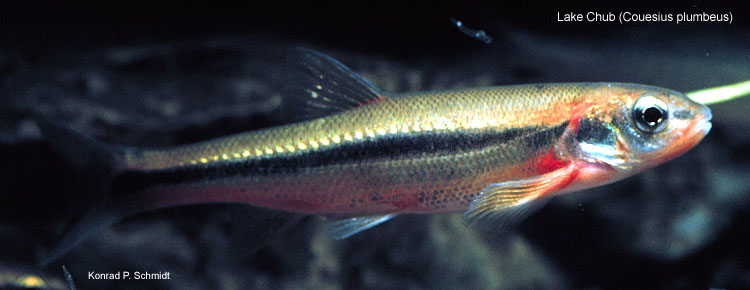 🇨🇦 Canada and 1 moreLake chub
A small cold-water minnow native to Canada and the northern US.Carp · Rivers and lakes
 EuropeCommon rudd
A red-finned freshwater fish native to Europe and Asia.Carp · Rivers and lakes