
European sprat
A small schooling fish in the herring family found across European seas.
The European sprat is a slender marine fish belonging to the herring family. It inhabits waters from the Atlantic coast to the Black Sea and supports commercial fisheries for food and bait.
- Grows to a maximum length of 16 cm.
- Native to the northeastern Atlantic Ocean.
- Tolerates low salinity in estuaries.
- Peak spawning occurs April to August in the Atlantic.
- Canned brisling popularized by Angus Watson.
What it is
The European sprat is a slender, silver-sided fish with a bluish or greenish back. It lacks dark spots and features a sharp row of scales along its belly. Adults typically measure between eight and twelve centimetres, though they can reach sixteen centimetres. This species belongs to the herring family and possesses soft fins without spines. Its lower jaw extends slightly forward, and it has no teeth on the roof of its mouth. The fish is built for speed and agility in open water.
Where it lives
This fish lives in the northeastern Atlantic Ocean and surrounding seas. Its range stretches from southern Norway and Sweden down to Morocco. It also inhabits the British Isles, the Iberian Peninsula, the Mediterranean Sea, the Adriatic Sea, and the Black Sea. The sprat thrives in both open ocean waters and sheltered bays. It can survive in estuaries where salinity drops to four parts per thousand. This adaptability allows it to occupy diverse coastal environments across Europe and West Asia.
How it lives
Adults feed primarily on copepods, while juveniles consume crustacean eggs and larvae. They form large schools and migrate seasonally between winter feeding areas and summer breeding grounds. The fish also performs vertical migrations, rising to the surface at night to hunt. Predators include larger fish and birds. Some individuals carry parasites like Lernaeenicus sprattae, which can burrow into their eyes and cause blindness or death during heavy infestations.
Breeding and life cycle
Spawning occurs year-round but peaks in specific seasons depending on location. In the Mediterranean, reproduction is highest between December and April. In the Baltic Sea and northeastern Atlantic, peak spawning happens from April to August. Eggs are released in inshore waters or up to one hundred kilometres offshore. The young grow quickly, transitioning from diatom diets to larger zooplankton as they mature.
Fish and people
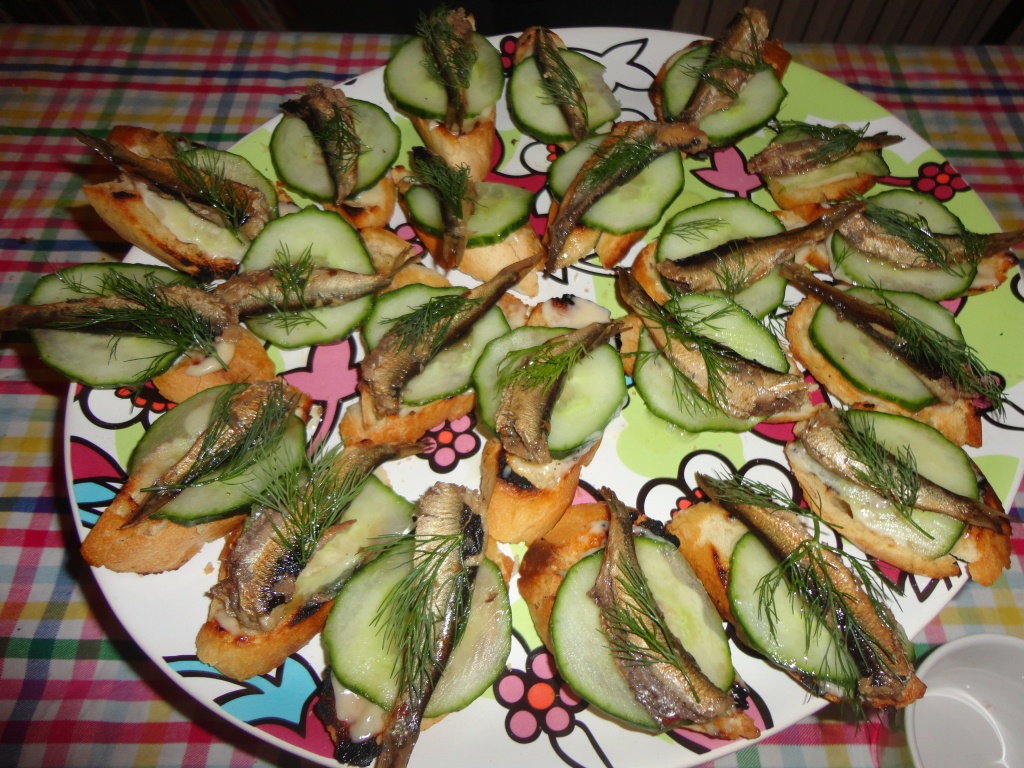
Commercial fisheries target this species using trawls across its range. It is processed into fish meal, used as bait, or sold for human consumption. Common preparation methods include canning, smoking, frying, and salting. Canned brisling became popular in the UK through Angus Watson’s Skippers brand. The fish holds cultural significance in Baltic states, Scandinavia, Ireland, Germany, Poland, and Russia. It remains a staple in local diets and culinary traditions.
Status and threats
Population numbers fluctuate significantly, especially in the Mediterranean and Black Seas. These swings may relate to rising sea temperatures and the spread of comb jellies. Commercial landings dropped in the 1990s but recovered later. The IUCN lists the species as Least Concern due to its wide distribution. However, exact population trends remain unknown. Conservation efforts focus on monitoring stock levels and managing fishing pressure to ensure sustainable harvests.

Questions people ask about European sprat
What does the European sprat eat?
Adults feed on copepods like Calanus and Temora. Juveniles eat crustacean eggs, larvae, and diatoms. They rise to the surface at night to hunt within their schools.
Where can you find European sprat?
They live in the northeastern Atlantic, Baltic Sea, North Sea, Mediterranean, and Black Sea. Their range extends from Norway to Morocco and includes the British Isles and Iberian Peninsula.
Is the European sprat endangered?
No. The IUCN assesses it as Least Concern. Populations fluctuate due to environmental factors like temperature and jellyfish, but the species remains widespread and abundant.
How is European sprat prepared for food?
It is canned, smoked, fried, salted, marinated, or grilled. Canned versions, often called brisling, are common in Europe. Angus Watson popularized the Skippers brand in the UK.
Good reading and sources
- European sprat on WikipediaEncyclopedia
- More photos on Wikimedia CommonsPhotos
- Wikidata recordOpen data
The facts on this page come from the Wikipedia article "European sprat", written by its contributors and used under the CC BY-SA 4.0 licence, and from its Wikidata record (CC0). EveryFish rewrote the text in its own words, with AI assistance, and compares every page with the article to make sure no passage is copied. It may be reused under the same CC BY-SA 4.0 licence with a link back.
It may contain mistakes, and figures change over time. Nothing here is investment or buying advice. If something is wrong, tell us. Last refreshed 2026-11-15.
Like European sprat
All herrings and sardines 🇹🇷 Turkey and 4 moreEuropean anchovy
Small coastal forage fish of Europe and AfricaHerring · Coasts and shelves · 1758
 🇲🇦 Morocco and 2 moreEuropean pilchard
Small schooling fish of the Atlantic and Mediterranean.Herring · Coasts and shelves
 🇺🇸 United StatesAtlantic menhaden
A silvery herring species found along the North American Atlantic coast.Herring · Coasts and shelves
 WorldSardine
Small, oily forage fish in the herring suborder Clupeoidei.Herring · Coasts and shelves
More from Clupeidae
All of them WorldBloch's gizzard shad
Small anadromous fish found across the Indo-West Pacific.Herring · Rivers and lakes · 1795
 Southeast AsiaWhite sardine
Small tropical clupeid fish of the Indo-Pacific.Herring · Coasts and shelves · 1847
 🇺🇸 United States and 3 moreMenhaden
Small silver forage fish that filter plankton and support marine food webs.Herring · Coasts and shelves
 WorldSpotted sardinella
A small herring with golden spots found in the Indo-Pacific.Herring · Coasts and shelves