
Bloch's gizzard shad
Small anadromous fish found across the Indo-West Pacific.
Bloch's gizzard shad is a small to medium-sized anadromous fish that moves between salt and fresh water. It inhabits marine, freshwater and brackish zones across the Indo-West Pacific region. First described in 1795, it serves as a common food source in various forms.
- Reaches a maximum standard length of 22 cm
- Found in marine, freshwater and brackish waters
- Distinguished by a dark spot behind the gill
- Used as food in fresh and dried forms
- Described by Marcus Elieser Bloch in 1795
What it is
Bloch's gizzard shad is a small to medium-sized fish belonging to the herring family. It grows to a maximum standard length of 22 centimetres. The body features a dark spot behind the gill opening, which helps distinguish it from similar species. Its belly has between 17 and 20 scutes, while the anal region has 9 to 13 scutes. The dorsal fin contains 15 to 19 soft rays, and the anal fin has 17 to 26 soft rays. This species is anadromous, meaning it migrates between saltwater and freshwater environments during its life cycle.
Where it lives
This fish is widespread throughout the Indo-West Pacific region. Its range extends from the Andaman Sea and the South China Sea to the Philippines and the Korean peninsula. A single specimen was once recorded in South African waters, but this is an outlier. The species inhabits marine, freshwater and brackish environments. It typically swims at depths of up to 30 metres. This adaptability allows it to thrive in diverse aquatic conditions across a vast geographical area.
How it lives
The Bloch's gizzard shad is a filter feeder. It consumes plankton by filtering small organisms from the water column. This feeding strategy is common among small clupeid fish. The species is known to swim in groups, although specific schooling behaviour details are not extensively documented in the provided material. Its primary ecological role involves converting planktonic biomass into food for larger predators and humans. The presence of a dark spot behind the gill opening is a key identification feature.
Fish and people
This species is widely used as a food fish across its range. It is consumed in both fresh and dried forms. In some culinary traditions, the meat is processed into fish balls. Its abundance and small size make it a practical source of protein for local communities. The fish is listed among the commercial fish of Sri Lanka, indicating its economic importance in regional fisheries. It is valued for its versatility in preparation and preservation methods.
Questions people ask about Bloch's gizzard shad
What does Bloch's gizzard shad eat?
It is a filter feeder that primarily consumes plankton. This diet allows it to extract nutrients from small organisms suspended in the water column, supporting its growth in various aquatic environments.
Where can this fish be found?
It is widespread in the Indo-West Pacific, ranging from the Andaman Sea and South China Sea to the Philippines and Korean peninsula. It lives in marine, freshwater and brackish waters up to 30 metres deep.
How is this fish used by people?
It is a common food fish eaten fresh or dried. It is also processed into fish balls in some regions. Its commercial value is recognised in places like Sri Lanka, where it supports local fisheries.
Good reading and sources
- Nematalosa nasus on WikipediaEncyclopedia
- More photos on Wikimedia CommonsPhotos
- Wikidata recordOpen data
The facts on this page come from the Wikipedia article "Nematalosa nasus", written by its contributors and used under the CC BY-SA 4.0 licence, and from its Wikidata record (CC0). EveryFish rewrote the text in its own words, with AI assistance, and compares every page with the article to make sure no passage is copied. It may be reused under the same CC BY-SA 4.0 licence with a link back.
It may contain mistakes, and figures change over time. Nothing here is investment or buying advice. If something is wrong, tell us. Last refreshed 2026-11-15.
Like Bloch's gizzard shad
All herrings and sardines 🇮🇪 IrelandTwait shad
Anadromous herring-like fish with flank spotsHerring · Rivers and lakes
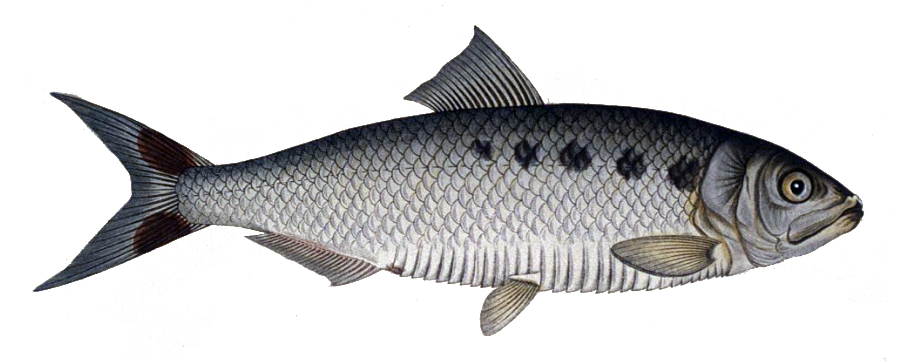 EuropeAllis shad
Anadromous Atlantic fish with a dark gill spot.Herring · Rivers and lakes
 🇹🇷 Turkey and 4 moreAnchovy
Small, oily forage fish found in oceans and some rivers worldwide.Herring · Coasts and shelves
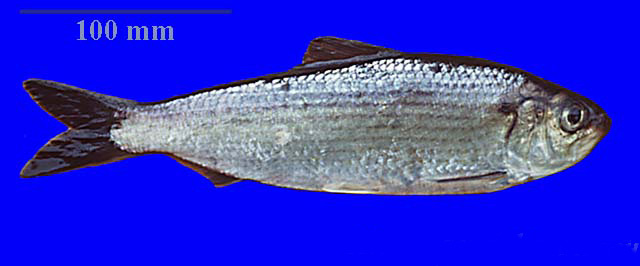 🇺🇸 United States and 1 moreAlewife
A small North American herring that migrates between sea and rivers.Herring · Coasts and shelves
More from Clupeidae
All of them 🇺🇸 United States and 2 moreAmerican gizzard shad
A silvery freshwater forage fish with a muscular gizzard.Herring · Rivers and lakes
 🇺🇸 United States and 3 moreMenhaden
Small silver forage fish that filter plankton and support marine food webs.Herring · Coasts and shelves
 WorldSpotted sardinella
A small herring with golden spots found in the Indo-Pacific.Herring · Coasts and shelves