
Crucian carp
A European cyprinid known for surviving winter ice by converting lactate to ethanol.
The crucian carp is a medium-sized freshwater fish native to Europe. It is famous for its unique ability to survive oxygen-free winters through ethanol fermentation and is valued in angling and regional cuisines.
- Survives winter ice by converting lactate to ethanol.
- Max recorded length is 64 cm and weight 3 kg.
- Native to Europe from England to Russia.
- Develops deeper bodies to evade predators.
- Key ingredient in Polish and Russian traditional dishes.
What it is
The crucian carp belongs to the carp family and is a medium-sized freshwater species. Adults typically measure around fifteen centimetres, though they can reach sixty-four centimetres and weigh up to three kilograms. Their appearance shifts with age: young fish display a golden-bronze hue that darkens into a deep green back and bronze flanks as they mature. The belly remains gold, while fins often show reddish or orange tones. A key visual marker is their convexly rounded dorsal fin, which distinguishes them from hybrid varieties.
Where it lives
This fish is native to northern and central Europe. Its natural distribution stretches from England eastward to Russia and south to central France and the Black Sea area. It thrives in shallow, slow-moving waters such as lakes, ponds, and sluggish rivers. Populations extend northward into the Arctic Circle within Scandinavian nations. While primarily European, related species are farmed extensively in Asia, leading to some statistical confusion regarding this specific native population.
How it lives
Crucian carp exhibit remarkable physiological resilience. In winter, when ice seals off oxygen supply, they survive anoxic conditions by fermenting lactate into ethanol, which they excrete into the water. This adaptation allows survival for months in freezing temperatures. They also alter their body shape when predators are present, developing a deeper, harder-to-swallow form. However, this defensive shape reduces growth rates and immune function compared to their sleeker counterparts.
Fish and people
Anglers prize the crucian carp for coarse fishing, with notable records held in Britain. The fish is also a culinary staple in Eastern Europe. In Poland, it is traditionally served with sour cream and considered a holiday dish. Russian cuisine includes recipes like borscht made with the fish or fried specimens in cream. Occasionally kept in home ponds for waste management, they are less common in the aquarium trade due to lower colour intensity compared to koi.
Status and threats
The species is generally widespread and not currently listed as threatened. Conservation concerns arise mainly from hybridisation with domestic goldfish or feral gibelio carp. These hybrids can exhibit hybrid vigour, outcompeting native fish for resources. Although the resulting hybrids are often sterile, genetic mixing poses a potential risk to the purity of wild crucian populations. Management efforts in angling circles sometimes reject catches suspected to be hybrids.


Questions people ask about Crucian carp
How does the crucian carp survive frozen ponds?
It survives oxygen-free winter conditions by fermenting lactate into ethanol. This metabolic process allows it to live without breathing for weeks or months, excreting the alcohol directly into the surrounding water rather than letting it build up to toxic levels in its tissues.
What is the difference between a crucian carp and a goldfish?
True crucian carp have a convexly rounded dorsal fin, whereas goldfish hybrids typically have concave fins. Crucians also tend to darken with maturity, gaining green backs and bronze flanks, while goldfish retain brighter colours. Hybrids between the two can occur but are often sterile.
Is the crucian carp eaten in Europe?
Yes, it is a popular food fish in parts of Eastern Europe. In Poland, it is traditionally served with sour cream and is considered one of the best-tasting pan fish. Russian cuisine also features it in soups like borscht or fried in sour cream.
Can crucian carp change their physical shape?
Yes, they exhibit morphological plasticity. When predatory fish are present in their habitat, crucians can develop a deeper, more robust body shape. This makes them harder for predators to swallow, though this form grows slower and has a weaker immune system.
Good reading and sources
The facts on this page come from the Wikipedia article "Crucian carp", written by its contributors and used under the CC BY-SA 4.0 licence, and from its Wikidata record (CC0). EveryFish rewrote the text in its own words, with AI assistance, and compares every page with the article to make sure no passage is copied. It may be reused under the same CC BY-SA 4.0 licence with a link back.
It may contain mistakes, and figures change over time. Nothing here is investment or buying advice. If something is wrong, tell us. Last refreshed 2026-11-15.
Like Crucian carp
All carps and minnows WorldTorinae
A subfamily of large freshwater carps known as mahseers, found across Asia and Africa.Carp · Rivers and lakes
 🇮🇳 India and 4 moreRohu
A large silver carp from South Asian rivers, farmed for food and prized as a game fish.Carp · Rivers and lakes
 🇨🇳 China and 4 moreBighead carp
A large Asian freshwater fish farmed globally and invasive in North America.Carp · Rivers and lakes
 🇸🇪 Sweden and 3 moreIde
A freshwater cyprinid native to Europe and Asia, widely kept in ornamental ponds.Carp · Rivers and lakes · 1758
More from Cyprinidae
All of them 🇲🇾 Malaysia and 1 moreHarlequin rasbora
A small, colourful freshwater fish popular in home aquariums for its distinctive black body marking.Carp · Rivers and lakes
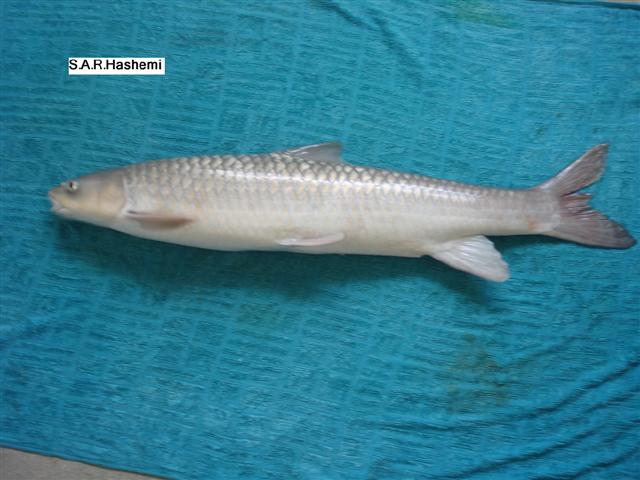 🇮🇷 Iran and 1 moreShabout
A large freshwater carp native to the Tigris-Euphrates basin in Western Asia.Carp · Rivers and lakes
 🇮🇳 India and 4 moreCommon snowtrout
A cold-water cyprinid from Himalayan rivers.Carp · Rivers and lakes