
Atlantic horse mackerel
Slender jack mackerel of the eastern Atlantic and Mediterranean.
The Atlantic horse mackerel is a migratory fish found from Norway to South Africa. It supports major commercial fisheries in Europe and faces population declines off West Africa. Listed as Vulnerable by the IUCN, it is valued for food and processed in various ways.
- Max length 60 cm with bony scutes on tail
- Migrates north in summer, south in winter
- Listed as Vulnerable due to West African declines
- Diet dominated by copepods and crustaceans
- Used in sushi, escabeche, and Sicilian dishes
What it is
This slender, compressed fish belongs to the jack family. It features a large head with a projecting lower jaw and a well-developed adipose eyelid. Two dorsal fins sit on its back, the second being longer than the first. A distinctive curved line of bony scutes runs from head to tail, giving the species its rough-tailed name. The body is dark blue above, with silvery flanks and a white belly. A dark spot marks the operculum. Adults typically reach 25 cm, though they can grow to 60 cm and weigh 1.5 kg.
Where it lives
Its distribution covers the north and eastern Atlantic Ocean, extending into the Mediterranean, Sea of Marmara, and Black Sea. In the Atlantic, it ranges from Norway down to South Africa, potentially reaching Mozambique along the Indian Ocean coast. Records exist for Cape Verde, but these are likely vagrants. The species inhabits sandy substrates at depths between 100 and 200 metres, though it has been found as deep as 1,050 metres. It also appears in surface waters occasionally.
How it lives
This migratory species moves north in summer and returns south as temperatures drop. Juveniles often shoal with Atlantic herring and other horse mackerels, sometimes sheltering in jellyfish tentacles. Their diet consists mainly of copepods, shrimps, small fishes, and squids. Crustaceans form the largest part of their food intake year-round. Larger individuals over 17 cm feed largely on fish larvae. Stomach content studies in the Aegean Sea revealed 60 different prey species, showing little seasonal variation in dietary habits.
Breeding and life cycle
Spawning timing varies by region. The western stock spawns from Ireland to the Bay of Biscay in early spring. The North Sea stock breeds in summer in the southern North Sea. Off Mauritania, spawning peaks between November and January. Females release eggs in batches, with each batch containing up to 140,000 eggs. The eggs and larvae are pelagic. Spawning is indeterminate, meaning total egg production depends on changing conditions during the season. Females typically begin breeding between two and four years of age.
Fish and people
Commercial fisheries target this species using trawls, longlines, and purse seines. Major catches occur in the Netherlands and Ireland. The flesh is oily and delicate, rich in omega-3 fatty acids. It is consumed fresh, frozen, salted, dried, smoked, or canned. Cooking methods include frying, broiling, and baking. In Iberia, it is prepared as escabeche. Some exports go to Japan for sushi under the name aji. It is also an important ingredient in Sicilian cuisine. Nutritional value includes high protein and moderate fat content.
Status and threats
The IUCN lists the species as Vulnerable. While European populations remain stable, declines exceeding ninety percent off West Africa have driven an overall drop of 35–40 percent over three generations. The International Council for the Exploration of the Sea considers the population below safe biological limits. Fishing pressure has remained high since 2006, with low recruitment observed since 2004. Calls for specific management plans in the North Sea have not yet resulted in defined objectives.


Questions people ask about Atlantic horse mackerel
What does the Atlantic horse mackerel eat?
It feeds primarily on copepods, shrimps, small fishes, and squids. Crustaceans make up the largest proportion of its diet throughout the year. Larger fish tend to consume more fish larvae than smaller individuals do.
Where is the Atlantic horse mackerel found?
It lives in the eastern Atlantic Ocean, from Norway to South Africa. Its range includes the Mediterranean Sea, Black Sea, and Sea of Marmara. It typically inhabits depths of 100 to 200 metres over sandy bottoms.
Is the Atlantic horse mackerel endangered?
The IUCN classifies it as Vulnerable. This status results from severe population declines off West Africa, despite stable numbers in European waters. Overall numbers have dropped by roughly 35 to 40 percent in recent decades.
How is the Atlantic horse mackerel cooked?
The fish is eaten fresh, frozen, salted, dried, smoked, or canned. Common preparation methods include frying, broiling, and baking. It is used in Japanese sushi, Iberian escabeche, and various Sicilian recipes.
Good reading and sources
- Atlantic horse mackerel on WikipediaEncyclopedia
- More photos on Wikimedia CommonsPhotos
- Wikidata recordOpen data
The facts on this page come from the Wikipedia article "Atlantic horse mackerel", written by its contributors and used under the CC BY-SA 4.0 licence, and from its Wikidata record (CC0). EveryFish rewrote the text in its own words, with AI assistance, and compares every page with the article to make sure no passage is copied. It may be reused under the same CC BY-SA 4.0 licence with a link back.
It may contain mistakes, and figures change over time. Nothing here is investment or buying advice. If something is wrong, tell us. Last refreshed 2026-11-15.
Like Atlantic horse mackerel
All other fish 🇳🇿 New Zealand and 3 moreCommon galaxias
A small migratory fish of the Southern Hemisphere.Other · Rivers and lakes
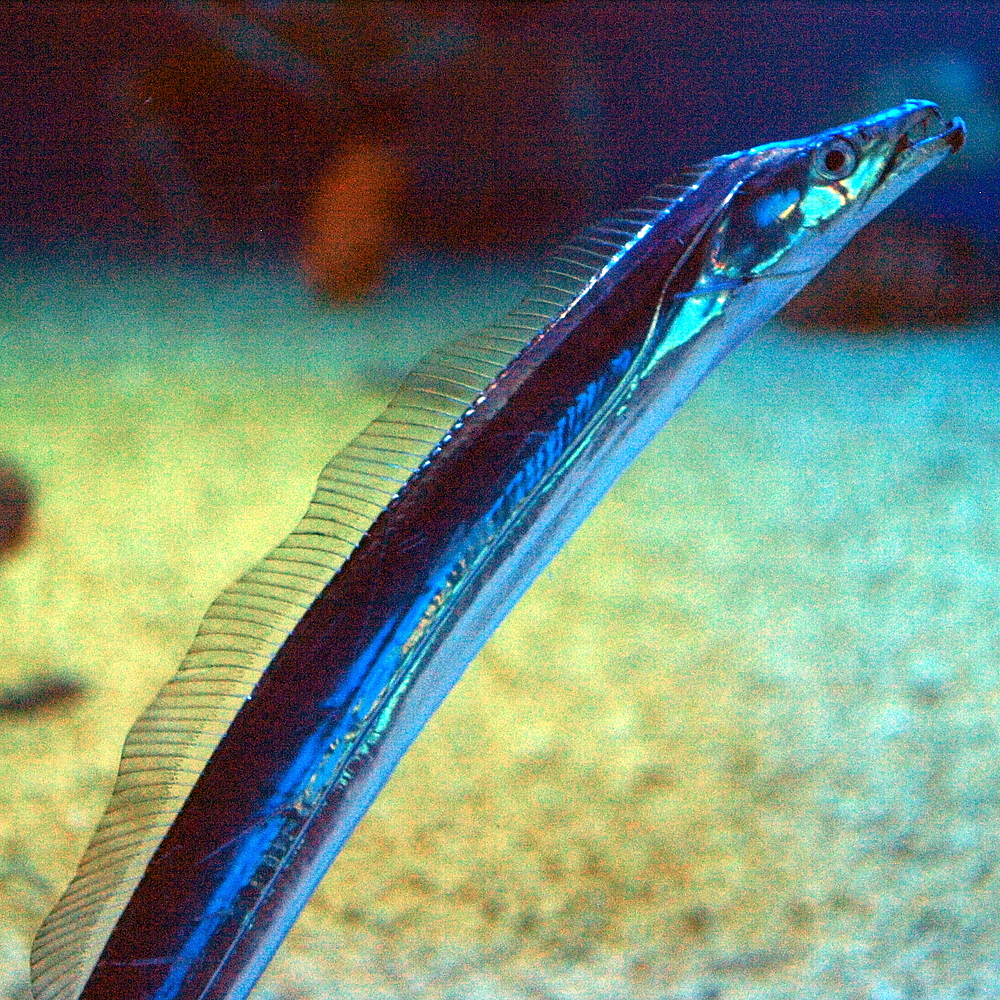 WorldLargehead hairtail
A long, silver, ribbon-like fish found in warm oceans worldwide.Other · Coasts and shelves
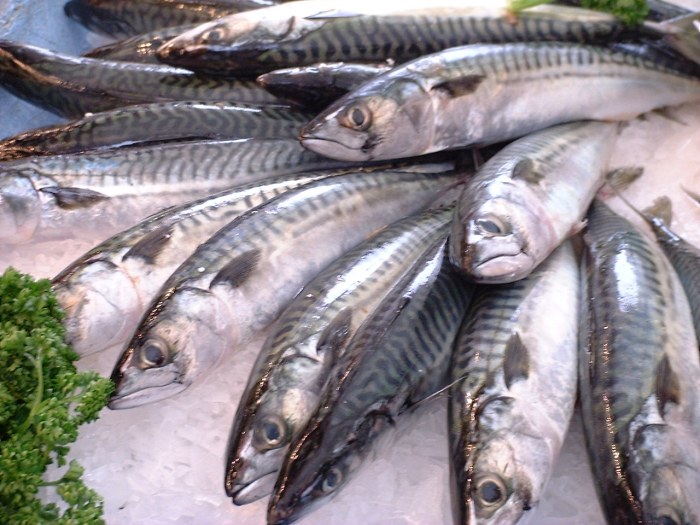 WorldMackerel
A group of pelagic fish known for their speed, stripes, and role in global fisheries.Tuna · Open ocean
 🇦🇺 Australia and 1 moreAustralian ghostshark
A cartilaginous fish native to southern Australia and New Zealand waters.Other · Coasts and shelves
More from Carangidae
All of them 🇯🇵 Japan and 2 moreJapanese amberjack
A prized jack fish native to the northwest Pacific Ocean.Other · Coasts and shelves
 🇯🇵 Japan and 1 moreJapanese jack mackerel
A silver coastal fish prized in East Asian cuisine.Tuna · Coasts and shelves
 WorldPompano
Deep-bodied marine fish in the genus Trachinotus.Perch-like · Coasts and shelves
 WorldBlack pomfret
A jackfish species prized in Asian fisheries.Other · Coasts and shelves