
Black pomfret
A jackfish species prized in Asian fisheries.
The black pomfret is a carangid fish native to the Indian and western Pacific Oceans. It supports significant local fisheries despite being a jack rather than a true pomfret.
- Only member of the genus Parastromateus.
- Can grow up to 75 cm in length.
- Diet includes diatoms, eggs, and crustaceans.
- Highly valued in Asian fisheries.
- Lives at depths up to 105 metres.
What it is
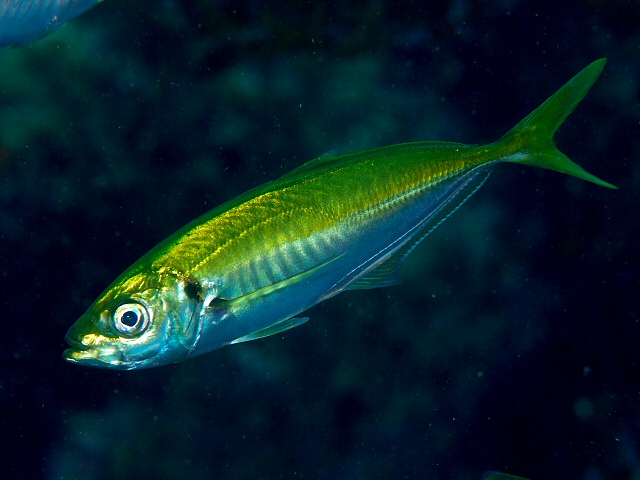
This fish belongs to the jack family, not the true pomfret group. It features a deep, compressed body with convex upper and lower profiles. Small dark grey scales cover its skin. Adults typically measure 30 cm but can reach 75 cm. The colour ranges from silvery-grey to bluish-brown. Missing scales may create a yellowish appearance. Fins have dark edges, and young fish display vertical bars.
Where it lives
Its distribution spans coastal waters from eastern Africa to Australia. Populations exist off South Africa, Mozambique, and Kenya. It inhabits the Arabian Sea, Bay of Bengal, and Persian Gulf. Range extends through Indonesia, the Philippines, China, southern Japan, and Australia. The species lives in pelagic zones, often near the seafloor by day and at the surface by night. Depths vary from 15 to 105 metres.
How it lives
Dietary analysis reveals varied feeding habits. Major components include diatoms, fish eggs, and larvae. Crustaceans form a significant part, specifically copepods and shrimp post-larvae. Parasites like the isopod Cymothea eremita affect health and growth. These parasites reduce feeding efficiency. Some individuals suffer from saddleback syndrome, a dorsal fin deformity. Causes may include pollution or genetic factors, though this remains unproven.
Breeding and life cycle
Scientific understanding of its reproduction is limited. Researchers have not fully mapped its spawning behaviour or early life stages. Lifespan estimates suggest it can live for seven years. However, the maximum age remains undetermined. Further study is required to clarify reproductive cycles and longevity limits for this species.
Fish and people
Fisheries value this species highly, particularly in Asia. Catch volumes reached over 74,000 tonnes in 2016. The flesh is slightly oily with few bones and a mild flavour. Culinary methods include steaming, frying, grilling, and smoking. It is also served raw or pickled. Its economic importance drives substantial fishing effort across its range.
Status and threats
Conservation status is not explicitly detailed in available records. Threats include parasitic infections that impact survival rates. Environmental factors like pollution may contribute to physical deformities such as saddleback syndrome.

Questions people ask about Black pomfret
Is the black pomfret a true pomfret?
No, it is actually a species of jackfish in the family Carangidae. It is the only known member of its genus, Parastromateus, and is distinct from true pomfrets.
What does the black pomfret eat?
Its diet is varied, consisting mainly of diatoms, fish eggs, larvae, and crustaceans. Specific crustaceans include copepods, shrimp post-larvae, and brachyuran zoeae.
How large does the black pomfret grow?
The common fork length is around 30 cm. However, individuals can grow up to a maximum length of 75 cm. Adults typically have a silvery-grey to bluish-brown colour.
Where is the black pomfret found?
It inhabits the Indian Ocean and western Pacific Ocean. Range includes coasts of Africa, the Arabian Sea, Bay of Bengal, Southeast Asia, China, Japan, and Australia.
Good reading and sources
- Black pomfret on WikipediaEncyclopedia
- More photos on Wikimedia CommonsPhotos
- Wikidata recordOpen data
The facts on this page come from the Wikipedia article "Black pomfret", written by its contributors and used under the CC BY-SA 4.0 licence, and from its Wikidata record (CC0). EveryFish rewrote the text in its own words, with AI assistance, and compares every page with the article to make sure no passage is copied. It may be reused under the same CC BY-SA 4.0 licence with a link back.
It may contain mistakes, and figures change over time. Nothing here is investment or buying advice. If something is wrong, tell us. Last refreshed 2026-11-15.
Like Black pomfret
All other fish WorldWrasse
A large family of colourful marine fish known for sex change and cleaning symbiosis.Reef fish · Coasts and shelves
 WorldBlue-spotted grouper
A widely distributed Indo-Pacific grouper known for its blue spots and invasive impact in Hawaii.Other · Coasts and shelves
 WorldSeahorse
Small marine fish with horse-like heads and curled tails in the genus Hippocampus.Other · Coasts and shelves
 WorldYellowstripe goatfish
A small Indo-Pacific reef fish with yellow fins and shrimp-like taste.Other · Coasts and shelves
More from Carangidae
All of them 🇯🇵 Japan and 2 moreJapanese amberjack
A prized jack fish native to the northwest Pacific Ocean.Other · Coasts and shelves
 🇯🇵 Japan and 1 moreJapanese jack mackerel
A silver coastal fish prized in East Asian cuisine.Tuna · Coasts and shelves
 WorldPompano
Deep-bodied marine fish in the genus Trachinotus.Perch-like · Coasts and shelves
 🇮🇩 Indonesia and 4 moreTorpedo scad
A fast, torpedo-shaped marine fish found across the Indo-Pacific.Other · Coasts and shelves · 1758