🇨🇳 Fish of China
46 fish from China, best known first.
China dominates global fish production, supplying one-third of the world's catch and two-thirds of farmed output. Its massive distant water fleet faces scrutiny for illegal activities and heavy state subsidies that sustain overfishing.
- China produces two-thirds of the world's farmed fish.
- The distant water fleet includes nearly 17,000 vessels.
- Fuel subsidies totaled $5.9 billion in 2018.
- Inland aquaculture output exceeds wild inland catches.
- Over 30% of high seas fishing activity is Chinese.
Fish of China
China holds a dominant position in global seafood, accounting for one-third of total production and two-thirds of aquaculture output. With one-fifth of the world’s population, domestic consumption is high, reaching nearly twenty-six kilograms per person in reported figures. The industry relies heavily on farming, which surpassed wild inland catches decades ago due to resource depletion from pollution and dam construction. While coastal waters support diverse marine life, the sector is defined by its scale, employing millions and exporting billions in value. However, this dominance comes with significant environmental costs, including habitat loss and excessive pressure on wild stocks both domestically and abroad.
Notable species
Freshwater systems host hundreds of species, with carp varieties like silver, bighead, and grass carp being commercially vital. Other key inland catches include bream, eel, catfish, and river crabs. Marine fisheries target over one hundred and fifty commercial species, such as chub mackerel, anchovy, and black scraper. Crustaceans like shrimps and crabs are also major components of the catch. In offshore and distant waters, fleets pursue tuna, squid, and sharks. Recent incidents have highlighted the capture of protected species, including whale sharks and other red-listed animals, indicating a broad and sometimes indiscriminate range of targeted marine life.
Seas and rivers
The country possesses a fourteen thousand five hundred kilometer coastline and a vast exclusive economic zone spanning sub-tropical to temperate regions. Inland waters cover one hundred and seventy-six thousand square kilometers, supplemented by eighty thousand reservoirs. These freshwater bodies support extensive aquaculture and wild fisheries. Coastal shelves provide rich grounds for marine species, though disputes over maritime boundaries persist in the South China Sea. The Yellow Sea hosts large-scale salmon farms, representing a shift toward offshore cultivation. Pollution from rapid industrial and urban development along the coast has degraded many natural habitats, affecting overall fishery health.
Fishing and farming
Aquaculture drives production, with output far exceeding any other nation. Wild inland fisheries declined historically but recovered slightly through stocking programs, though farming now dominates. The distant water fleet is the largest globally, with thousands of vessels operating worldwide, often supported by state subsidies for fuel and modernization. This fleet has been linked to illegal, unreported, and unregulated fishing, including incidents in the Galapagos and West Africa. Management efforts include seasonal moratoriums and vessel limits, yet overcapacity remains a critical issue. The industry is heavily subsidized, making operations economically viable even when depleting stocks, and faces international sanctions for labor abuses and regulatory non-compliance.
Today
Recent years have seen the launch of massive automated fish farming vessels, signaling a technological shift in aquaculture. Despite government targets to reduce marine catch, the industrial fleet continues to expand, accounting for a significant portion of visible global fishing activity. International pressure mounts over illegal practices, with neighboring countries and organizations like the Permanent Commission for the South Pacific enforcing stricter monitoring. Sanctions have been applied to specific enterprises for human rights violations tied to fishing operations. The sector remains a major global supplier, particularly to the United States, while grappling with accusations of data overreporting and environmental harm.
The facts in this overview come from the Wikipedia article "Fishing industry in China", written by its contributors and used under the CC BY-SA 4.0 licence. EveryFish rewrote the text in its own words, with AI assistance, and compares every page with the article to make sure no passage is copied. It may be reused under the same CC BY-SA 4.0 licence with a link back.
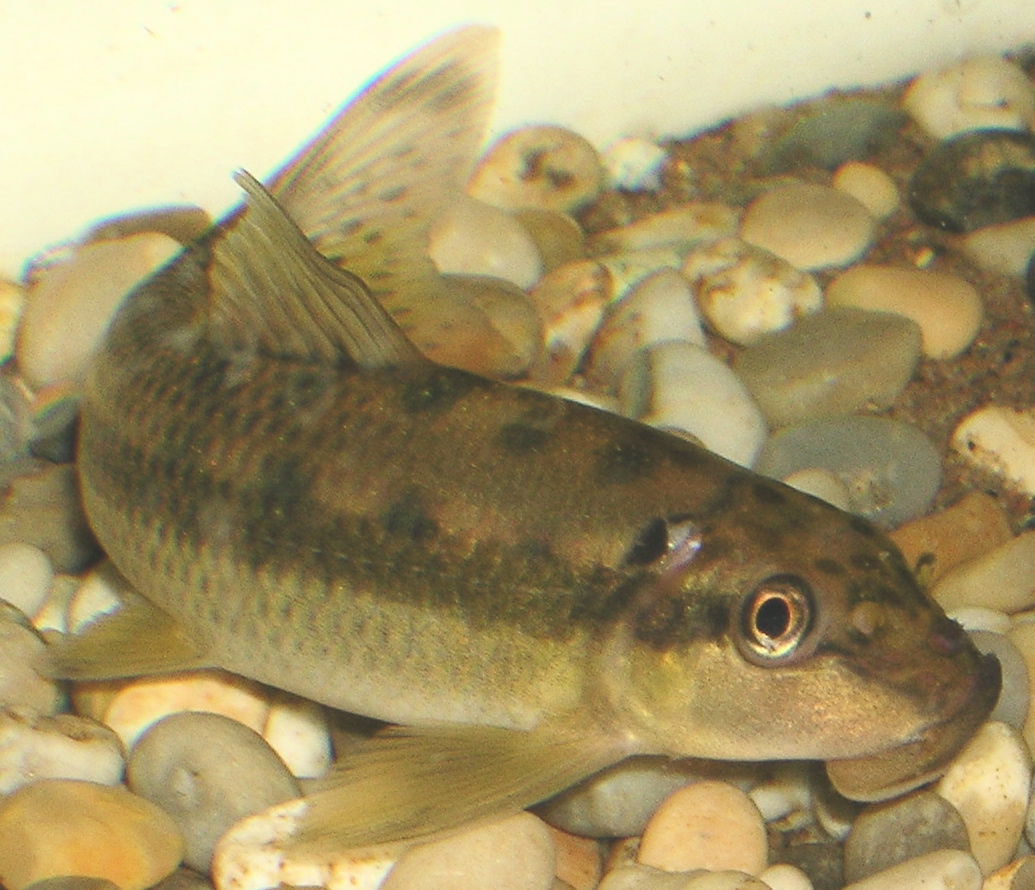 🇰🇭 Cambodia and 4 moreGyrinocheilus aymonieri
A Southeast Asian freshwater fish known for its suction-like mouth and role in the aquarium trade.Other · Rivers and lakes
 🇨🇳 China and 4 moreThree spot gourami
Hardy freshwater fish native to Southeast Asia with distinct side spots.Other · Rivers and lakes
 🇹🇭 Thailand and 4 moreClown featherback
Large tropical freshwater fish with a knife-shaped body and spotted pattern.Other · Rivers and lakes
Photo credits on this page
The small pictures above come from Wikimedia Commons under free licences. Some are cropped to fit.
- Gyrinocheilus aymonieri: Pseudogastromyzon, Public domain, source
- Three spot gourami: Gourami Watcher, CC BY-SA 3.0, source
- Clown featherback: Mistvan, CC BY-SA 3.0, source