
Clown featherback
Large tropical freshwater fish with a knife-shaped body and spotted pattern.
The clown featherback is a large nocturnal fish native to Southeast Asian rivers. It features a long anal fin for movement and distinct black spots. While popular in aquariums and food markets, it is an invasive species in other regions due to releases from the trade.
- Uses long anal fin for forward and backward propulsion
- Males guard nests aggressively during breeding season
- Listed as least concern but invasive in Florida and Sri Lanka
- Reaches one metre in length in the wild
- Nocturnal hunter of fish, crustaceans and insects
What it is
This tropical fish has a long, laterally compressed body that resembles a knife blade. Its colour shifts from brownish-yellow in youth to grey-silver in adulthood. A row of six to ten black spots with white borders runs above the anal fin base. The small dorsal fin sits forward, creating a humped appearance, while the long anal fin extends along most of the lower body. This structure gives the species its common name and distinctive silhouette.
Where it lives
Native to tropical fresh waters in Southeast Asia, this fish inhabits the Mekong, Chao Phraya, and Mae Klong river basins. It prefers flowing streams with vegetation but can survive in stagnant pools using a modified swim bladder. Outside its native range, it has established populations in Florida and Sri Lanka. These introductions often result from accidental or deliberate releases by ornamental fish breeders and hobbyists.
How it lives
Nocturnal by nature, it hides during the day and hunts at night. Adults are solitary and territorial, feeding on smaller fish, crustaceans, and insects. Juveniles stay near vegetation for protection before becoming independent. The species uses its long anal fin for propulsion, rippling it to move forward or backward. This motion reduces turbulence, helping the lateral line detect vibrations in the water for navigation and hunting.
Breeding and life cycle
Spawning occurs between March and August, peaking in April and May. Females lay 300 to 500 adhesive, spherical eggs on vegetation or submerged wood. Both parents tend the nest, but males guard it aggressively against predators. They fan the eggs to provide oxygen. Males often lose body condition during this period due to energy expenditure, while larger females are preferred for mating due to higher reproductive potential.
Fish and people
In Southeast Asia, particularly Thailand, this fish is consumed as food. Due to numerous small bones, it is often minced for fish balls or deep fried. It is also popular in the aquarium trade, though it outgrows most home tanks. Confusion with the rare Chitala chitala occurs in the trade. Its hardiness and size make it a frequent subject of accidental release into non-native waters.
Status and threats
The International Union for Conservation of Nature lists it as least concern due to its wide distribution and adaptability. However, it is considered highly invasive in regions like the United States and Sri Lanka. Its ability to tolerate pollution and high salinity allows it to outcompete native species. Predation by this fish threatens local biodiversity in these introduced ranges.


Questions people ask about Clown featherback
How does the clown featherback move?
It relies on its long anal fin rather than its tail for movement. Rippling the fin from head to tail pushes it forward, while reversing the ripple moves it backward. This method provides stability and reduces water turbulence.
Is the clown featherback dangerous to other fish?
Yes, in non-native regions it is an invasive predator. It eats smaller fish, crustaceans, and insects. Its ability to tolerate poor water conditions allows it to thrive and threaten endemic species in places like Florida and Sri Lanka.
Do clown featherbacks care for their young?
Yes, both parents care for the eggs. The male guards the nest defensively against predators, while both adults fan the eggs to ensure they receive enough oxygen. This care continues until the eggs hatch.
Good reading and sources
- Clown featherback on WikipediaEncyclopedia
- More photos on Wikimedia CommonsPhotos
- Wikidata recordOpen data
The facts on this page come from the Wikipedia article "Clown featherback", written by its contributors and used under the CC BY-SA 4.0 licence, and from its Wikidata record (CC0). EveryFish rewrote the text in its own words, with AI assistance, and compares every page with the article to make sure no passage is copied. It may be reused under the same CC BY-SA 4.0 licence with a link back.
It may contain mistakes, and figures change over time. Nothing here is investment or buying advice. If something is wrong, tell us. Last refreshed 2026-11-15.
Like Clown featherback
All other fish 🇧🇷 Brazil and 1 moreRed-bellied Pacu
A large South American freshwater fish related to piranhas, farmed for food and kept in aquariums.Other · Rivers and lakes
 Southeast AsiaGiant snakehead
A large freshwater predator from Southeast Asia known for air breathing and invasive potential.Other · Rivers and lakes
 🇧🇷 BrazilBanded leporinus
A striped freshwater fish from the Amazon kept in home tanks and occasionally caught by anglers.Other · Rivers and lakes
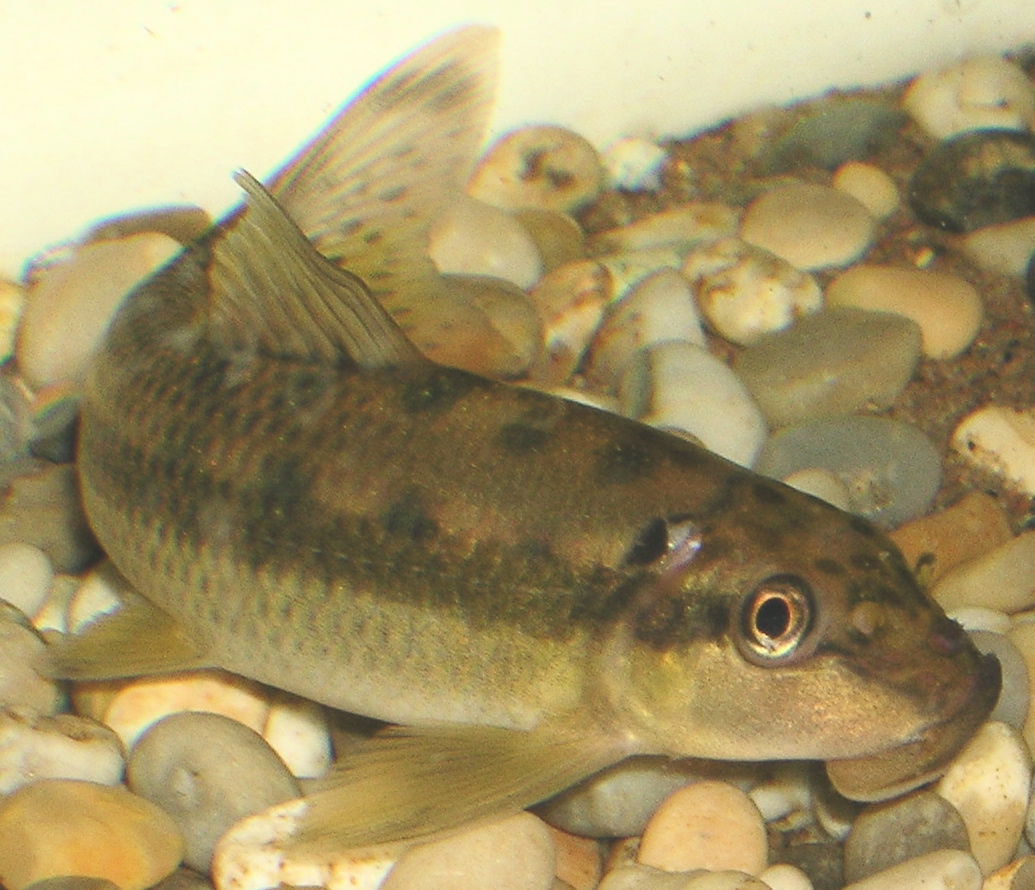 🇰🇭 Cambodia and 4 moreGyrinocheilus aymonieri
A Southeast Asian freshwater fish known for its suction-like mouth and role in the aquarium trade.Other · Rivers and lakes
More from Notopteridae
All of them WorldFeatherbacks and knifefishes
Freshwater bony-tongued fishes with long anal finsOther · Rivers and lakes
 🇹🇩 Chad and 2 moreAfrican brown knifefish
Nocturnal freshwater fish with a knife-shaped body and fused fins.Other · Rivers and lakes
 🇱🇦 Laos and 3 moreBronze featherback
A freshwater fish from South and Southeast Asia used for food.Other · Rivers and lakes