
Orange-spotted grouper
A large Indo-Pacific marine fish prized for its flesh and known for changing sex.
The orange-spotted grouper is a ray-finned fish found across the Indo-Pacific region. It inhabits coral reefs and estuaries, growing up to 120 cm in length. This species faces severe overfishing pressure due to high market demand.
- Maximum length reaches 120 centimetres.
- Changes sex from female to male at 67 cm.
- Spawns in large groups of up to 1,500 fish.
- First described by Francis Buchanan-Hamilton in 1822.
- Faces severe overfishing in the Persian Gulf.
What it is
This ray-finned fish features an elongate body with a flat or slightly convex head profile. Adults display light brown backs that fade to whitish bellies, covered in small brown or orange spots. Dark H-shaped markings appear on the flanks, while juveniles show larger, fewer spots. The dorsal fin holds eleven spines, and the caudal fin is rounded. Maximum recorded lengths reach 120 centimetres, with weights up to 15 kilograms.
Where it lives
Found throughout the Indo-Pacific, this species ranges from the Gulf of Suez down to South Africa. Populations exist off Madagascar, Mauritius, and Réunion. The range extends eastward into the Pacific Ocean toward Palau and Fiji. Northern limits include Japan, while southern boundaries cover Australia. A rare presence was noted in the Mediterranean Sea near Israel starting in 1969.
How it lives
Juveniles frequent estuaries with sand, mud, or gravel substrates before moving to coral reefs as adults. They are predatory, feeding on fishes, shrimp, crabs, and benthic crustaceans. At night, they partially bury themselves in mud. These fish are diandric protogynous hermaphrodites, meaning females can transform into males around 67 centimetres long and seven years old.
Breeding and life cycle
Spawning occurs in large aggregations, sometimes involving thousands of individuals over muddy or sandy bottoms. In the Persian Gulf, breeding happens between March and June. Eggs and larvae are pelagic, drifting in open water. Males develop either directly from juveniles or by transformation from functional females when reaching specific size and age thresholds.
Fish and people
Highly valued for its spectacular flesh, this fish supports commercial fisheries globally. Markets sell them live, fresh, or frozen. Aquaculture attempts have been made to breed them in captivity. Intense fishing pressure has caused severe population declines, with some areas reporting catches far below historical levels. Larger males are particularly targeted, disrupting gender balances.
Status and threats
Severe overexploitation threatens populations across its entire range. Fishing intensity often exceeds sustainable levels significantly. Slow growth rates and late maturity exacerbate recovery difficulties. The removal of large males creates reproductive imbalances. Conservation measures are critical, though current data indicates the status remains poorly assessed globally.


Questions people ask about Orange-spotted grouper
What does the orange-spotted grouper eat?
It is a predatory species that hunts fishes, shrimp, crabs, and other benthic crustaceans. Adults actively hunt in coral reef environments, while juveniles may forage in estuaries and mangroves.
How big can this fish grow?
The maximum published total length is 120 centimetres. Adults can weigh up to 15 kilograms. Juveniles start smaller with larger spots that multiply as they mature.
Is it safe to eat?
Yes, it is esteemed as a food fish with spectacular tasting flesh. It is sold live, fresh, and frozen in markets worldwide, though overfishing has reduced availability in some regions.
Where do they live?
They inhabit coral reefs along mainland coasts and large islands. Juveniles frequently use estuaries with sand, mud, or gravel substrates, as well as mangrove areas.
Do they change sex?
Yes, they are diandric protogynous hermaphrodites. Some females transform into males when they reach approximately 67 centimetres in length and about 7.5 years of age.
Good reading and sources
- Orange-spotted grouper on WikipediaEncyclopedia
- More photos on Wikimedia CommonsPhotos
- Wikidata recordOpen data
The facts on this page come from the Wikipedia article "Orange-spotted grouper", written by its contributors and used under the CC BY-SA 4.0 licence, and from its Wikidata record (CC0). EveryFish rewrote the text in its own words, with AI assistance, and compares every page with the article to make sure no passage is copied. It may be reused under the same CC BY-SA 4.0 licence with a link back.
It may contain mistakes, and figures change over time. Nothing here is investment or buying advice. If something is wrong, tell us. Last refreshed 2026-11-15.
Like Orange-spotted grouper
All other fish WorldOrbicular batfish
A round, silvery marine fish native to the Indo-Pacific.Other · Coasts and shelves
 WorldSeahorse
Small marine fish with horse-like heads and curled tails in the genus Hippocampus.Other · Coasts and shelves
 WorldJavelin grunter
A marine grunt found in the Indo-Pacific coastal waters.Other · Coasts and shelves · 1830
 WorldGreater amberjack
Large predatory jack found in warm seas worldwide.Other · Coasts and shelves · 1810
More from Serranidae
All of them Southeast AsiaHumpback grouper
A spotted marine fish with a distinctive humped head profile.Perch-like · Coral reefs · 1828
 WorldGiant grouper
A massive Indo-Pacific reef fish and one of the largest bony species on Earth.Reef fish · Coasts and shelves · 1790
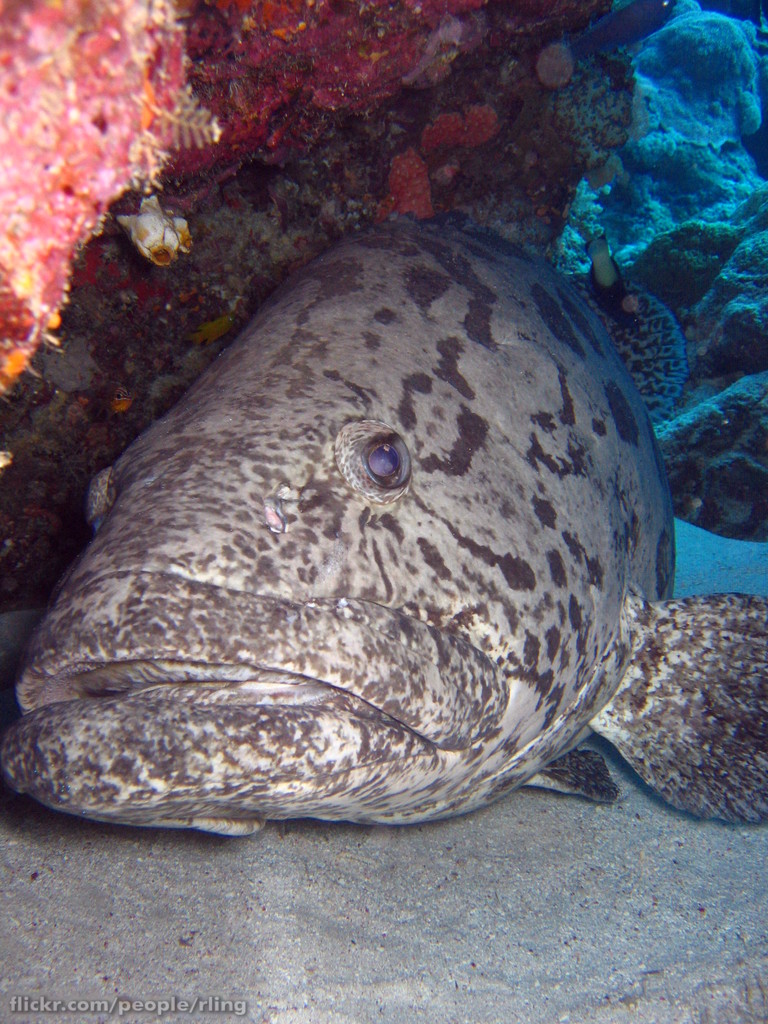 WorldPotato grouper
Large Indo-Pacific reef grouper with dark blotches.Perch-like · Coral reefs · 1959
 WorldGreasy grouper
Indo-Pacific reef fish with slow growth and high commercial valuePerch-like · Coasts and shelves