
Greenland shark
A large, slow-moving sleeper shark with the longest lifespan of any vertebrate.
The Greenland shark is a massive sleeper shark found in the cold waters of the North Atlantic and Arctic Oceans. It holds the record for longevity among vertebrates, living up to five centuries, and grows to over six metres long.
- Lifespan estimated between 272 and 510 years.
- Maximum confirmed length is 6.4 metres.
- Sexual maturity reached at approximately 150 years.
- Meat is toxic raw due to high TMAO levels.
- Parasitic copepods often cause blindness.
What it is
This thickset shark features a short rounded snout, small eyes, and tiny dorsal fins. Its colour ranges from pale grey to blackish-brown, sometimes marked with white spots. Adults grow to four or five metres, with the largest confirmed specimen reaching 6.4 metres and weighing over one tonne. Females are generally larger than males. The species belongs to the sleeper shark family and rivals its Pacific relative in size.
Where it lives
These sharks inhabit the frigid waters of the North Atlantic and Arctic Oceans. They prefer depths between 100 and 1,200 metres but migrate vertically and seasonally. In winter they gather in shallows near the poles, while summer brings them to deeper southern waters. Records exist from the Gulf of Mexico and even the Caribbean coast of Belize, suggesting a wider tropical distribution at depth than previously thought.
How it lives
They are sluggish swimmers with a very slow metabolism, cruising at roughly 0.34 metres per second. This speed suits their role as ambush predators and scavengers. They hunt sleeping or injured seals and fish using suction and smell, relying on a lateral line system due to poor vision caused by parasitic copepods. Their diet includes carrion, herring, cod, and even reindeer carcasses washed into the sea.
Breeding and life cycle
Reproduction is extremely slow. Pups are born live after a gestation period lasting eight to eighteen years. Sexual maturity is reached late, around one hundred and fifty years of age. Males mature at a smaller size than females. The species diverged from ancestral sleeper sharks during the Pleistocene epoch, adapting to glacial cycles.
Fish and people
Meat contains high levels of trimethylamine N-oxide, making it toxic to mammals unless dried and fermented. In Iceland, this treated product is known as kæstur hákarl. Despite their size, they pose little threat to humans due to their remote habitat. One unverified report from 1859 mentions a human leg in a stomach, but attacks are rare.
Status and threats
Information is scarce because they live in deep, remote environments. They are not currently assessed by the IUCN Red List. Their slow growth and late maturity make them vulnerable to overfishing if targeted. Genetic studies published in 2024 reveal a massive genome with unique DNA repair mechanisms that likely support their extreme longevity.


Questions people ask about Greenland shark
How long do Greenland sharks live?
They have the longest lifespan of any known vertebrate. Estimates range from 272 to 510 years, with the oldest individual calculated at approximately 392 years old based on radiocarbon dating of eye lens crystals.
Are Greenland sharks dangerous to humans?
They are not considered a threat. They live in cold, deep, remote waters where human contact is rare. While one unverified historical report exists, no confirmed attacks have been recorded, and their slow speed makes them unlikely to catch a swimming person.
Why is Greenland shark meat poisonous?
Their tissues contain high concentrations of trimethylamine N-oxide. When fresh, this compound is toxic to mammals. In Iceland, the meat is traditionally dried and fermented to break down the toxins, creating a delicacy called kæstur hákarl.
What do Greenland sharks eat?
They are generalist feeders and scavengers. Their diet includes fish like herring and cod, marine mammals such as seals and minke whales, and carrion. They have also been found with remains of moose, horses, and reindeer in their stomachs.
Good reading and sources
- Greenland shark on WikipediaEncyclopedia
- More photos on Wikimedia CommonsPhotos
- Wikidata recordOpen data
The facts on this page come from the Wikipedia article "Greenland shark", written by its contributors and used under the CC BY-SA 4.0 licence, and from its Wikidata record (CC0). EveryFish rewrote the text in its own words, with AI assistance, and compares every page with the article to make sure no passage is copied. It may be reused under the same CC BY-SA 4.0 licence with a link back.
It may contain mistakes, and figures change over time. Nothing here is investment or buying advice. If something is wrong, tell us. Last refreshed 2026-11-15.
Like Greenland shark
All sharks WorldSmall-spotted catshark
A common shallow-water shark found across the northeast Atlantic and Mediterranean.Shark · Coasts and shelves
 WorldSkate
Cartilaginous fish with flat bodies and egg cases, found on sea floors worldwide.Shark · Coasts and shelves
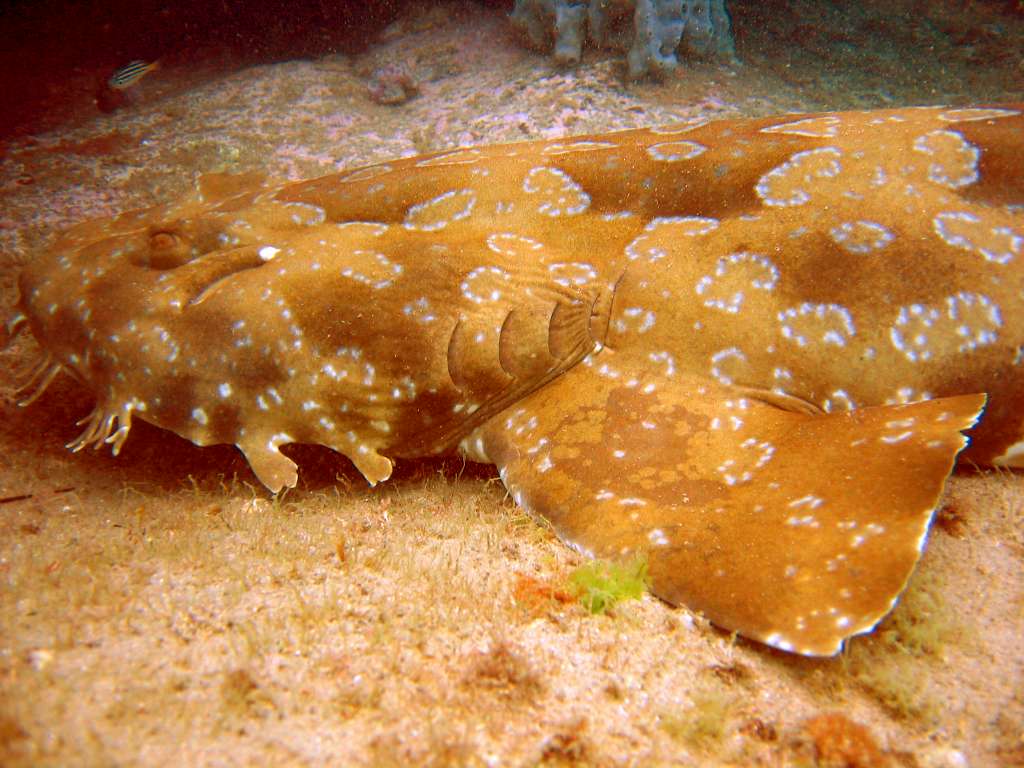 🇦🇺 Australia and 2 moreWobbegong
Camouflaged bottom-dwelling sharks found in the western Pacific and eastern Indian Ocean.Shark · Coasts and shelves
 WorldChimaeras
Cartilaginous deep-sea fish with cartilage skeletons and unique tooth plates.Shark · Open ocean
