
Vacha catfish
A schilbid catfish native to South Asia.
The Vacha catfish is a schilbid species found in rivers across India, Nepal, Bhutan and Bangladesh. It grows up to 34 cm and serves as a key subject for studying how warming climates affect fish breeding cycles.
- Native to India, Nepal, Bhutan and Bangladesh
- Grows up to 34 cm long and 1.35 kg
- Needs 24 °C water for breeding
- Sensitive to climate change impacts
- Used in ecological research studies
What it is
This fish belongs to the schilbid family of catfish. It has a streamlined body typical of river dwellers. Adults can reach a length of 34 centimetres and weigh up to 1.35 kilograms. The species is native to the freshwater systems of South Asia. Its physical form allows it to navigate river currents effectively. Researchers identify it by its specific taxonomic classification within the Schilbeidae family.
Where it lives
The Vacha catfish inhabits freshwater rivers in four countries. Its range includes India, Nepal, Bhutan and Bangladesh. It is particularly noted in the River Ganga system. The fish relies on specific environmental conditions found in these tropical and subtropical waterways. These regions provide the necessary flow and temperature regimes for its survival and reproduction cycles.
How it lives
This species shows high sensitivity to climate variations. Studies indicate that local warming trends influence its biological rhythms. It adapts its behaviour based on regional climate patterns. The fish is selected as a target for impact studies because of this responsiveness. Its life cycle is closely tied to seasonal changes in water temperature and precipitation levels in its habitat.
Breeding and life cycle
Reproduction depends on strict environmental triggers. Breeding phenology varies by region due to local climate trends. In the River Ganga, spawning requires a water temperature threshold of around 24 degrees Celsius. Rainfall exceeding 100 millimetres is also necessary. These conditions help attain a gonadosomatic index greater than 3.5 units. Warming climates profoundly affect gonad maturation and the timing of spawning events.
Fish and people
Scientists use this catfish to study climate change impacts. It serves as an indicator species for understanding how warming affects aquatic life. Its primary value to humans currently lies in ecological research. Researchers monitor its breeding patterns to gauge environmental shifts in South Asian river systems.
Status and threats
However, the species faces threats from changing climate conditions. Warming waters disrupt its breeding cycle and gonad development. These environmental pressures may affect population stability over time. Monitoring programmes focus on its adaptation to rising temperatures and shifting rainfall patterns in its native range.

Questions people ask about Vacha catfish
Where does the Vacha catfish live?
It is native to freshwater rivers in India, Nepal, Bhutan and Bangladesh. It is particularly associated with the River Ganga system where researchers study its adaptation to local climate trends.
How big does this catfish get?
Adults can reach a maximum length of 34 centimetres. They can also weigh up to 1.35 kilograms. This size makes it a medium-sized member of the schilbid catfish family.
What triggers its breeding season?
Breeding requires specific environmental conditions. Water temperature must reach around 24 degrees Celsius. Additionally, rainfall needs to exceed 100 millimetres to support gonad maturation and successful spawning.
Good reading and sources
- Eutropiichthys vacha on WikipediaEncyclopedia
- More photos on Wikimedia CommonsPhotos
- Wikidata recordOpen data
The facts on this page come from the Wikipedia article "Eutropiichthys vacha", written by its contributors and used under the CC BY-SA 4.0 licence, and from its Wikidata record (CC0). EveryFish rewrote the text in its own words, with AI assistance, and compares every page with the article to make sure no passage is copied. It may be reused under the same CC BY-SA 4.0 licence with a link back.
It may contain mistakes, and figures change over time. Nothing here is investment or buying advice. If something is wrong, tell us. Last refreshed 2026-11-15.
Like Vacha catfish
All catfishes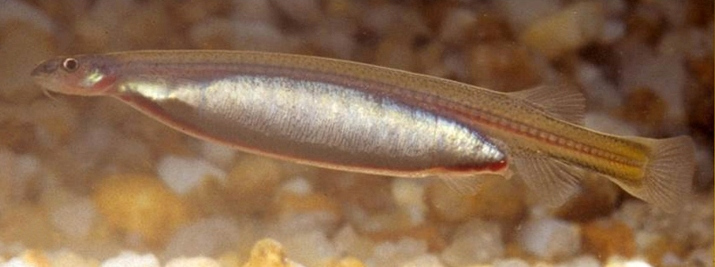 🇧🇷 Brazil and 4 moreCandiru
A tiny parasitic catfish from the Amazon that feeds on blood.Catfish · Rivers and lakes
 🇹🇭 Thailand and 4 moreMekong giant catfish
A massive freshwater fish native to the Mekong basin, now critically endangered.Catfish · Rivers and lakes
 🇺🇸 United StatesWidemouth blindcat
A pale, eyeless catfish from Texas aquifersCatfish · Rivers and lakes
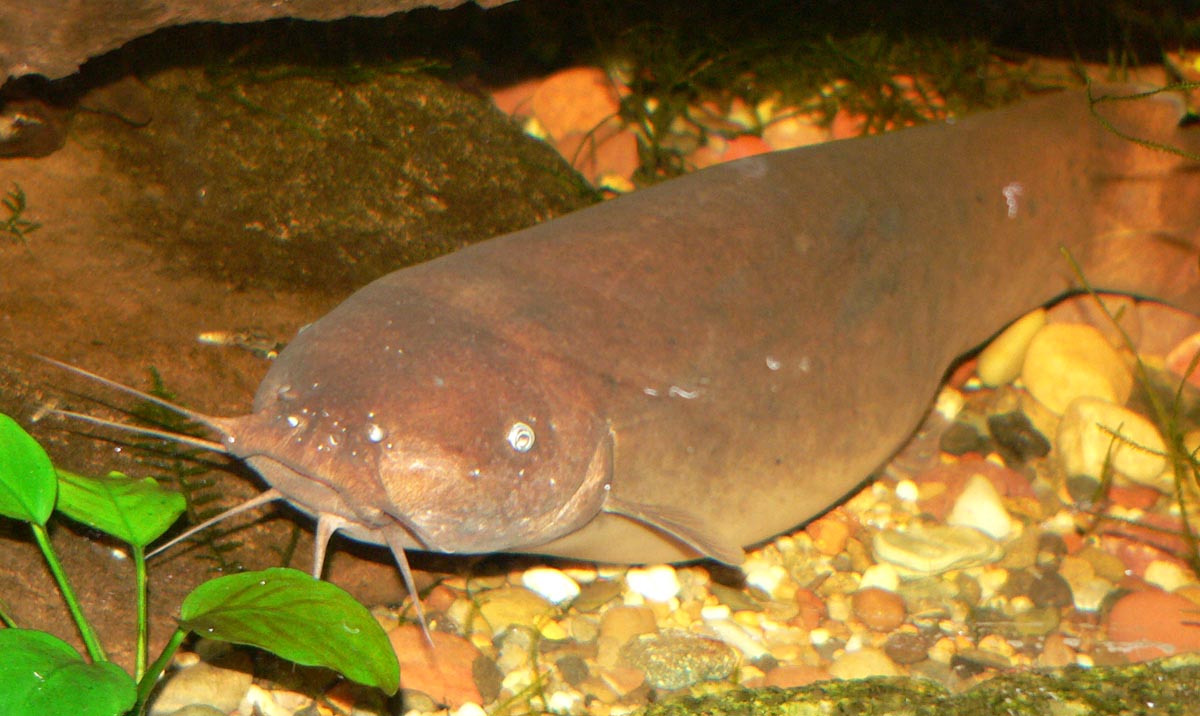 🇳🇬 Nigeria and 1 moreElectric catfish
African catfish that generates strong electric shocksCatfish · Rivers and lakes
