
Dwarf lanternshark
The world's smallest shark, a bioluminescent dogfish from the Caribbean deep slope.
The dwarf lanternshark is the smallest known shark species, reaching just 20 cm. It lives in the dark waters off Colombia and Venezuela, where it uses light organs to survive.
- Smallest shark species, max length 21.2 cm.
- Found only on slopes off Colombia and Venezuela.
- Uses photophores to produce light on its belly.
- Born alive with two or three young per litter.
- Described scientifically in 1985 by Springer and Burgess.
What it is
This tiny dogfish holds the title for the smallest living shark. Adults rarely exceed twenty centimetres in length. The animal features a broad, flattened head that makes up a significant portion of its body. Its skin is dark brown, covered in needle-like scales arranged randomly. A key identifier is the pattern of black markings on its underside. These markings include light-producing organs called photophores. A thin black line runs along the middle of its back. The shark has two dorsal fins equipped with grooved spines. Large eyes help it see in the dim light of its environment.
Where it lives
The species is found only in the upper continental slopes of the Caribbean Sea. Records place it near the coasts of Colombia and Venezuela. Specific locations include areas between Barranquilla and Santa Marta. It also appears near the Guajira Peninsula and the Los Testigos Islands. The range extends south towards Grenada. Individuals live at depths ranging from two hundred eighty-three to four hundred thirty-nine metres. This zone is part of the deep ocean environment.
How it lives
Males reach sexual maturity at lengths between sixteen and seventeen point five centimetres. Fematures mature slightly earlier, around fifteen point five centimetres. The shark relies on bioluminescence for survival in the dark. Photophores on its ventral surface produce light. Chromatophores provide additional dark patches for camouflage. Predators likely include larger deep-sea fish and marine mammals. The low fecundity of the species makes it vulnerable to population declines. Human activities may impact numbers through bycatch in commercial fisheries.
Breeding and life cycle
Reproduction occurs via aplacental viviparity. Developing embryos receive nutrients from a yolk sac until birth. Females typically carry litters of two or three young. Newborns measure approximately five point five to six centimetres long. Pregnant females can grow up to twenty centimetres. The small litter size limits population growth rates. This reproductive strategy is common among deep-water sharks.
Fish and people
The dwarf lanternshark has no economic value due to its minute size. It is not targeted by commercial fishing operations. However, it may be caught unintentionally as bycatch. The limited range and low reproduction rate raise conservation concerns. The International Union for Conservation of Nature lists it as least concern. Current human impact on its population remains unknown. Researchers study it to understand deep-sea biodiversity.
Status and threats
The species is assessed as least concern by the IUCN. Threats include potential mortality from commercial bycatch. Dams and pollution are not cited as direct threats. Climate change impacts are not detailed in current records. Protection efforts focus on monitoring bycatch levels. The restricted habitat makes it susceptible to localized disturbances. Further research is needed to assess population trends accurately.

Questions people ask about Dwarf lanternshark
How big does the dwarf lanternshark get?
Adults reach a maximum length of about twenty-one point two centimetres. Males mature at sixteen to seventeen point five centimetres. Females mature at roughly fifteen point five centimetres. Pregnant individuals can grow up to twenty centimetres long.
Where does this shark live?
It inhabits the upper continental slopes of the Caribbean Sea. Locations include waters off Colombia and Venezuela. Depths range from two hundred eighty-three to four hundred thirty-nine metres. Specific sites include areas near Barranquilla and Santa Marta.
Is the dwarf lanternshark dangerous to humans?
No, it poses no danger to humans. Its small size means it has no economic value. It is not targeted by fisheries but may be caught as bycatch. It lacks venom or aggressive behaviour towards people.
How do they reproduce?
They are aplacental viviparous. Embryos develop using a yolk sac for nutrition. Females give birth to litters of two or three young. Newborns measure approximately five point five to six centimetres.
Good reading and sources
- Dwarf lanternshark on WikipediaEncyclopedia
- More photos on Wikimedia CommonsPhotos
- Wikidata recordOpen data
The facts on this page come from the Wikipedia article "Dwarf lanternshark", written by its contributors and used under the CC BY-SA 4.0 licence, and from its Wikidata record (CC0). EveryFish rewrote the text in its own words, with AI assistance, and compares every page with the article to make sure no passage is copied. It may be reused under the same CC BY-SA 4.0 licence with a link back.
It may contain mistakes, and figures change over time. Nothing here is investment or buying advice. If something is wrong, tell us. Last refreshed 2026-11-15.
Like Dwarf lanternshark
All sharks 🇯🇵 JapanViper dogfish
A rare deep-sea shark with fang-like teeth and light-producing organs.Shark · Deep sea · 1990
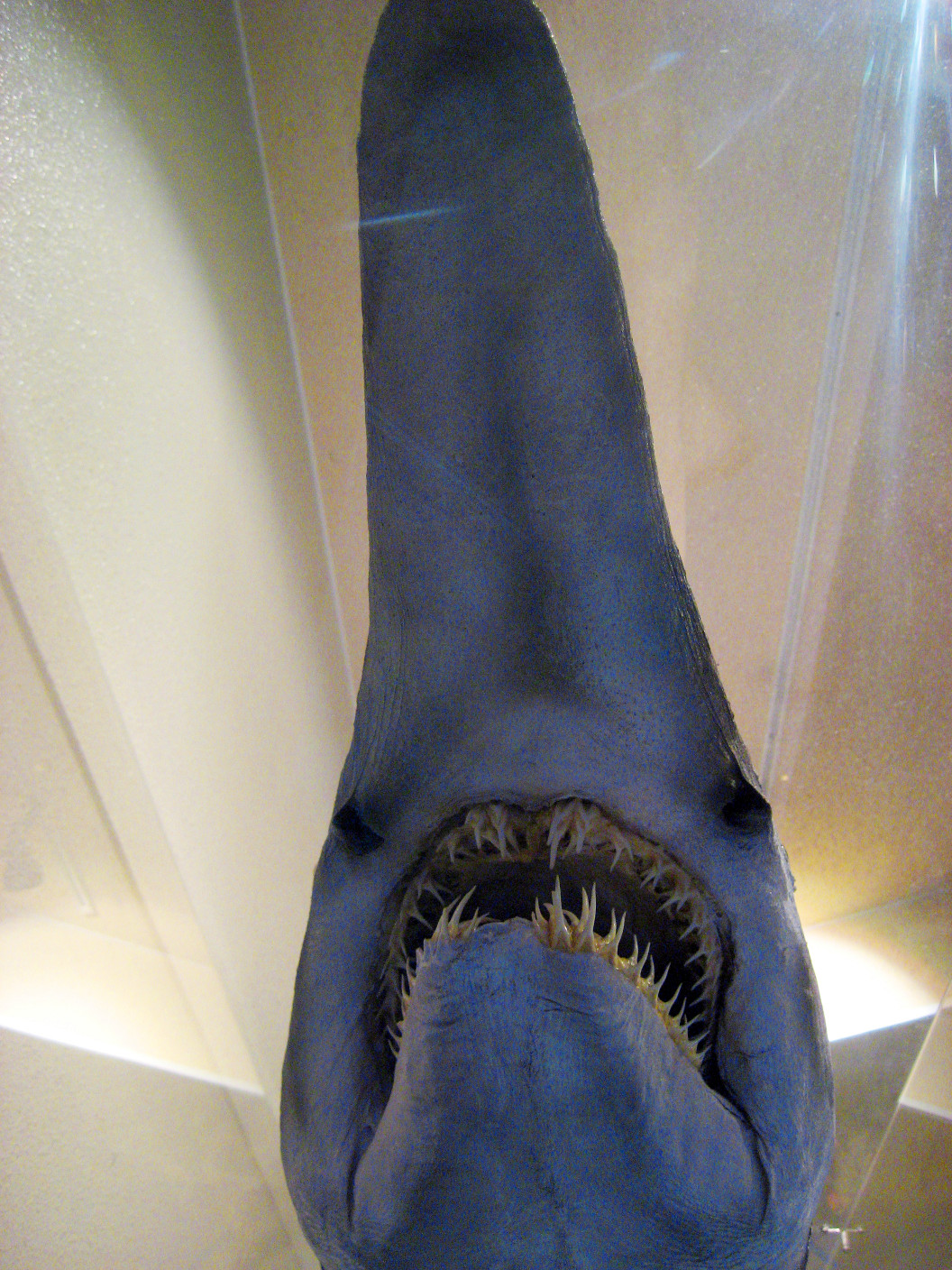 WorldGoblin shark
Rare deep-sea shark with protrusible jaws and pink skinShark · Open ocean · 1898
 🇯🇵 Japan and 3 moreFrilled shark
An ancient, eel-like deep-sea shark with six pairs of gill slits and needle teeth.Shark · Open ocean · 1884
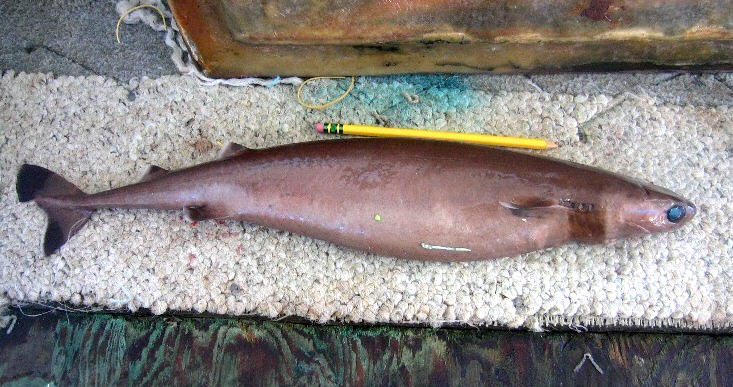 WorldCookiecutter shark
A small deep-sea shark that bites round plugs from larger animals.Shark · Open ocean · 1824
