
Frilled shark
An ancient, eel-like deep-sea shark with six pairs of gill slits and needle teeth.
The frilled shark is a primitive elasmobranch found in the Atlantic and Pacific oceans. It lives on continental slopes, hunting squid and small fish at night after migrating vertically from the depths.
- Gestation period reaches 3.5 years for live birth from eggs.
- Three hundred recurved teeth line the narrow jaws.
- Six pairs of gill slits create a fringed appearance at the throat.
- Maximum recorded depth is 1,570 metres in the Pacific.
- Diet consists mainly of squid varieties and small sharks.
What it is
The frilled shark is an ancient marine predator resembling an eel in body shape. Its skin ranges from dark brown to grey, and it possesses a long, slender torso measuring up to two metres. The head is broad and flat with a short snout. A distinctive feature is the throat, which displays six pairs of gill slits that form a fleshy fringe. The eyes are horizontal ellipsoids without protective eyelids. The mouth holds three hundred recurved, needle-like teeth arranged in widely spaced rows. Dorsal, pelvic, and anal fins sit near the tail, while the pectoral fins are small and rounded.
Where it lives
This species inhabits the outer continental shelves and upper slopes of the Atlantic and Pacific oceans. In the Atlantic, it ranges from Norway and Scotland south to Morocco and Brazil. In the Pacific, it appears from Japan and Taiwan to New Zealand and California. It typically stays near the ocean floor but migrates vertically to feed at night. While often found between fifty and two hundred metres deep in areas like Suruga Bay, Japan, it can dive deeper than one thousand five hundred metres. It prefers biologically productive waters and avoids depths below one thousand metres in most regions.
How it lives
Frilled sharks hunt cephalopods, particularly squid, along with smaller sharks and bony fish. They use diel vertical migration to reach surface waters at night. To capture prey, they brace their tails against rocks or the seabed, then lunge with flexible jaws. Their wide gape allows them to swallow animals larger than themselves. The teeth snag soft bodies and tentacles effectively. They are generally solitary, though aggregations occur on seamounts during mating. Parasites such as tapeworms and nematodes affect them, and they face predation from larger sharks, evidenced by missing tail tips.
Breeding and life cycle
Reproduction follows an aplacental viviparous strategy. Embryos develop inside egg capsules within the mother’s uterus, feeding on yolk rather than a placenta. Gestation lasts up to three and a half years, resulting in litters of two to fifteen pups. There is no distinct breeding season. The long development period ensures young are born relatively large and capable of surviving in deep-water environments immediately after emerging from their capsules.
Fish and people
Commercial fisheries occasionally catch frilled sharks as bycatch in deep-sea trawls. The meat is utilized for human consumption or processed into fishmeal, giving the species some economic value. Despite being caught at significant depths, occurrences below twelve hundred metres remain uncommon. Fishing pressure has not led to immediate conservation crises, but data on population trends remains limited due to their remote habitat and elusive nature.
Status and threats
The International Union for Conservation of Nature does not list a specific status year in the provided text, but the species is generally considered Least Concern due to its wide distribution. However, its slow reproductive rate and long gestation make populations vulnerable to overfishing. Threats include commercial bycatch and potential habitat disruption from deep-sea mining. Protection measures are currently minimal, relying largely on existing fisheries regulations in various countries.


Questions people ask about Frilled shark
Why is the frilled shark called a living fossil?
It retains primitive anatomical traits from millions of years ago, such as amphistyly jaw articulation and a quasi-cartilaginous notochord, showing little evolutionary change since the Cretaceous period.
How does the frilled shark catch its prey?
It braces its tail against the seabed for leverage, then lunges forward with flexible jaws. The wide gape and recurved teeth allow it to snap up prey larger than itself, including squid and small sharks.
Where do frilled sharks live in the ocean?
They inhabit the outer continental shelves and upper slopes of the Atlantic and Pacific oceans. They prefer depths between fifty and two hundred metres but can dive beyond one thousand five hundred metres.
What is unique about their reproduction?
They are aplacental viviparous, meaning embryos develop inside egg capsules within the mother. The young feed on yolk until birth, which occurs after a gestation period lasting up to three and a half years.
Good reading and sources
- Frilled shark on WikipediaEncyclopedia
- More photos on Wikimedia CommonsPhotos
- Wikidata recordOpen data
The facts on this page come from the Wikipedia article "Frilled shark", written by its contributors and used under the CC BY-SA 4.0 licence, and from its Wikidata record (CC0). EveryFish rewrote the text in its own words, with AI assistance, and compares every page with the article to make sure no passage is copied. It may be reused under the same CC BY-SA 4.0 licence with a link back.
It may contain mistakes, and figures change over time. Nothing here is investment or buying advice. If something is wrong, tell us. Last refreshed 2026-11-15.
Like Frilled shark
All sharks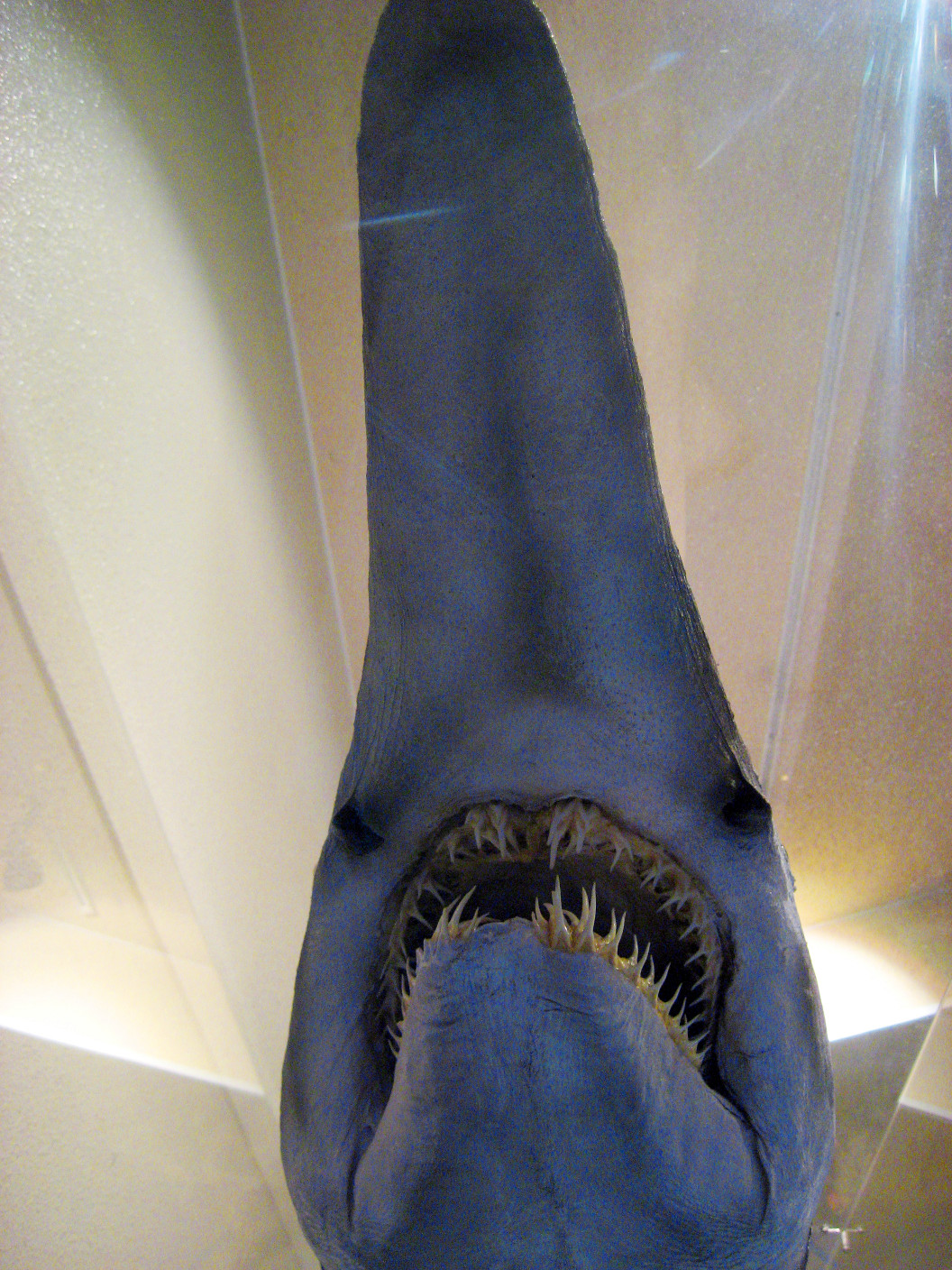 WorldGoblin shark
Rare deep-sea shark with protrusible jaws and pink skinShark · Open ocean · 1898
 WorldGalapagos shark
Large requiem shark of tropical oceanic islandsShark · Coasts and shelves · 1905
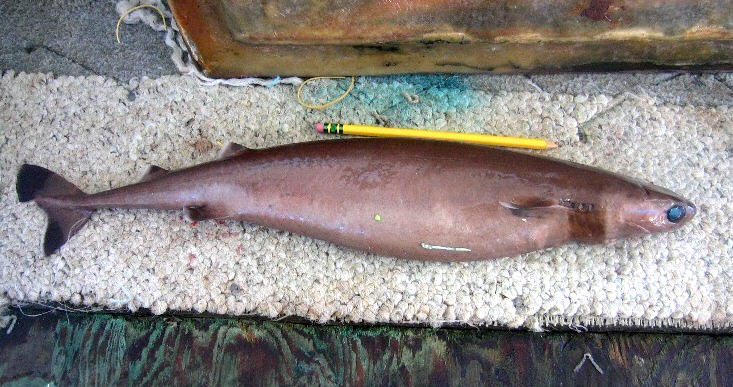 WorldCookiecutter shark
A small deep-sea shark that bites round plugs from larger animals.Shark · Open ocean · 1824
 WorldBramble shark
A deep-sea shark with thorn-like skin scales.Shark · Open ocean · 1788