
Lumpfish
A round, sucker-finned fish from the North Atlantic, prized for its roe and use in salmon farming.
The lumpfish is a marine ray-finned fish found in cold northern waters. It is known for its unique suction disc and significant role in aquaculture and food industries.
- Pelvic fins form a suction disc for clinging to rocks.
- Roe is processed into affordable caviar substitute.
- Used as cleaner fish on salmon farms.
- Juveniles exhibit green biofluorescence.
- Males guard eggs for one month after spawning.
What it is
This species belongs to the family Cyclopteridae and is the sole member of its genus. Adults possess a spherical body covered in knobbly skin and bony tubercles. Their pelvic fins have evolved into a powerful suction disc that allows them to cling firmly to rocks or other surfaces. Males are generally smaller than females, with the largest recorded specimen reaching 61 cm in length and weighing nearly 10 kg. Colouration varies widely, including shades of blue, grey, olive, yellow, and brown, while mature males develop an orange-red hue during the breeding season.
Where it lives
Lumpfish inhabit the North Atlantic Ocean and adjacent Arctic regions. Their distribution extends south to Chesapeake Bay on the American coast and Spain on the European coast. They are occasionally reported in the Mediterranean Sea. Juveniles typically occupy warmer waters between 6 and 9 °C, whereas adults prefer temperatures between 4 and 8 °C. They become rare in waters exceeding 12 °C. While often associated with the seabed, they also spend time in open water, migrating vertically through the water column.
How it lives
After hatching, young fish live in tidal pools or among floating seaweed before moving to open ocean waters. In the pelagic zone, they feed on gelatinous zooplankton, small crustaceans, and fish eggs. Juveniles exhibit biofluorescence, emitting green light from specific body ridges. Adults alter their daily behaviour, spending more time near the surface at night and closer to the seabed during the day. They lack a swim bladder but can move rapidly between depths of over 300 metres.
Breeding and life cycle
Mature fish migrate to coastal areas in spring to spawn. Females lay eggs in batches of 50,000 to 220,000 onto rocky nests selected by males. The male guards the eggs for approximately one month, fanning them with his fins to ensure oxygen flow. Females often return to the same spawning grounds and times each year. The ovaries of mature females can constitute up to one-third of their total body weight prior to spawning.
Fish and people
The primary commercial value lies in the roe, which is processed into inexpensive caviar substitutes. Major catches occur in Iceland and Greenland, where females are targeted using gillnets. Male fish are sometimes caught for local consumption in Scandinavia, prepared by salting, smoking, or boiling. Additionally, live lumpfish are used as cleaner fish on salmon farms in several countries to reduce parasite loads. Bycatch issues have impacted fishing certifications in some regions.
Status and threats
Populations in Iceland and Norway are monitored and considered healthy. Greenland shows stable trends based on limited data. The Canadian population is classified as threatened due to severe declines. Abundance in the North Sea and Baltic Sea remains unknown due to insufficient survey data. Fisheries in Iceland, Norway, and Greenland have held Marine Stewardship Council certifications, though Iceland’s was temporarily suspended due to bycatch concerns before being reinstated.


Questions people ask about Lumpfish
What makes the lumpfish physically unique?
Its pelvic fins are modified into a strong suction disc. This allows the fish to attach firmly to rocks and other surfaces in its marine environment.
How is the lumpfish used in aquaculture?
Live lumpfish are employed as cleaner fish on salmon farms. They help reduce parasite burdens on the farmed salmon without harming them.
Where does the lumpfish live?
It inhabits the North Atlantic and Arctic Oceans. Range includes coasts from Canada to Europe, extending south to Chesapeake Bay and Spain.
What do lumpfish eat?
They consume gelatinous zooplankton, fish eggs, and small crustaceans. Juveniles feed in open water, while adults may hunt near the seabed.
Good reading and sources
The facts on this page come from the Wikipedia article "Cyclopterus", written by its contributors and used under the CC BY-SA 4.0 licence, and from its Wikidata record (CC0). EveryFish rewrote the text in its own words, with AI assistance, and compares every page with the article to make sure no passage is copied. It may be reused under the same CC BY-SA 4.0 licence with a link back.
It may contain mistakes, and figures change over time. Nothing here is investment or buying advice. If something is wrong, tell us. Last refreshed 2026-11-15.
Like Lumpfish
All other fish 🇺🇸 United States and 1 moreNorth Pacific hake
A silver-gray marine fish found in the northeast Pacific Ocean, used for surimi production.Other · Coasts and shelves
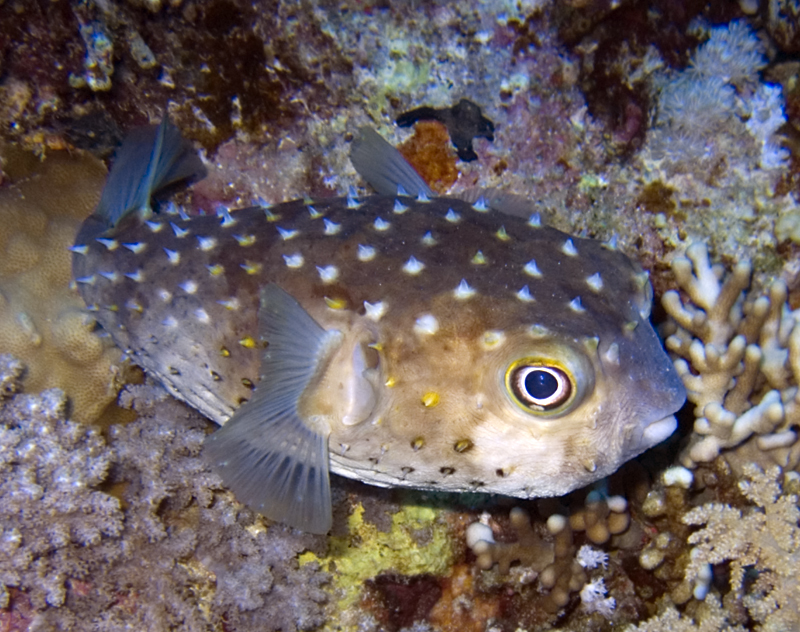 WorldPorcupinefish
Spiny marine fish that inflate into a defensive sphere to deter predators.Other · Coasts and shelves
 WorldCobia
A large, solitary marine fish found in warm tropical and subtropical waters worldwide.Other · Coasts and shelves
WorldCapelin
Small forage fish of the smelt family found in northern oceans.Other · Open ocean