
Common roach
A widespread European freshwater fish with red fins.
The common roach is a adaptable cyprinid native to Europe and western Asia. It thrives in varied freshwater and brackish habitats, tolerating pollution and temperature shifts. Introduced to Australia for sport, it remains a key species in local ecosystems.
- Identifiable by red fins and a red eye spot
- Tolerates water temperatures from 4 to 31 C
- Females can lay up to 100,000 eggs per season
- Introduced to Australia in the 1860s for sport
What it is
The common roach is a small to medium-sized fish belonging to the carp family. Adults typically reach 35 centimetres, though they can grow to 50 centimetres. The body displays a bluish-silvery hue that fades to white on the belly. Distinctive features include red fins and a prominent red spot in the iris above the pupil. Young fish are slender, while older individuals develop a deeper, broader shape. The lateral line contains between 39 and 48 scales.
Where it lives
This species is native to most of Europe and extends east into Siberia. It avoids the Mediterranean region but inhabits areas around the Caspian and Black Seas. Some subspecies in these regions have an oceangoing life cycle. Humans introduced the fish to Australia in the 1860s and 1880s, specifically into the Murray River and coastal drainages of New South Wales and Victoria. It thrives in diverse freshwater systems, from small ponds to major rivers.
How it lives
Roach are highly adaptable and tolerate organic pollution, often surviving where other species perish. They endure temperatures ranging from near freezing to 31 degrees Celsius. These shoaling fish feed at various depths but prefer shallower waters for food sources. Their diet includes plant material, bottom-dwelling invertebrates, worms, and plankton for juveniles. In nutrient-poor waters, they may slow growth and mature early to adapt to scarce resources.
Breeding and life cycle
Spawning occurs between March and June, triggered by rising water temperatures. Fish often return to the same locations annually. Large males form groups called leks, which females enter for mating. Males follow females closely, fertilizing eggs in a rough process that sometimes causes fish to jump from the water. A single female can release up to 100,000 eggs. Successful reproduction requires a water pH above 5.5.
Fish and people
Anglers value the roach for sport fishing, particularly in Europe. It was introduced to Australia specifically for recreational purposes. The fish serves as bait for catching larger predatory species. While not primarily a food fish in many Western contexts, it is consumed in some regions. Its resilience makes it a common subject in ecological studies regarding pollution tolerance and ecosystem health.
Status and threats
The common roach is numerous across most of its range. It tolerates poor water quality and is often the last species to disappear from polluted sites. However, high turbidity and sparse vegetation can allow common bream to surpass it in biomass. No specific conservation threats are noted for the main population, though introduced populations in Australia may impact local ecology.


Questions people ask about Common roach
How can you tell a roach from a rudd?
Roach have four or five scales between the ventral fin tip and anal fin rays, whereas rudd have only one or two. Rudd also display a more golden colour and an upturned mouth.
What do common roach eat?
They consume a wide variety of foods including plant material, worms, maggots, and bottom-dwelling invertebrates. Young fish primarily feed on plankton until they grow large enough for a broader diet.
Where are common roach found?
They are native to Europe and western Asia, excluding the Mediterranean. They were introduced to Australia in the nineteenth century and now inhabit the Murray River and southern coastal drainages.
Good reading and sources
The facts on this page come from the Wikipedia article "Common roach", written by its contributors and used under the CC BY-SA 4.0 licence, and from its Wikidata record (CC0). EveryFish rewrote the text in its own words, with AI assistance, and compares every page with the article to make sure no passage is copied. It may be reused under the same CC BY-SA 4.0 licence with a link back.
It may contain mistakes, and figures change over time. Nothing here is investment or buying advice. If something is wrong, tell us. Last refreshed 2026-11-15.
Like Common roach
All carps and minnows WorldTench
Slippery freshwater fish with olive-green skin and red eyes.Carp · Rivers and lakes · 1758
 EuropeAsp
A predatory freshwater fish native to Europe and western Asia.Carp · Rivers and lakes · 1758
 🇷🇺 RussiaCaspian roach
A brackish water fish from the Caspian Sea region, widely consumed as a dried snack.Carp · Estuaries and mangroves
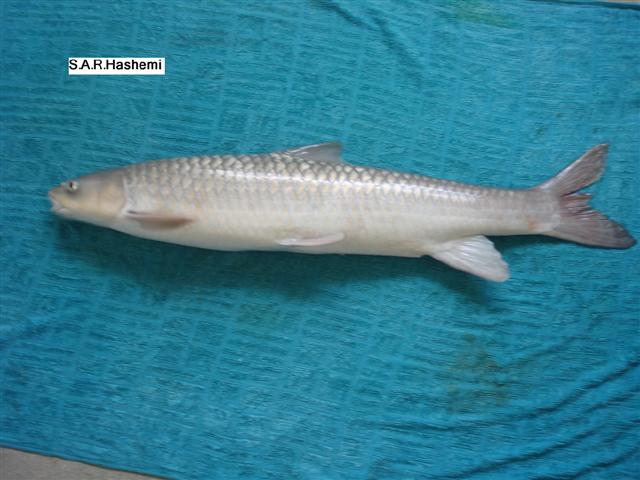 🇮🇷 Iran and 1 moreShabout
A large freshwater carp native to the Tigris-Euphrates basin in Western Asia.Carp · Rivers and lakes
More from Cyprinidae
All of them 🇹🇭 Thailand and 2 moreSiamese mud carp
Freshwater cyprinid native to Mekong and Chao Phraya riversCarp · Rivers and lakes
 🇮🇳 India and 4 moreRohu
A large silver carp from South Asian rivers, farmed for food and prized as a game fish.Carp · Rivers and lakes
 🇲🇾 Malaysia and 1 moreHarlequin rasbora
A small, colourful freshwater fish popular in home aquariums for its distinctive black body marking.Carp · Rivers and lakes
 WorldLabeobarbus
A genus of mid-sized ray-finned fish widely distributed in eastern and southern Africa.Carp · Rivers and lakes