
Common carp
A widespread freshwater fish native to Europe and Asia, now farmed globally and often invasive.
The common carp is a robust freshwater fish originating from European and Asian rivers. It has been farmed for food since Roman times and introduced worldwide, where it frequently becomes an invasive pest that disrupts local ecosystems.
- Maximum recorded weight exceeds 40 kilograms for domesticated forms.
- Wild carp can live up to 64 years in non-native habitats.
- Introduced to over 59 countries and found on all continents except poles.
- Females can lay up to 300,000 eggs in a single spawning event.
- Tolerates salinity levels up to 12 grams per litre.
What it is
The common carp is a sturdy freshwater fish known for its dark gold sheen and large, shiny scales. Its body tapers toward the head, featuring a dorsal fin that runs along the back two-thirds of its length. The mouth turns downward and carries two pairs of whisker-like barbels used to sense food in sediment. While wild individuals are typically slimmer with red flesh, domesticated varieties can grow much larger and display diverse colour patterns. Mirror carp lack most scales, whereas leather carp have very few near the dorsal fin. These physical traits allow the species to thrive in various muddy environments across temperate zones.
Where it lives
Native to Europe and Asia, including the Danube, Volga, Black, Caspian, and Aral Seas. Humans have introduced the species to nearly every continent except the polar regions. In Australia, it spread through the Murray-Darling Basin after escaping containment in the 1960s. In North America, it was distributed widely in the nineteenth century as a food source but is now largely viewed as a pest. The fish tolerates a wide range of conditions, surviving in frozen ponds if liquid water remains below ice, and thriving in temperatures between three and thirty-five degrees Celsius.
How it lives
Carp are benthic feeders that root through bottom sediments to find insects, worms, crustaceans, and plant matter. They use suction to pick up debris and filter food using gill rakers and pharyngeal teeth, often spitting out sediment which clouds the water. They feed day and night, preferring low-oxygen environments by gulping air at the surface. Wild carp live longer and grow slower than their farmed counterparts. Predators include northern pike, largemouth bass, herons, cormorants, otters, and mink. Juveniles face high mortality rates from bacteria and fungi before reaching adulthood.
Breeding and life cycle
Adult females release hundreds of thousands of eggs during spawning events triggered by rising spring temperatures and rainfall. Carp can spawn multiple times within a single season. In commercial aquaculture, reproduction is often stimulated via hypophysation, injecting pituitary extracts containing gonadotropic hormones. Eggs and young fry are vulnerable to predation by birds and mammals, as well as microbial infections. Despite these threats, the high volume of eggs ensures population stability, allowing the species to establish itself rapidly in new habitats.
Fish and people
Humans have farmed carp since Roman times, initially keeping them in captive pools and later in dedicated spawning ponds. Monks spread domestication across Europe between the thirteenth and sixteenth centuries. Today, carp serve as a primary food source in many regions, though they are rarely eaten in the United States. Varieties like koi are popular ornamental pets. In some areas, carp are processed into fertilizer or targeted for control due to their destructive feeding habits. Hybridization with goldfish produces Kollar carp, while crosses with Japanese koi create commercially valuable ghost carp.
Status and threats
Wild native populations are classified as vulnerable by conservation groups due to habitat loss and competition. However, the species as a whole is least concern because of its widespread introduction and farming. In non-native ranges like Australia and parts of North America, carp are considered invasive pests that damage vegetation and displace native species. Control methods include mechanical removal, chemical piscicides like rotenone, and controversial biological agents such as carp-specific herpes virus. Genetic modification research aims to produce male-only populations to curb reproduction.


Questions people ask about Common carp
What does the common carp eat?
Common carp are omnivores that scavenge the bottom of lakes and rivers. They eat aquatic plants, seeds, insects, crustaceans, molluscs, and fish eggs. Using their barbels to detect food in sediment, they suck up debris and filter it through gill rakers, often clouding the water with expelled mud.
Is the common carp dangerous to humans?
No, the common carp is not venomous or aggressive toward humans. It is primarily valued as a food fish in many cultures and as an ornamental pet in the form of koi. However, it is considered a dangerous invasive species in some regions because it damages aquatic vegetation and displaces native wildlife.
How big can a common carp get?
Domesticated common carp can reach lengths of 120 centimetres and weigh over 40 kilograms. Wild carp are typically smaller, averaging 40 to 80 centimetres long and weighing between 2 and 14 kilograms. The largest recorded specimen weighed 45.59 kilograms and was caught in France in 2013.
Why are carp considered invasive?
Carp are invasive because they reproduce quickly and alter their environment by rooting through sediment. This behaviour destroys submerged vegetation, which harms habitats for native ducks and fish. Their ability to survive in low-oxygen water and tolerate various salinities allows them to thrive in places where native species struggle.
Good reading and sources
The facts on this page come from the Wikipedia article "Common carp", written by its contributors and used under the CC BY-SA 4.0 licence, and from its Wikidata record (CC0). EveryFish rewrote the text in its own words, with AI assistance, and compares every page with the article to make sure no passage is copied. It may be reused under the same CC BY-SA 4.0 licence with a link back.
It may contain mistakes, and figures change over time. Nothing here is investment or buying advice. If something is wrong, tell us. Last refreshed 2026-11-15.
Like Common carp
All carps and minnows 🇹🇭 Thailand and 4 moreJava barb
A silvery freshwater fish farmed across Southeast Asia.Carp · Rivers and lakes
 🇸🇪 Sweden and 3 moreIde
A freshwater cyprinid native to Europe and Asia, widely kept in ornamental ponds.Carp · Rivers and lakes · 1758
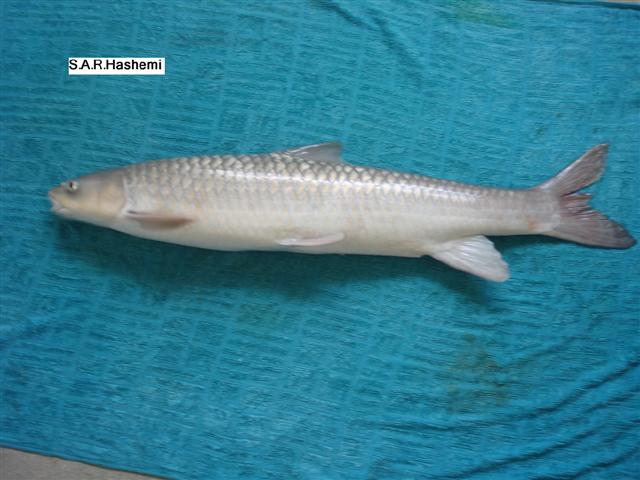 🇮🇷 Iran and 1 moreShabout
A large freshwater carp native to the Tigris-Euphrates basin in Western Asia.Carp · Rivers and lakes
 🇮🇳 India and 4 moreRohu
A large silver carp from South Asian rivers, farmed for food and prized as a game fish.Carp · Rivers and lakes
More from Cyprinidae
All of them 🇮🇳 India and 4 moreCommon snowtrout
A cold-water cyprinid from Himalayan rivers.Carp · Rivers and lakes
 🇲🇾 Malaysia and 1 moreHarlequin rasbora
A small, colourful freshwater fish popular in home aquariums for its distinctive black body marking.Carp · Rivers and lakes
🇵🇰 Pakistan and 3 moreGolden barb
Small Asian cyprinid found in rivers and aquariumsCarp · Rivers and lakes
 🇹🇭 Thailand and 2 moreSiamese mud carp
Freshwater cyprinid native to Mekong and Chao Phraya riversCarp · Rivers and lakes