
Bonytail chub
Endangered freshwater fish from the Colorado River Basin known for its thin tail.
The bonytail chub is a ray-finned fish native to the Colorado River Basin in the Southwestern United States. Once abundant, it has declined sharply due to dams and invasive species, relying on hatchery releases for survival.
- Maximum length reaches 62 cm.
- Lifespan can exceed 50 years.
- Extirpated from Mexican waters.
- Critically endangered since 2013.
- Relies on hatchery releases for survival.
What it is
The bonytail chub is a freshwater fish belonging to the Leuciscidae family. It features a streamlined body that often arches into a smooth hump behind the head in adults. The most distinctive trait is its thin caudal peduncle, resembling a pencil, which gives the species its name. Coloration varies by water clarity and sex. Males display bright red-orange bands between fins during breeding. Adults are dark above and lighter below for camouflage. They grow to about 62 cm in length.
Where it lives
This species is native to the Colorado River Basin across several US states including Arizona, Utah, and Wyoming. It was once found in Mexico but is now extirpated there. Historically widespread, populations have collapsed. Today, wild groups are not self-sustaining. Remnants may exist in the Green River of Utah. The lower basin lost the species between 1926 and 1950 following dam construction.
How it lives
Young fish feed on aquatic plants. Adults consume small fish, algae, plant debris, and terrestrial insects. They inhabit flowing pools and backwaters with rocky or muddy substrates. While historically found in wide downstream sections, they are now mostly restricted to rocky canyons. They are long-lived, reaching up to 50 years. Invasive species and habitat changes threaten their existence.
Breeding and life cycle
Reproductive habits are not fully understood. Spawning likely occurs in midsummer. Observations show spawning in May in Lake Mohave and June or July in the upper Green River. Eggs are scattered randomly over the river bottom. There is no parental care after laying. They may hybridize with roundtail and humpback chubs.
Fish and people
The bonytail chub is protected under the Endangered Species Act. Recovery plans aim to protect habitats and release hatchery-reared fish. Several facilities maintain populations, including hatcheries in New Mexico, Arizona, Utah, and California. Reintroduction efforts face opposition from bass fishermen concerned about gamefish removal. Fears regarding invasive quagga mussels also delay stocking programs in some areas.
Status and threats
The species is critically endangered. Populations are small and declining due to dam-induced habitat alterations and competition from non-native fish. No wild population survives independently. Conservation relies entirely on hatchery production. Threats include water flow management disputes and invasive species like quagga mussels. Protection measures include recovery plans established in 1990.

Questions people ask about Bonytail chub
What does the bonytail chub eat?
Juveniles primarily consume aquatic plants. Adult fish shift their diet to include small fish, algae, plant debris, and terrestrial insects. This dietary change supports their growth in river environments.
Why is the bonytail chub endangered?
Dams altered its natural habitat and blocked migration. Non-native fish compete for food and prey on young chubs. These factors caused a sharp decline, leaving only hatchery-supported populations today.
Where can bonytail chubs be found now?
They are native to the Colorado River Basin in the US. Wild populations are not self-sustaining. Some may remain in the Green River of Utah. Most individuals are maintained in various hatcheries across the region.
How do bonytail chubs reproduce?
They spawn in midsummer, typically May to July depending on location. Eggs are laid randomly on the river bottom without parental care. They may also hybridize with related chub species like the humpback chub.
Good reading and sources
- Bonytail chub on WikipediaEncyclopedia
- More photos on Wikimedia CommonsPhotos
- Wikidata recordOpen data
The facts on this page come from the Wikipedia article "Bonytail chub", written by its contributors and used under the CC BY-SA 4.0 licence, and from its Wikidata record (CC0). EveryFish rewrote the text in its own words, with AI assistance, and compares every page with the article to make sure no passage is copied. It may be reused under the same CC BY-SA 4.0 licence with a link back.
It may contain mistakes, and figures change over time. Nothing here is investment or buying advice. If something is wrong, tell us. Last refreshed 2026-11-15.
Like Bonytail chub
All other fish 🇺🇸 United States and 1 moreRazorback sucker
Endangered river fish with a distinctive back ridgeOther · Rivers and lakes
 🇺🇸 United StatesDevils Hole pupfish
A tiny fish found only in one cavern in Nevada.Other · Rivers and lakes · 1930
 🇺🇸 United StatesDelta smelt
A tiny, endangered fish native to California's Sacramento-San Joaquin River Delta.Other · Rivers and lakes · 1963
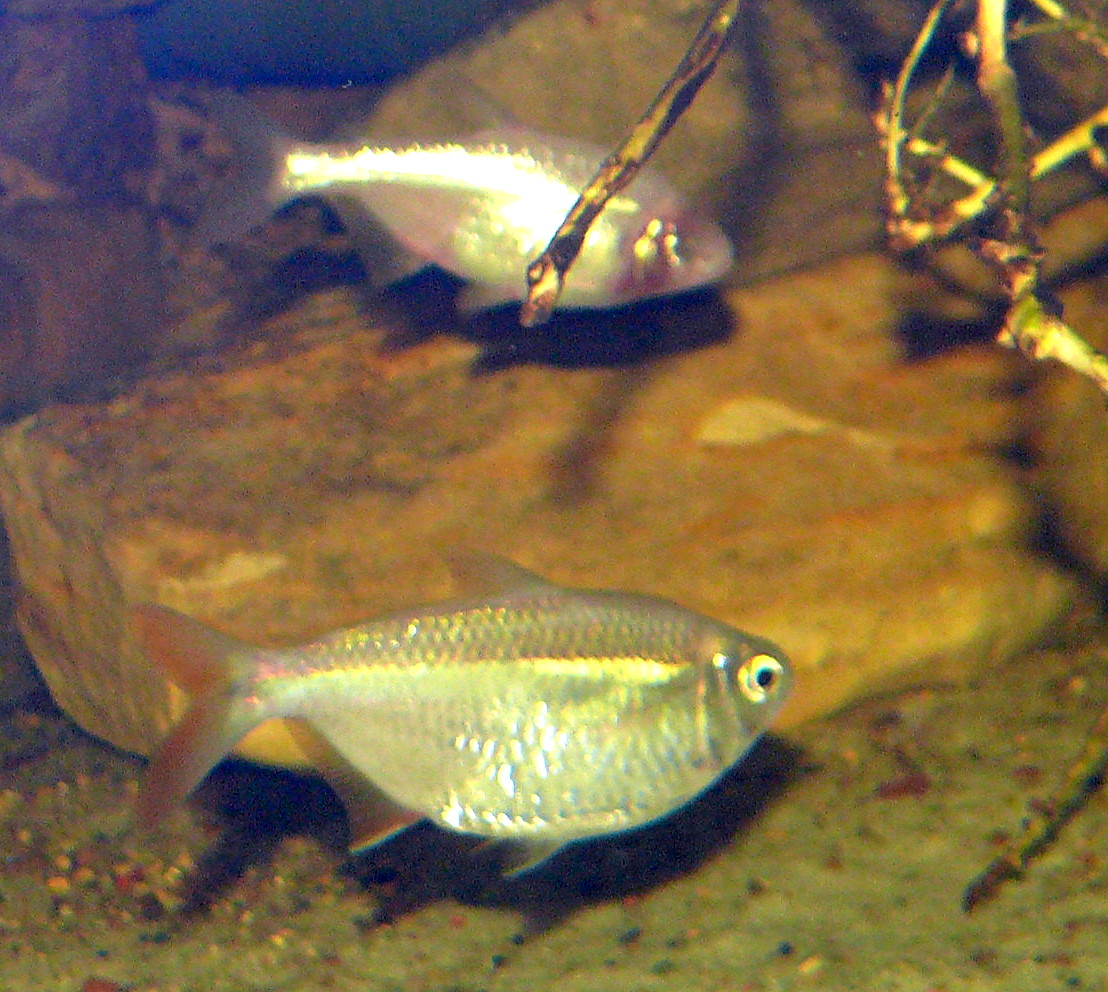 🇺🇸 United States and 1 moreMexican tetra
A freshwater characin with surface and blind cave forms, studied for evolutionary biology.Other · Rivers and lakes
More from Leuciscidae
All of them 🇺🇸 United States and 1 moreCreek chubs
Small North American minnows with a distinctive dorsal spotCarp · Rivers and lakes
 🇷🇺 RussiaCaspian roach
A brackish water fish from the Caspian Sea region, widely consumed as a dried snack.Carp · Estuaries and mangroves
 🇷🇺 Russia and 4 moreSabre carp
A silvery surface feeder from Eastern Europe and Asia.Carp · Rivers and lakes
 EuropeCommon rudd
A red-finned freshwater fish native to Europe and Asia.Carp · Rivers and lakes