
Chacunda gizzard shad
A small clupeid fish found across the Indo-West Pacific region.
The Chacunda gizzard shad is a small marine and freshwater fish belonging to the herring family. It inhabits coastal waters from the Persian Gulf to northern Australia and is commercially harvested for food in countries like Thailand.
- Reaches a maximum size of 22 cm.
- Found from the Persian Gulf to northern Australia.
- Known as pla khok in parts of Thailand.
- Commercially fished for fresh and dried markets.
What it is
This species belongs to the Clupeidae family, which includes herrings and sardines. Adults typically measure around 14 centimetres, though they can reach a maximum length of 22 centimetres. The body is adapted for life in both salt and fresh water environments.
Where it lives
The fish ranges across the Indo-West Pacific region. Its distribution extends from the Persian Gulf eastward through the coasts of India and the Andaman Sea. Records also place it in the Gulf of Thailand, Indonesia, Vietnam, the Philippines, and as far south as northern Australia. It also appears in the Caroline Islands and New Caledonia.
How it lives
These fish primarily inhabit marine coastal areas. They frequently move into rivers and estuaries, tolerating brackish conditions. Specific details regarding their diet, schooling behaviour, or natural predators are not provided in the available records.
Fish and people
The species is captured commercially and sold fresh, frozen, dried, or dried-salted. In Thailand, it holds culinary significance. In Chonburi Province, locals call it pla khok and boil it with salted pickled vegetables, a method influenced by Teochew cuisine. In Phatthalung Province, the roe is mixed with herbs and fried on a flat pan.
Questions people ask about Chacunda gizzard shad
What is the scientific name of this fish?
The scientific name is Anodontostoma chacunda. It is classified within the family Clupeidae, which comprises herrings and sardines.
Where does the Chacunda gizzard shad live?
It lives in the Indo-West Pacific region. Habitats include coastal marine waters, rivers, and estuaries. Ranges stretch from the Persian Gulf to northern Australia.
Is this fish eaten by people?
Yes. It is caught commercially and sold fresh, frozen, or dried. In Thailand, it is used in local dishes such as boiled preparations with pickled vegetables.
Good reading and sources
- Anodontostoma chacunda on WikipediaEncyclopedia
- More photos on Wikimedia CommonsPhotos
- Wikidata recordOpen data
The facts on this page come from the Wikipedia article "Anodontostoma chacunda", written by its contributors and used under the CC BY-SA 4.0 licence, and from its Wikidata record (CC0). EveryFish rewrote the text in its own words, with AI assistance, and compares every page with the article to make sure no passage is copied. It may be reused under the same CC BY-SA 4.0 licence with a link back.
It may contain mistakes, and figures change over time. Nothing here is investment or buying advice. If something is wrong, tell us. Last refreshed 2026-11-15.
Like Chacunda gizzard shad
All herrings and sardines 🇮🇪 IrelandTwait shad
Anadromous herring-like fish with flank spotsHerring · Rivers and lakes
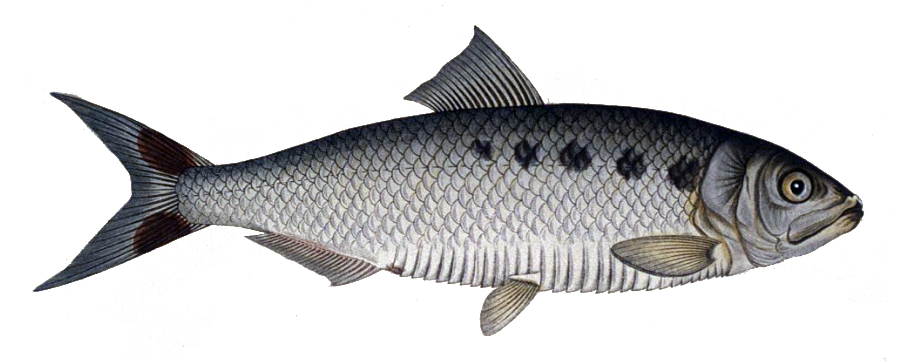 EuropeAllis shad
Anadromous Atlantic fish with a dark gill spot.Herring · Rivers and lakes
 🇹🇷 Turkey and 4 moreAnchovy
Small, oily forage fish found in oceans and some rivers worldwide.Herring · Coasts and shelves
 🇲🇾 Malaysia and 4 moreToli shad
A prized shad of the Indian and Pacific coastsHerring · Rivers and lakes
More from Clupeidae
All of them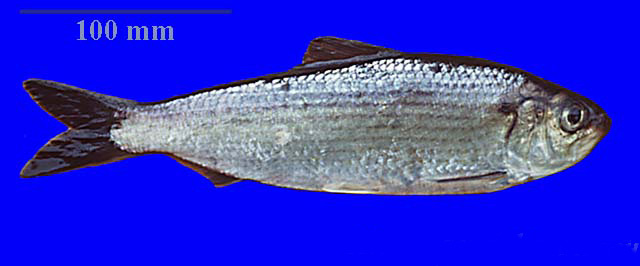 🇺🇸 United States and 1 moreAlewife
A small North American herring that migrates between sea and rivers.Herring · Coasts and shelves
 🇺🇸 United States and 3 moreMenhaden
Small silver forage fish that filter plankton and support marine food webs.Herring · Coasts and shelves
 WorldSpotted sardinella
A small herring with golden spots found in the Indo-Pacific.Herring · Coasts and shelves
 🇺🇸 United States and 2 moreAmerican gizzard shad
A silvery freshwater forage fish with a muscular gizzard.Herring · Rivers and lakes