
Alligator gar
A large, primitive freshwater fish native to North America known for its armored scales and air-breathing ability.
The alligator gar is a massive ray-finned fish belonging to the family Lepisosteidae. It inhabits slow-moving waters across the southern United States and Mexico, where it serves as an apex predator. Once hunted as a nuisance, it is now protected due to its ecological importance and ancient lineage.
- Mature adults commonly measure 6 ft (1.8 m) and weigh over 100 lb (45 kg).
- They breathe air using a vascularized swim bladder that acts like a lung.
- Scales are hard, rhomboidal ganoid plates composed of bone and enamel-like material.
- Eggs are bright red, sticky, and poisonous to humans if ingested.
- Once hunted as pests, they are now protected and used in conservation stocking.
What it is
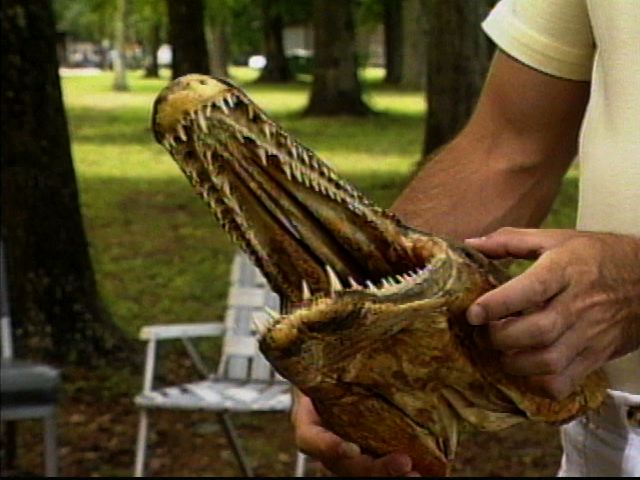
The alligator gar is a large, torpedo-shaped fish with a heavy body and broad head. Its skin is covered in hard, rhomboidal ganoid scales that resemble armor and protect it from predators. The coloration is typically brown or olive on top, fading to a lighter gray or yellow belly. Some individuals may appear black due to high melanin levels. The fish has a short, broad snout lined with sharp teeth, including a distinctive double row on the upper jaw. These features give the species its common name, referencing its resemblance to an alligator. It is one of the largest freshwater fish in North America, with mature adults commonly exceeding six feet in length and weighing over one hundred pounds.
Where it lives
This species lives in the southern United States and extends into northern Mexico. Its range includes the lower Mississippi River Valley, Gulf Coast states, and rivers flowing into the Gulf of Mexico. Historically, populations reached further north into states like Kansas, Nebraska, Ohio, and Iowa, but they are now extirpated from those areas. In Mexico, they are found in Tamaulipas and northern Veracruz. They inhabit reservoirs, lakes, backwaters, bayous, and brackish marshes. Occasional sightings occur in the open Gulf of Mexico, though these are rare. Records from Central America are considered invalid.
How it lives
Alligator gars are solitary ambush predators that often float motionless just below the surface. They wait for prey to swim within reach before lunging forward to impale them with their sharp teeth. Their diet consists mainly of fish, such as gizzard shad, but they also eat waterfowl, turtles, and small mammals floating on the surface. In brackish waters, they consume blue crabs and catfish. They can survive in stagnant, low-oxygen water by gulping air using a vascularized swim bladder that functions like a lung. This adaptation allows them to thrive in environments where other fish would suffocate. They are opportunistic feeders and may scavenge when preferred food sources are scarce.
Breeding and life cycle
Gars are long-lived and reach sexual maturity late, with females maturing after ten years and males in about half that time. Spawning requires specific conditions: rising water temperatures between 20 and 28 degrees Celsius and flooding that creates oxbow lakes and inundates vegetation. Males gather around females, triggering egg release. The sticky, bright red eggs attach to submerged plants and hatch within days. Larvae detach after about ten days. A female can produce approximately 150,000 eggs per spawn, depending on her size. The eggs are poisonous to humans if ingested.
Fish and people
For decades, alligator gars were viewed as nuisance species and targeted for elimination because they competed with sport fish. Since the 1980s, conservation efforts have protected them under laws like the Lacey Act. Agencies monitor wild populations and run outreach programs. They are cultured in ponds and tanks by federal hatcheries for mitigation stocking and by universities for research. In Mexico, they are raised for consumption. In some regions outside their natural range, such as China and Hong Kong, they have been released by aquarium hobbyists, leading to invasive concerns and public fear due to their appearance.
Status and threats
Populations declined significantly due to habitat destruction, indiscriminate culling, and unrestricted harvests. Today, they are protected by state and federal agencies in the United States. Reintroduction efforts have occurred in areas like Tennessee and Illinois to help control invasive Asian carp. While still present in much of their historic range, valid sightings in northern parts of their former distribution are rare. Conservation programs aim to educate the public and restore ecological balance. The species is currently listed as least concern globally, though local populations require ongoing management.



Questions people ask about Alligator gar
How do alligator gars survive in low-oxygen water?
They possess a highly vascularized swim bladder connected to their foregut. This organ allows them to gulp air at the surface, supplementing gill respiration. This adaptation enables them to live in stagnant or hypoxic waters where other fish cannot survive.
What does an alligator gar eat?
They are primarily piscivores, feeding on forage fish like gizzard shad. They also ambush waterfowl, turtles, small mammals, and crabs. In brackish waters, they heavily consume blue crabs and catfish. They are opportunistic and may scavenge when necessary.
Are alligator gars dangerous to humans?
No confirmed predatory attacks on humans exist. Their large teeth and appearance often cause fear, but they are generally passive. However, their eggs are poisonous if ingested, posing a health risk rather than a physical threat.
Why were alligator gars once considered trash fish?
For nearly fifty years, they were viewed as nuisances detrimental to sport fisheries. Authorities targeted them for elimination. Later understanding of ecosystem balance led to their protection and recognition as important ecological components.
Good reading and sources
- Alligator gar on WikipediaEncyclopedia
- More photos on Wikimedia CommonsPhotos
- Wikidata recordOpen data
The facts on this page come from the Wikipedia article "Alligator gar", written by its contributors and used under the CC BY-SA 4.0 licence, and from its Wikidata record (CC0). EveryFish rewrote the text in its own words, with AI assistance, and compares every page with the article to make sure no passage is copied. It may be reused under the same CC BY-SA 4.0 licence with a link back.
It may contain mistakes, and figures change over time. Nothing here is investment or buying advice. If something is wrong, tell us. Last refreshed 2026-11-15.
Like Alligator gar
All other fish 🇦🇴 Angola and 3 moreAtlantic mudskipper
Semi-aquatic goby that walks on mudflats in West Africa.Other · Rivers and lakes · 1766
 WorldNorthern whiting
A widespread marine fish found in the Indo-Pacific, known for its silvery body and ability to bury itself in sand.Other · Coasts and shelves · 1775
 🇯🇵 JapanJapanese rice fish
Small freshwater fish native to Japan and a key model organism.Other · Rivers and lakes
 🇮🇳 IndiaGangetic leaffish
A small Asian fish found in slow rivers and ponds across South Asia.Other · Rivers and lakes
More from Lepisosteidae
All of them 🇺🇸 United States and 2 moreLongnose gar
A primitive ray-finned fish with a long snout and armored scales found in North America.Other · Rivers and lakes · 1758
 🇺🇸 United States and 2 moreGar
Ancient armored fish with lung-like swim bladders found in North American waters.Ancient · Rivers and lakes · 1758
 🇺🇸 United States and 1 moreSpotted gar
A small North American freshwater fish with a long snout and spotted scales.Ancient · Rivers and lakes · 1860
 🇲🇽 Mexico and 2 moreTropical gar
A small freshwater predator from Central America known for its armored scales and air-breathing ability.Ancient · Rivers and lakes