
Silver dollar
Round, silver tropical fish related to piranhas, popular in aquariums.
The silver dollar is a common name for several species of South American freshwater fish, primarily in the genus Metynnis. These peaceful, vegetarian schooling fish are widely kept by hobbyists due to their distinctive shape and calm temperament.
- Related to piranhas but generally peaceful and vegetarian.
- Native to weedy rivers in South America.
- Can lay up to 2,000 eggs per spawning event.
- Popular choice for community aquariums.
- Prefer water temperatures between 24 and 28 degrees Celsius.
What it is
The silver dollar refers to a group of tropical freshwater fishes, mostly within the genus Metynnis. These fish belong to the family Serrasalmidae, making them close relatives of piranhas and pacu. They possess a distinctively round, disc-like body covered in silvery scales. The most frequently encountered species is Metynnis argenteus, though many others exist, such as the spotted or striped varieties. Their appearance is striking, with a flat profile that aids in navigating through vegetation.
Where it lives
These fish are native to South America. They inhabit tropical climates, specifically preferring the sides of weedy rivers. In the wild, they thrive in environments with specific water conditions, including a pH level between 5 and 7. They also require water hardness of up to 15 dGH and temperatures ranging from 24 to 28 degrees Celsius. This habitat provides ample cover and food sources essential for their survival.
How it lives
Silver dollars are peaceful schooling fish that typically occupy the mid to upper levels of the water column. Despite being related to aggressive predators like piranhas, they are generally mellow and semi-aggressive at most. Their diet is almost exclusively vegetarian, consisting mainly of plants. In captivity, they may consume all available tank vegetation and supplement their intake with worms and small insects. They live less than ten years on average but can survive longer in controlled environments.
Breeding and life cycle
These fish are benthic spawners and egg scatterers. A breeding pair can produce around 2,000 eggs in soft, warm water under low light conditions. To encourage spawning, aquarists often raise juveniles together until a pair forms. The eggs fall to the bottom and hatch after three days. Fry become free-swimming after about a week, feeding on fine foods like crushed spirulina or brine shrimp. Parents do not eat their young, but other tank mates might.
Fish and people
The primary use of silver dollars is as aquarium fish. They are popular among fish-keeping hobbyists due to their unique shape and peaceful nature. They can be kept in community tanks with larger fish that cannot fit in their mouths, such as oscars or large catfish. Their vegetarian diet makes them interesting additions to planted tanks, though they may devour aquatic plants if not provided sufficient alternative food sources.


Questions people ask about Silver dollar
What do silver dollars eat?
Their diet is almost exclusively vegetarian. They primarily consume plants and algae. In captivity, they may also eat worms and small insects. Hobbyists often need to provide extra plant matter as they can clear out tank vegetation quickly.
Are silver dollars aggressive?
They are listed as semi-aggressive but are generally very mellow. They are peaceful schooling fish that spend time in the mid to upper water levels. They can coexist with larger fish that cannot fit in their mouths.
How big do silver dollars get?
The provided sources do not specify the maximum length or weight of adult silver dollars. They are described as somewhat round-shaped and silvery, but exact dimensions are not recorded in this text.
Where do silver dollars live?
They are native to South America. In the wild, they inhabit the sides of weedy rivers in tropical climates. They prefer soft, warm water with a pH between 5 and 7.
Good reading and sources
- Silver dollar (fish) on WikipediaEncyclopedia
- More photos on Wikimedia CommonsPhotos
- Wikidata recordOpen data
The facts on this page come from the Wikipedia article "Silver dollar (fish)", written by its contributors and used under the CC BY-SA 4.0 licence, and from its Wikidata record (CC0). EveryFish rewrote the text in its own words, with AI assistance, and compares every page with the article to make sure no passage is copied. It may be reused under the same CC BY-SA 4.0 licence with a link back.
It may contain mistakes, and figures change over time. Nothing here is investment or buying advice. If something is wrong, tell us. Last refreshed 2026-11-15.
Like Silver dollar
All other fish WorldLeopard bush fish
A freshwater labyrinth fish from the Congo River basin kept in home aquariums.Other · Rivers and lakes
 Southeast AsiaBumblebee goby
Small striped freshwater and brackish gobies from AsiaOther · Rivers and lakes
 🇨🇳 China and 4 moreCelestial Eye goldfish
Fancy goldfish with upward-facing telescope eyesOther · Rivers and lakes
 🇧🇷 Brazil and 3 moreTambaqui
A large freshwater fish from South America known for its heavy body and seed-eating habits.Other · Rivers and lakes
More from Serrasalmidae
All of them 🇧🇷 Brazil and 4 moreRed-bellied piranha
A widespread South American freshwater fish known for its omnivorous diet and shoaling behavior.Other · Rivers and lakes
 🇧🇷 Brazil and 1 moreRed-bellied Pacu
A large South American freshwater fish related to piranhas, farmed for food and kept in aquariums.Other · Rivers and lakes
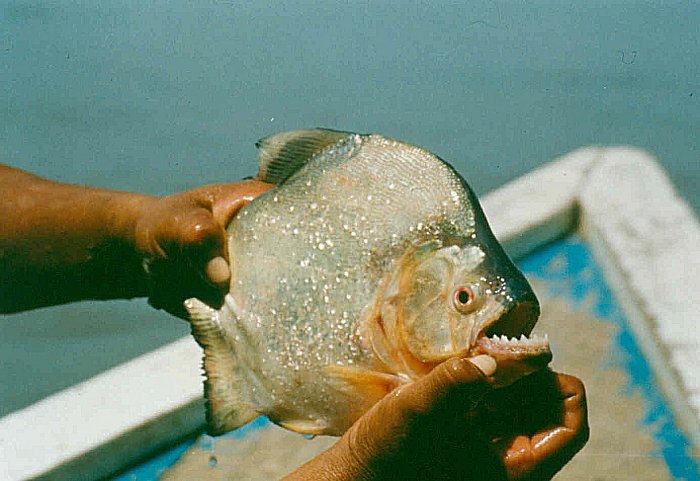 🇸🇷 Suriname and 2 moreRedeye piranha
A large freshwater fish from South America with a rhombus-shaped body and red eyes.Other · Rivers and lakes · 1766