
Leopard bush fish
A freshwater labyrinth fish from the Congo River basin kept in home aquariums.
The leopard bush fish is a member of the Anabantidae family found in Central Africa. It grows to about twenty centimetres and is popular in the trade for its hardy nature and unique hunting style.
- Endemic to the Congo River basin in Middle Africa
- Reaches up to 20 cm in the wild
- Part of the Anabantidae labyrinth fish family
- Predatory diet of small fish and insects
- Popular hardy choice for beginner aquariums
What it is
This species belongs to the Anabantidae group, commonly called labyrinth fish. Adults reach roughly twenty centimetres in length within their natural environment. In home tanks they typically stay smaller, with fifteen centimetres considered a large specimen. The fish displays a patterned appearance that gives it its common name. It possesses the ability to breathe atmospheric air using a specialized organ. This adaptation allows survival in low-oxygen waters. Its body shape supports ambush hunting near vegetation or debris.
Where it lives
The leopard bush fish lives only in the Congo River basin in Middle Africa. It adapts to various conditions within this region. Individuals inhabit fast-flowing streams as well as stagnant ponds. This flexibility helps them survive in different parts of their native range. No populations exist outside this specific geographical area according to available records.
How it lives
Wild specimens hunt small fish and insects that fit into their mouths. They use a stalking method to catch prey. In captivity they accept dead foods like bloodworms and sinking pellets. Many owners prefer live food to observe natural behaviours. They ignore prey larger than an adult female guppy. Aggression towards smaller tank mates is common. Large aggressive cichlids may injure them or outcompete them for resources.
Fish and people
Aquarists view this fish as a hardy oddball suitable for beginners. It fits into some community setups if carefully selected. Suitable tank mates include medium-sized gouramis, bala sharks, silver dollars, Corydoras, and Plecostomus species. Tanks should provide hiding places and ample space. A fifty-five-gallon aquarium with good filtration is acceptable. Overstocking should be avoided to maintain water quality and reduce stress.


Questions people ask about Leopard bush fish
What does the leopard bush fish eat?
In the wild they consume small fish and insects that fit in their mouths. Captive individuals accept bloodworms and sinking pellets. Live food is often preferred by owners to watch their stalking behaviour. Flake foods are rarely accepted by most specimens.
Is it aggressive towards other fish?
They can be somewhat aggressive in aquarium settings. They will eat small fish up to the size of an adult female guppy. Large aggressive cichlids may injure them or compete for food. Medium-sized peaceful fish make better tank mates.
How big do they get?
Wild adults easily reach twenty centimetres in length. In captivity they grow slower and usually stay around fifteen centimetres. A fifteen-centimetre specimen is considered large for a home tank environment.
Where is this fish naturally found?
It is endemic to the Congo River basin in Middle Africa. It adapts to various biotopes including fast streams and stagnant ponds. No wild populations exist outside this specific Central African region.
Good reading and sources
- Leopard bush fish on WikipediaEncyclopedia
- More photos on Wikimedia CommonsPhotos
- Wikidata recordOpen data
The facts on this page come from the Wikipedia article "Leopard bush fish", written by its contributors and used under the CC BY-SA 4.0 licence, and from its Wikidata record (CC0). EveryFish rewrote the text in its own words, with AI assistance, and compares every page with the article to make sure no passage is copied. It may be reused under the same CC BY-SA 4.0 licence with a link back.
It may contain mistakes, and figures change over time. Nothing here is investment or buying advice. If something is wrong, tell us. Last refreshed 2026-11-15.
Like Leopard bush fish
All other fish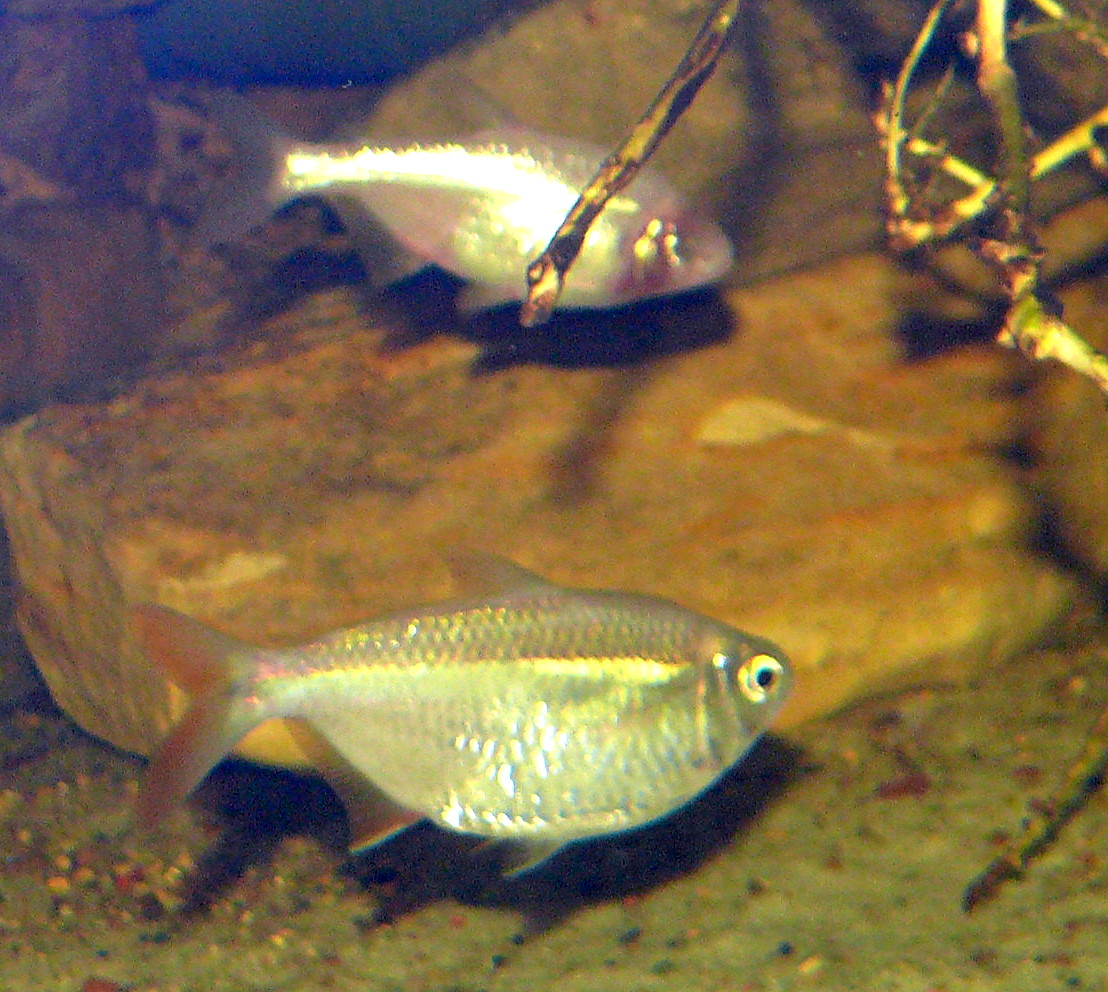 🇺🇸 United States and 1 moreMexican tetra
A freshwater characin with surface and blind cave forms, studied for evolutionary biology.Other · Rivers and lakes
 🇧🇷 Brazil and 4 moreWolf fish
A predatory freshwater ray-finned fish found across Central and South America.Other · Rivers and lakes
 🇧🇷 Brazil and 3 moreTambaqui
A large freshwater fish from South America known for its heavy body and seed-eating habits.Other · Rivers and lakes
 🇧🇷 BrazilBanded leporinus
A striped freshwater fish from the Amazon kept in home tanks and occasionally caught by anglers.Other · Rivers and lakes