
Giant Lake Biwa catfish
Large predatory catfish endemic to Lake Biwa in Japan
The giant Lake Biwa catfish is a large freshwater predator found only in Lake Biwa, Japan. It resembles the wels catfish and plays a key role in local mythology regarding earthquakes.
- Endemic to Lake Biwa in Japan
- Can reach 1.18 m in length
- Largest predatory fish in Lake Biwa
- Features in Japanese earthquake mythology
- Shows site faithfulness near spawning grounds
What it is
This species is a large ray-finned fish within the sheatfish family. It has an elongated, cylindrical body shape typical of its genus. The upper side ranges from dark grey to black, while the belly is pale or whitish. Adults can grow up to 1.18 metres long and weigh as much as 17 kilograms. It closely resembles the wels catfish but is distinct in its specific habitat requirements.
Where it lives
The fish is endemic to Lake Biwa on the island of Honshu in Japan. It does not occur naturally in any other water body. This restricted range makes it unique to this specific freshwater environment. The population remains confined to the lake system, with little mixing between sub-populations across different areas of the water.
How it lives
As the largest predatory fish in its habitat, it feeds on other fish and frogs found in the lake. Telemetry studies indicate that these animals are largely site-faithful. They tend to remain close to their spawning grounds rather than migrating long distances. Research suggests that distinct sub-populations exist within the lake and do not mix significantly.
Breeding and life cycle
Spawning behaviour is linked to specific locations within the lake. The fish show strong fidelity to these sites, staying nearby during reproductive periods. This site faithfulness helps maintain separate sub-populations. Details on egg count or juvenile growth rates are not provided in the available records.
Fish and people
This catfish holds a place in Japanese mythology. Folklore describes a giant catfish named Namazu that causes earthquakes by moving beneath the earth. Observations note that catfish become very active before seismic events. This behavioural change links the biological species to cultural beliefs about natural disasters and earth movements.

Questions people ask about Giant Lake Biwa catfish
Where is the giant Lake Biwa catfish found?
It is endemic to Lake Biwa in Honshu, Japan. It does not live in any other natural water bodies outside this specific lake system.
How large does this catfish grow?
Adults can reach lengths of up to 1.18 metres and weigh as much as 17 kilograms. It is the largest predatory fish in Lake Biwa.
What is its connection to Japanese mythology?
It is linked to the legend of Namazu, a giant catfish that causes earthquakes. Folklore states the fish becomes active before seismic events.
Good reading and sources
- Silurus biwaensis on WikipediaEncyclopedia
- More photos on Wikimedia CommonsPhotos
- Wikidata recordOpen data
The facts on this page come from the Wikipedia article "Silurus biwaensis", written by its contributors and used under the CC BY-SA 4.0 licence, and from its Wikidata record (CC0). EveryFish rewrote the text in its own words, with AI assistance, and compares every page with the article to make sure no passage is copied. It may be reused under the same CC BY-SA 4.0 licence with a link back.
It may contain mistakes, and figures change over time. Nothing here is investment or buying advice. If something is wrong, tell us. Last refreshed 2026-11-15.
Like Giant Lake Biwa catfish
All catfishes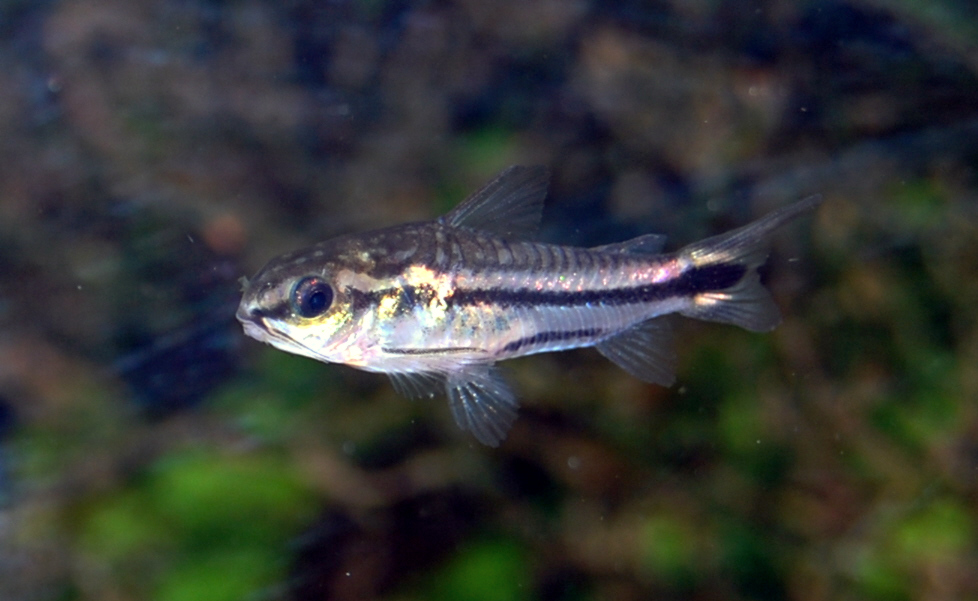 🇧🇷 Brazil and 2 morePygmy corydoras
A tiny armored catfish from South America kept in community aquariums.Catfish · Rivers and lakes · 1966
 🇵🇪 Peru and 1 morePanda corydoras
Small armoured catfish with distinctive black eye patchesCatfish · Rivers and lakes · 1971
 🇧🇷 BrazilZebra pleco
Striped catfish from the Rio XinguCatfish · Rivers and lakes · 1991
 🇹🇭 Thailand and 2 moreGiant pangasius
A large freshwater catfish from Southeast Asia, now critically endangered due to overfishing and habitat loss.Catfish · Rivers and lakes · 1931

