
Kribensis
Small colourful cichlid from West Africa
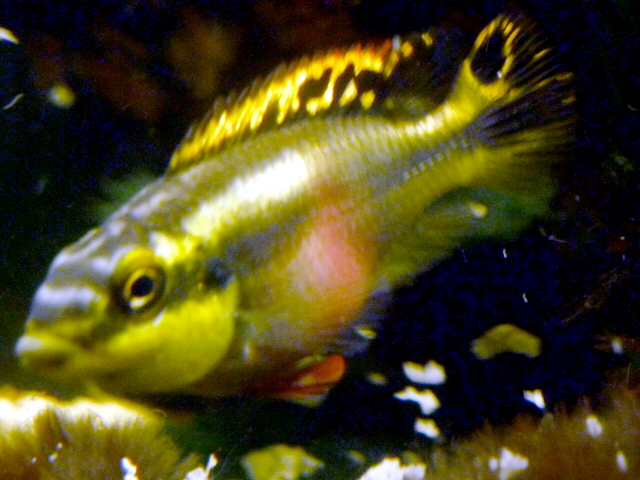
Pelvicachromis pulcher is a small freshwater cichlid native to Nigeria and Cameroon. It lives in warm acidic waters and is popular in home aquariums for its bright colours and breeding behaviour.
- Males grow to 12.5 cm and females to 8.1 cm
- Native to warm acidic waters in Nigeria and Cameroon
- Both parents care for fry for up to 28 days
- Diet consists mainly of algae and plant matter
- Albino trait is incompletely dominant in captivity
What it is
This small cichlid belongs to the family Cichlidae. Males reach about 12.5 centimetres while females stay smaller at 8.1 centimetres. Both sexes display a dark stripe running from mouth to tail. Their bellies turn pink or red during courtship. Fins may show gold-ringed eye spots. Males have pointed fins and a spade-shaped tail. Females have rounder fins. Juveniles look similar until they are six months old.
Where it lives
The fish lives in southern Nigeria and coastal Cameroon. It prefers warm water between 24 and 26 degrees Celsius. The pH level ranges from 5.6 to 6.2. Water hardness is low. Dense vegetation is essential for survival. Populations also exist in Hawaii due to the ornamental trade. These introduced groups live outside their natural range.
How it lives
Wild individuals eat diatoms, green algae and plant matter. Invertebrates are rare in their diet despite common beliefs. They hide in caves dug under plants. Predators include Nile perch and other large fish. Some live in large non-breeding groups. Others defend territories. Red males tend to be more aggressive than yellow ones from the same area.
Breeding and life cycle
They spawn in caves excavated beneath plants. Eggs stick to the cave roof in rows. A clutch contains 40 to 100 eggs. Both parents guard the young for three to four weeks. The female feeds the fry while the male defends the area. Fry sex ratio changes with water pH. Pairs may adopt unrelated young to reduce predation risk.
Fish and people
Aquarium hobbyists value this species highly. It is sold as kribensis or rainbow krib. Breeders have developed albino forms with incomplete dominance. These albinos keep some red and yellow pigment. Wild names often stem from old scientific errors. The fish remains a staple in the freshwater aquarium trade.


Questions people ask about Kribensis
What do kribensis eat in the wild?
Studies show they primarily consume diatoms, green algae, blue-green algae and pieces of higher plants. Invertebrates are not a major part of their natural diet.
How big do kribensis get?
Males reach a maximum length of approximately 12.5 centimetres. Females are smaller and deeper bodied, growing to about 8.1 centimetres in length.
Do kribensis form monogamous pairs?
While often kept in pairs in aquariums, wild populations frequently form polygynous harems. Males may defend territories cooperatively or individually depending on colour morph.
Good reading and sources
- Pelvicachromis pulcher on WikipediaEncyclopedia
- More photos on Wikimedia CommonsPhotos
- Wikidata recordOpen data
The facts on this page come from the Wikipedia article "Pelvicachromis pulcher", written by its contributors and used under the CC BY-SA 4.0 licence, and from its Wikidata record (CC0). EveryFish rewrote the text in its own words, with AI assistance, and compares every page with the article to make sure no passage is copied. It may be reused under the same CC BY-SA 4.0 licence with a link back.
It may contain mistakes, and figures change over time. Nothing here is investment or buying advice. If something is wrong, tell us. Last refreshed 2026-11-15.
Like Kribensis
All cichlids 🇧🇮 Burundi and 3 moreGiant cichlid
The largest living cichlid species, native to Lake Tanganyika in Africa.Cichlid · Rivers and lakes · 1899
 WorldHaplochromis
A large ray-finned fish genus from East Africa known for rapid evolution and aquarium popularity.Cichlid · Rivers and lakes · 1888
 🇬🇹 Guatemala and 4 moreConvict cichlid
Striped Central American cichlid popular in home aquariumsCichlid · Rivers and lakes · 1867
 🇻🇪 Venezuela and 1 moreRam cichlid
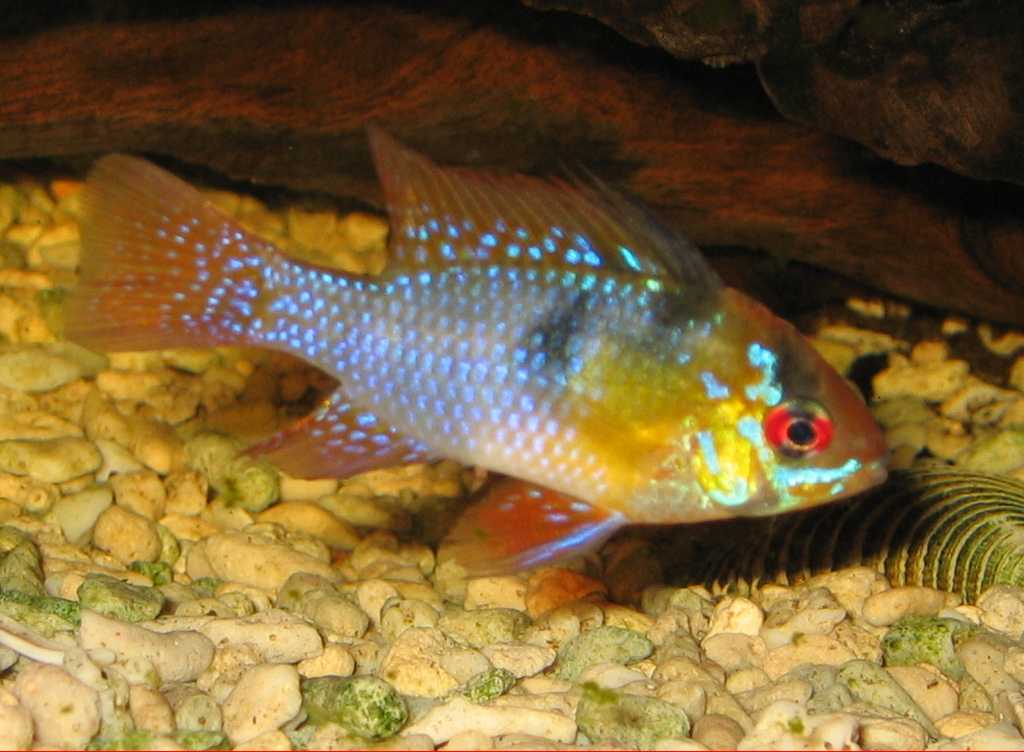
Small colourful freshwater fish from South AmericaCichlid · Rivers and lakes · 1948
More from Cichlidae
All of them Sub-Saharan AfricaRedbreast tilapia
Herbivorous cichlid from southern African freshwatersCichlid · Rivers and lakes · 1897
 WorldUaru
A large South American cichlid from clear Amazon streams.Cichlid · Rivers and lakes · 1840
 🇧🇷 BrazilDiscus
Round, colourful cichlids from the Amazon basin.Cichlid · Rivers and lakes · 1840
 WorldCichlid
Diverse freshwater fish family known for parental care and rapid evolution.Cichlid · Rivers and lakes · 1835